

Best Books on Emotional Regulation

Emotional Regulation Total 3 books

End Procrastination Now summary and key insights by William Knaus
Loading…

End Procrastination Now

William Knaus

3.51054 learners

End Procrastination Now by William Knaus delivers a science-backed, actionable guide to breaking the crippling cycle of delay. Knaus first unpacks procrastination into distinct, relatable types—deadline-driven, personal task avoidance, simple instant delay, and complex multi-factor patterns—revealing their hidden psychological roots: cognitive biases, emotional avoidance, self-sabotaging thought loops, and fear-based defense mechanisms. He then provides a toolkit of targeted strategies spanning cognitive, emotional, and behavioral domains: the five-step change method to shift from delay to action, the ABCDE framework to challenge irrational procrastination thoughts, the PURRRRS plan to build emotional tolerance for discomfort, and even adapts military strategist Clausewitz’s principles to foster decisive decision-making. For workplace procrastinators, he introduces the SWLO self-analysis tool to align strengths with tasks, reducing delay triggers. Packed with real-world examples and practical exercises, this book empowers readers to dismantle automatic procrastination habits, build lasting productivity, and reclaim control over their time and goals.
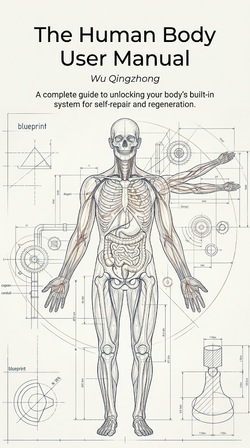

The User's Manual for Human Body summary and key insights by Wu Qingzhong
Loading…

The User's Manual for Human Body

Wu Qingzhong

3.41171 learners

For decades, modern medicine has fixated on treating symptoms instead of root causes, leaving chronic conditions like diabetes, hypertension, and cancer effectively uncurable. In *The User's Manual for Human Body*, author Wu Qingzhong challenges this flawed approach by leveraging Traditional Chinese Medicine (TCM) principles to frame the body as an interconnected, self-sustaining system. He breaks down core concepts like blood qi (vital energy), meridians, and trapped cold, explaining how poor lifestyle choices and Western medical interventions disrupt the body’s natural balance. Wu shares practical, low-effort strategies—including tapping the gallbladder meridian, prioritizing early sleep, and massaging the pericardium meridian—to boost blood qi, clear blocked pathways, and eliminate lingering cold. The book also debunks common myths about obesity, insomnia, and chronic disease, offering a actionable roadmap to reclaim health without relying on lifelong medications. Whether you’re navigating a persistent condition or aiming to optimize wellness, this guide empowers you to work with your body’s innate wisdom rather than against it.

The Whole-Brain Child summary and key insights by Daniel J. Siegel;Tina Payne Bryson
Loading…

The Whole-Brain Child

Daniel J. Siegel;Tina Payne Bryson

4.5719 learners

Written by child development experts Daniel J. Siegel and Tina Payne Bryson, *The Whole-Brain Child* translates cutting-edge neuroscience into accessible, actionable parenting strategies. At its core is the concept of 'brain integration'—helping kids coordinate the different regions of their developing brains to foster emotional regulation, sound decision-making, and strong social connections. The book breaks down key brain functions: left-right brain coordination to balance logic and emotion, upper-lower brain integration to manage impulsive reactions, and bridging implicit and explicit memories to heal past hurts. It also introduces the 'Seven Senses' and 'Wheel of Awareness' tools to help kids build self-awareness and empathy, guiding them from a self-focused 'me' mindset to a collaborative 'we' perspective. Packed with real-life parenting anecdotes, this book empowers caregivers to understand their child’s behavior through a brain-based lens, turning daily challenges into opportunities to shape a resilient, mentally healthy child.