
Best Books on Endowment Effect

Endowment Effect Total 3 books

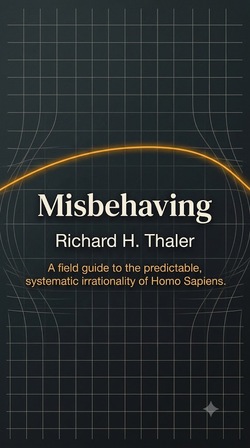
Misbehaving summary and key insights by Richard H. Thaler
Loading…

Misbehaving

Richard H. Thaler

4.3397 learners

In *Misbehaving*, Nobel Prize-winning economist Richard H. Thaler dismantles the long-standing 'rational economic man' assumption of traditional economics. Starting with a quirky classroom experiment—where students cheered for a 96/137 exam score but raged at a 72/100 despite identical grade outcomes—Thaler reveals how real people’s decisions are driven by predictable irrationalities, not cold, calculated logic. He traces his decades-long journey collaborating with psychologists Daniel Kahneman and Amos Tversky, whose prospect theory laid the foundation for behavioral economics. Thaler breaks down core concepts like the endowment effect, mental accounting, and loss aversion using relatable examples: wine collectors refusing to sell or buy their own valued bottles, consumers prioritizing transaction utility over actual value, and businesses failing to grasp fairness perceptions. He also explores how these insights transformed finance (challenging the efficient market hypothesis) and public policy, with game-changing solutions like the 'Save More Tomorrow' retirement plan and the 'nudge' framework now adopted by global governments. This engaging blend of memoir and scholarship shows how studying human misbehavior turned a fringe idea into a mainstream discipline, reshaping our understanding of economics, business, and daily choices.
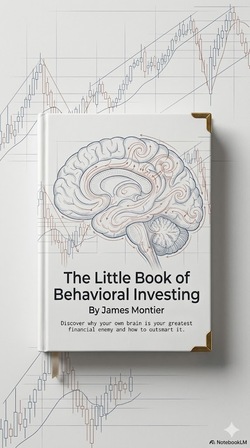

The Little Book of Behavioral Investing summary and key insights by James Montier
Loading…

The Little Book of Behavioral Investing

James Montier

4.3848 learners

In The Little Book of Behavioral Investing, James Montier exposes the hidden psychological traps that trip up even seasoned investors—from overconfidence and loss aversion to confirmation bias and herd mentality. Packed with real-world experiments, iconic investing case studies, and insights from legends like Warren Buffett and Benjamin Graham, this book breaks down why we make irrational decisions when markets swing, and how to build disciplined strategies to fight back. You’ll learn to use pre-commitment plans to avoid impulsive trades, adopt a “kill the company” mindset to counter confirmation bias, and embrace contrarian thinking to capitalize on market bubbles and bear markets. Montier’s no-nonsense, relatable approach turns complex behavioral finance concepts into actionable steps, helping you rewire your brain for long-term investing success instead of chasing short-term wins.

Quit summary and key insights by Annie Duke
Loading…

Quit

Annie Duke

3.91322 learners

Annie Duke’s *Quit* upends the cultural myth that persistence equals success, arguing that knowing when to walk away is the unsung skill of high achievers. Drawing on real-world examples—from 1996 Everest climbers who survived by abandoning their summit goal to Stewart Butterfield’s pivot from failed games to create Slack—Duke breaks down the cognitive biases that trap us in unproductive paths: loss aversion, sunk cost fallacy, endowment effect, and the fear of losing our identity tied to a project or role. She provides actionable tools to make rational quitting decisions, including calculating expected value, setting pre-defined ending criteria, and using the 'Monkey & Pedestal' model to focus on core, unsolvable problems first. Duke also emphasizes the power of active exploration, urging readers to avoid complacency and keep backup options open, so they can pivot proactively instead of waiting for crisis to force a change. This book is a roadmap to navigating uncertainty, cutting losses, and redirecting energy toward opportunities that truly align with your goals.