Best Books on Free Will

Free Will Total 9 books

Augustine_ A Very Short Introduction(Henry Chadwick [Chadwick, Henry],2001) summary and key insights
Loading…

Augustine_ A Very Short Introduction(Henry Chadwick [Chadwick, Henry],2001)

4.51006 learners

Henry Chadwick’s *Augustine: A Very Short Introduction* offers a concise, illuminating exploration of one of Western civilization’s most pivotal thinkers. Spanning Augustine’s turbulent life—from youthful indulgences and his Manichaean phase to his conversion to Christianity and rise as Bishop of Hippo—the book unpacks the intellectual currents shaping his thought: Cicero’s philosophical spark, Neoplatonism’s metaphysical framework, and biblical truths anchoring his theology. Chadwick delves into Augustine’s core ideas: original sin, the tension between divine grace and human free will, the 'two cities' (earthly and heavenly) defining his political theology, and groundbreaking reflections on time and memory in *Confessions*. The book also examines his enduring legacy, from medieval scholasticism and the Protestant Reformation to modern debates on ethics, faith, and human nature. Accessible yet rigorous, this introduction reveals why Augustine remains a cornerstone of Western philosophy and Christian thought.
Stories of Your Life and Others summary and key insights by Ted Chiang
Loading…

Stories of Your Life and Others

Ted Chiang

4.1608 learners

From the Hugo Award-winning 'Story of Your Life'—where a linguist’s study of alien Heptapods rewires her perception of time and fate—to the mind-bending 'Tower of Babylon' that reimagines the universe’s structure, Ted Chiang’s *Stories of Your Life and Others* is a collection of seven provocative sci-fi tales. Each story acts as a rigorous thought experiment, blending cutting-edge science, philosophy, and theology to challenge fundamental assumptions about human understanding. Whether exploring the limits of superintelligence in 'Understanding,' the collapse of mathematical logic in 'Division by Zero,' or the moral dilemmas of a world where God’s miracles are mundane in 'Hell Is the Absence of God,' Chiang crafts narratives that are both intellectually stimulating and emotionally resonant. These stories don’t just entertain; they force readers to question how we see time, truth, faith, and the very nature of existence.

What Does It All Mean? summary and key insights by Thomas Nagel
Loading…

What Does It All Mean?

Thomas Nagel

4.1871 learners

Thomas Nagel’s *What Does It All Mean?* is a concise, accessible introduction to philosophy tailored for readers with no prior background in the field. Ditching dense jargon, Nagel guides readers through six foundational, mind-bending questions that cut to the core of human existence: How can we confirm the external world isn’t just a figment of our minds? Do other people have conscious experiences like our own? What’s the relationship between the mind and the brain? How do words gain their meaning? Do we truly have free will, or are our actions predetermined? And what does moral responsibility mean if our choices aren’t fully our own? Instead of handing down definitive answers, Nagel sparks critical thinking, inviting readers to grapple with these timeless puzzles using relatable examples—from tasting chocolate to choosing dessert. He makes complex philosophical ideas approachable, fostering curiosity about the big questions that shape our understanding of reality, self, and others.

Tales from Both Sides of the Brain summary and key insights by Michael S. Gazzaniga
Loading…

Tales from Both Sides of the Brain

Michael S. Gazzaniga

4.3856 learners

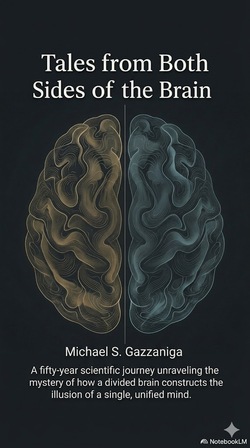
As a founding father of split-brain research, Michael S. Gazzaniga takes readers on a captivating personal journey through decades of groundbreaking neuroscience in Tales from Both Sides of the Brain. Starting with his work alongside Roger Sperry on patients with severed corpus callosums—surgery to treat epilepsy—Gazzaniga reveals how these experiments unlocked the secrets of cerebral lateralization: the distinct roles of the left and right hemispheres. Through vivid anecdotes of his patients, he explains how the left brain acts as an 'interpreter' to create a coherent narrative of our experiences, even when the two hemispheres process information independently. The book delves into profound questions about consciousness, free will, and what makes us uniquely human, blending rigorous science with warm, personal storytelling. Gazzaniga’s insights challenge our understanding of the brain’s unity and offer a fascinating look at how our two hemispheres collaborate to shape our thoughts, behaviors, and sense of self.

The Consolation of Philosophy summary and key insights by Ancius Boethius
Loading…

The Consolation of Philosophy

Ancius Boethius

4.3470 learners

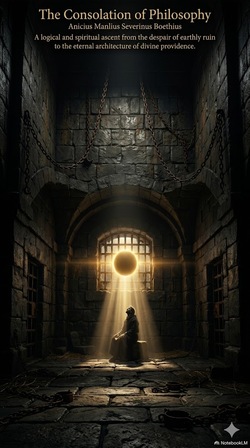
Written by Boethius while imprisoned and facing execution, *The Consolation of Philosophy* is a timeless dialogue between the disgraced statesman and the personified Lady Philosophy. As Boethius wallows in despair over his unjust fall from power, Lady Philosophy arrives to dismantle his obsession with fleeting worldly goods—wealth, fame, and political status. She guides him through rigorous reasoning and poetic allegory to uncover that true happiness lies not in external fortunes, but in the pursuit of universal goodness rooted in divine wisdom. The text explores core philosophical questions: the illusion of fate vs. the order of divine providence, the inherent powerlessness of evil, the unshakable reward of virtue, and how human free will coexists with God’s omniscience. More than a philosophical treatise, it is a profound comfort for anyone grappling with adversity, reminding readers that inner virtue and connection to eternal truth are the only unshakable sources of peace.

Exhalation summary and key insights by Ted Chiang
Loading…

Exhalation

Ted Chiang

4.21224 learners

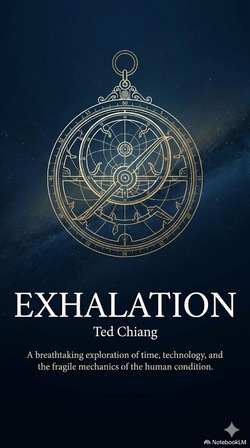
Ted Chiang’s *Exhalation* is a groundbreaking collection of speculative short stories that weaves hard science, philosophical inquiry, and deeply human narratives to challenge our most fundamental assumptions about time, consciousness, and existence. From the haunting cosmic revelation in “Exhalation”—where a mechanical race discovers their universe’s inevitable end as air pressure equalizes—to the time-bending parable of “The Merchant and the Alchemist’s Gate,” which explores fate and the beauty of unplanned moments, each tale invites readers to rethink reality. Stories like “The Lifecycle of Software Objects” confront AI ethics and what it means to care for artificial life, while “The Great Silence” highlights humanity’s blindness to non-human intelligence right under our noses. Chiang’s prose is precise yet lyrical, turning abstract concepts into intimate, thought-provoking journeys that linger long after the final page.

How to Create a Mind summary and key insights by Ray Kurzweil
Loading…

How to Create a Mind

Ray Kurzweil

4.2920 learners

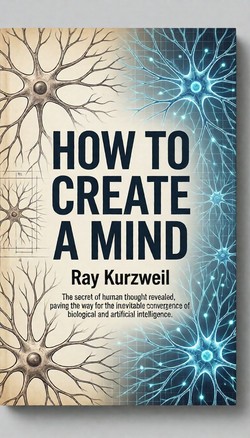
In How to Create a Mind, visionary Ray Kurzweil demystifies the human brain’s inner workings using iconic thought experiments—from Darwin’s evolutionary parallels to Einstein’s relativity insights—as a framework to unpack the neocortex’s core role as a hierarchical pattern-recognition machine. He breaks down how 300 million interconnected pattern recognizers drive memory, learning, creativity, and consciousness, drawing parallels between biological neural structures and cutting-edge AI technologies like hidden Markov models, neural networks, and evolutionary algorithms. Kurzweil addresses contentious debates: he defends the accelerating returns law against skeptics, argues that consciousness is an emergent property of complex systems, and explores the feasibility of building human-level artificial intelligence. He also shares practical tools like his dream-thinking method to unlock creativity, and paints a compelling vision of a future where human and non-biological intelligence merge to transcend biological limits and embrace the technological singularity.

The World as I See It summary and key insights by Albert Einstein
Loading…

The World as I See It

Albert Einstein

4.51148 learners

In *The World as I See It*, Albert Einstein shares unvarnished, deeply personal reflections on life, morality, and humanity’s place in the world. Rejecting the "pig’s ideal" of comfort as life’s ultimate goal, he argues we exist to serve others—from loved ones to strangers bound by compassion—and uphold truth, goodness, and beauty. He challenges the illusion of philosophical free will, drawing on Schopenhauer to frame human action as constrained by external and internal forces, urging humility toward oneself and others. A fierce advocate for peace, Einstein condemns militarism, conscription, and nationalist fervor, calling for global cooperation and moral courage to end war. He redefines the relationship between science and religion, emphasizing a "cosmic religious feeling" rooted in wonder at nature’s order, separate from dogmatic faith. The collection also includes his defense of Jewish identity, support for Zionism, and his 1933 resignation from the Prussian Academy, a bold stand against Nazi-era oppression and eroding academic freedom.

The City of God (Books 1-10) summary and key insights by Saint Augustine
Loading…

The City of God (Books 1-10)

Saint Augustine

4.71201 learners

In 410 CE, when Gothic invaders sacked Rome, pagan critics blamed the disaster on Christianity’s rejection of traditional gods. In *The City of God* Books 1-10, Saint Augustine delivers a sharp, evidence-driven defense of his faith, dismantling pagan claims with historical context and theological rigor. He contrasts the safety Christian churches provided refugees during the sack—an act of mercy unheard of in pagan temple history—with the impotence of Rome’s gods, who failed to protect even their own sacred sites like Troy. Augustine dissects the moral decay of pagan rituals, from obscene theater offerings to violent temple practices, and argues Rome’s greatness stemmed from human ambition, not divine favor. He explores the tension between the City of God (the faithful community seeking eternal life) and the Earthly City (worldly pursuits of power and pleasure), delves into free will vs. fatalism, engages with Platonist philosophy, and establishes Christ as the only legitimate mediator between humanity and God, laying foundational groundwork for Christian political and theological thought.