
Best Books on Hukou System

Hukou System Total 3 books

Urban and Rural China summary and key insights by Qiren Zhou
Loading…

Urban and Rural China

Qiren Zhou

3.5598 learners

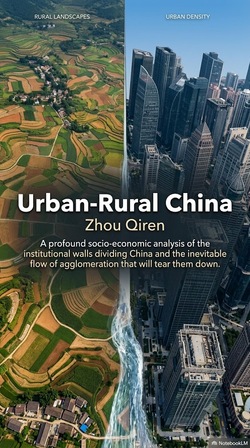
Zhou Qirun’s *Urban-Rural China* delivers a rigorous, accessible exploration of the historical, systemic, and economic forces shaping China’s urban-rural divide. Starting with a comparative analysis of global urbanization drivers—using Tokyo and Seoul as benchmarks—it unpacks why China’s industrialization outpaced its urbanization, fueled by mid-20th century policies restricting rural migration. The book traces the evolution of migration rights, from the 1954 Constitution’s initial recognition of free movement to the 1958 hukou system that entrenched a rigid, hereditary urban-rural hierarchy. It further examines the lopsided "land urbanization" phenomenon, where city expansion outpaces rural-to-urban population integration, rooted in state-controlled land ownership and compulsory land acquisition. Through on-the-ground case studies of Chengdu’s "empowerment through property rights" reform, Chongqing’s innovative land ticket system, and Shenzhen’s urban renewal efforts, Zhou illustrates grassroots and policy-driven solutions. He also debunks common misconceptions about land supply, property rights, and urban governance, arguing that balanced, sustainable development hinges on market-oriented land reform and restoring equitable property rights for rural residents.
Great Nation, Great City summary and key insights by Lu Ming
Loading…

Great Nation, Great City

Lu Ming

3.6723 learners

Drawing lessons from the EU debt crisis, *Great Nation, Great City* explores China’s unique advantages as a large, unified nation—from its massive integrated market that fuels innovation and strategic industries to its ability to efficiently provide public goods. However, the book argues these strengths are undermined by systemic barriers: rigid hukou policies restricting labor mobility, misallocated land resources, and local protectionism splitting the national market. These distortions lead to widening regional gaps, underdeveloped urbanization, and wasted economic potential. Lu Ming advocates aligning policies with market principles: removing cross-regional factor flow barriers, embracing urban agglomeration to achieve 'balance through concentration,' and reforming public services for equal resident access. By learning from Europe’s failures and global urban successes, the book outlines a path to unlock China’s mega-nation growth and build inclusive, efficient great cities.

Street of Eternal Happiness summary and key insights by Rob Schmitz
Loading…

Street of Eternal Happiness

Rob Schmitz

4.2799 learners

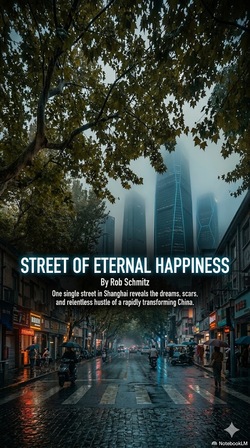
Stretching 2 miles through central Shanghai, Changle Road is a living microcosm of China’s dramatic transformation over the past century. Rob Schmitz weaves intimate portraits of ordinary residents whose lives intersect along this iconic street, revealing the human cost and resilience behind the nation’s rise. Meet CK, a former accordion seller turned café owner chasing artistic fulfillment amid city pressures; Zhao Shiling, a rural migrant who built a flower shop empire after escaping an abusive marriage and factory layoffs; “Mayor Chen,” a lifelong resident fighting to save his family’s shikumen home from forced demolition; and Aunt Fu, a retired worker drawn to church and risky get-rich-quick schemes. Through their stories, Schmitz unpacks pivotal forces shaping modern China: the hukou system’s grip on education and mobility, the clash between urban development and personal property rights, the allure and danger of unregulated capitalism, and the search for spiritual meaning in a materialistic era. Each narrative captures the tension between tradition and progress, individual dreams and systemic constraints, painting a vivid, unfiltered picture of life in one of the world’s fastest-changing cities.