Best Books on Migrant Workers

Migrant Workers Total 4 books

The Grapes of Wrath summary and key insights by John Steinbeck
Loading…

The Grapes of Wrath

John Steinbeck

4.4994 learners

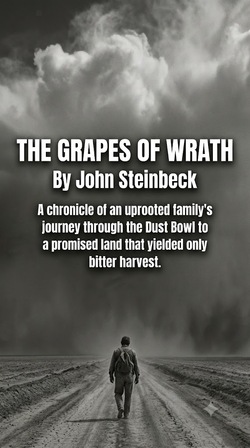
Set during the 1930s Dust Bowl, John Steinbeck’s *The Grapes of Wrath* traces the Joad family’s harrowing journey after they’re evicted from their Oklahoma farm—their land parched by drought, seized by corporate greed. Piling into a rickety truck, they join thousands of displaced “Okies” on Route 66, chasing the false promise of work and abundance in California. Along the way, they endure hunger, illness, and devastating loss, yet find glimmers of hope in the solidarity of fellow migrants. In California, they face systemic exploitation: greedy landowners slash wages, use scabs to break strikes, and label them unwanted outsiders. Guided by former preacher Jim Casey, who evolves from a man of faith to a champion of collective action, the Joads learn survival depends not just on individual grit, but on standing together against a system that dehumanizes the poor. Steinbeck’s raw narrative exposes the dark underbelly of the American Dream, celebrating the unbreakable resilience of ordinary people clinging to dignity.
Leaving Liang Village summary and key insights by Liang Hong
Loading…

Leaving Liang Village

Liang Hong

5664 learners

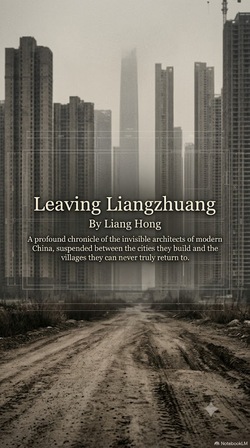
In *Leaving Liang Village*, author Liang Hong returns to her rural hometown in central China to document the quiet crises and unspoken struggles of its people. Through intimate interviews and on-the-ground observations, she follows Liang Village’s residents as they scatter across China’s cities—Xi’an, Beijing, Shenzhen, Qingdao—chasing jobs, money, and a shot at a better life. From underpaid rickshaw drivers enduring police harassment to factory workers breathing toxic fumes, from college-educated migrants stuck in dead-end jobs to left-behind villagers grappling with loss and apathy, each story lays bare the harsh realities of China’s migrant labor system. Hong doesn’t just highlight the physical toll of long hours and dangerous work; she captures the emotional weight of fractured families, lost identities, and the impossible choice between clinging to village roots and surviving in unforgiving cities. A raw, unflinching portrait of a community caught between tradition and modernity, this book gives voice to millions of invisible workers shaping China’s rise.

Country Driving summary and key insights by Peter Hessler
Loading…

Country Driving

Peter Hessler

4.1545 learners

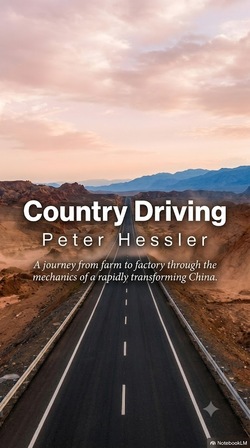
Peter Hessler’s *Country Driving* takes readers on a vivid, eye-opening road trip across early 2000s China, using his newly obtained driver’s license as a key to unlock the nation’s hidden corners. Split into three interconnected parts, the book begins with a meandering journey along the Great Wall, where Hessler encounters rural villagers, crumbling historical sites, and the quiet erosion of traditional life amid desertification. Next, he dives into China’s burgeoning auto industry, shadowing Chery’s test drives and meeting young engineers eager to build a domestic car brand from scratch. Finally, he settles in Sancha Village, documenting a farmer’s transition to running a guesthouse, and later explores southern industrial zones—from bra adjuster factories to art “workshops” churning out paintings for export. Through intimate portraits of ordinary people, Hessler captures the chaos, hope, and contradictions of a country racing toward modernity, offering a nuanced alternative to Western stereotypes of China.

Street of Eternal Happiness summary and key insights by Rob Schmitz
Loading…

Street of Eternal Happiness

Rob Schmitz

4.2799 learners

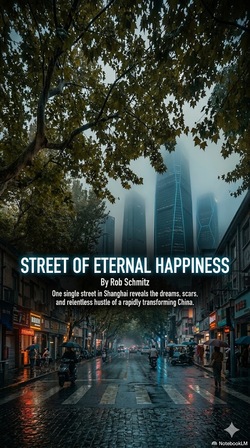
Stretching 2 miles through central Shanghai, Changle Road is a living microcosm of China’s dramatic transformation over the past century. Rob Schmitz weaves intimate portraits of ordinary residents whose lives intersect along this iconic street, revealing the human cost and resilience behind the nation’s rise. Meet CK, a former accordion seller turned café owner chasing artistic fulfillment amid city pressures; Zhao Shiling, a rural migrant who built a flower shop empire after escaping an abusive marriage and factory layoffs; “Mayor Chen,” a lifelong resident fighting to save his family’s shikumen home from forced demolition; and Aunt Fu, a retired worker drawn to church and risky get-rich-quick schemes. Through their stories, Schmitz unpacks pivotal forces shaping modern China: the hukou system’s grip on education and mobility, the clash between urban development and personal property rights, the allure and danger of unregulated capitalism, and the search for spiritual meaning in a materialistic era. Each narrative captures the tension between tradition and progress, individual dreams and systemic constraints, painting a vivid, unfiltered picture of life in one of the world’s fastest-changing cities.