Best Books on Opportunity cost

Opportunity cost Total 6 books

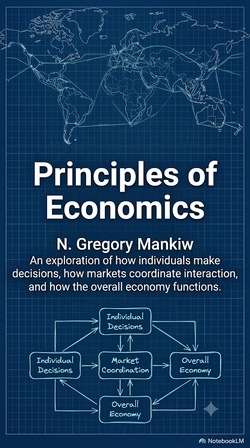
Principles of Economics summary and key insights by N. Gregory Mankiw
Loading…

Principles of Economics

N. Gregory Mankiw

4.3803 learners

Gregory Mankiw’s *Principles of Economics* is the definitive introductory guide for anyone seeking to understand how economies function at every level—from individual choices to global markets. Anchored by 10 core principles grouped into three pillars—individual decision-making, interpersonal trade, and macroeconomic performance—the book demystifies complex concepts with relatable, real-world examples: from why airlines sell last-minute tickets cheap to how Reagan-era tax policies reflected the Laffer Curve. It covers foundational models like the circular-flow diagram and production possibility frontier, dives into microeconomics (supply and demand, market structures, consumer choice) and macroeconomics (inflation, unemployment, economic growth), and explores critical topics such as trade policy, market failures, taxation, and income inequality. Designed to be accessible yet rigorous, it equips readers to decode daily economic decisions, evaluate policy impacts, and think critically about how resources are allocated in society.
The Economic Way of Thinking summary and key insights by Paul Heyne;Peter J. Boettke;David L. Prychitko
Loading…

The Economic Way of Thinking

Paul Heyne;Peter J. Boettke;David L. Prychitko

3.9716 learners

Tired of viewing economics as a jargon-heavy, inaccessible field? *The Economic Way of Thinking* demystifies core economic principles by grounding them in everyday, relatable scenarios—from rush-hour traffic coordination to your morning grocery run. This book teaches you that economics isn’t just about graphs and numbers; it’s a practical framework for analyzing how individuals make choices based on trade-offs, opportunity costs, and self-interest. You’ll discover why voluntary trade creates wealth for both parties, how price controls and government interventions often backfire with unintended consequences, and why clear property rights are essential for a thriving market. It also delves into macroeconomics, breaking down GDP, inflation, and the roots of economic cycles, plus explores why some nations achieve long-term prosperity while others remain trapped in poverty. Whether you’re a student, professional, or curious reader, this guide equips you to spot hidden economic logic in daily decisions and avoid common misconceptions about markets and governance.

Xue Zhaofeng's Economics Lectures summary and key insights by Xue Zhaofeng
Loading…

Xue Zhaofeng's Economics Lectures

Xue Zhaofeng

4.4749 learners

Forget dry textbooks stuffed with jargon—Xue Zhaofeng’s Economics Lectures turns everyday moments into accessible masterclasses in economic thinking. Tailored for regular people, not just finance experts, this book uses relatable scenarios: why train tickets sell out during peak travel seasons, why rent climbs in desirable neighborhoods, and even why we pick one coffee order over another. Xue breaks down core concepts like scarcity, opportunity cost, property rights, and transaction costs into simple, actionable lessons, showing how these ideas shape every choice we make—from career moves to grocery runs. Ditching complex equations, it teaches you to view the world through an economist’s lens, helping you spot hidden incentives, make smarter decisions, and cut through noise in debates about policy, business, and daily life. Whether you’re a student, professional, or curious learner, this book turns economics from an intimidating subject into a practical tool for navigating modern life.

Scarcity summary and key insights by Sendhil Mullainathan;Eldar Shafir
Loading…

Scarcity

Sendhil Mullainathan;Eldar Shafir

4.11061 learners

In *Scarcity*, behavioral economists Sendhil Mullainathan and Eldar Shafir unpack how feeling short on resources—whether time, money, or social connection—rewires our brains. When scarcity captures our attention, it delivers a "focus dividend": we zero in on urgent tasks with laser-like precision, boosting short-term productivity. But this narrow focus, called "tunneling," comes at a steep cost: we ignore critical long-term priorities, drain our mental "bandwidth" (cognitive and self-control abilities), and fall into cycles of borrowing that deepen future scarcity. The book uses real-world stories—from struggling sugarcane farmers to overworked hospital staff—to show how scarcity traps aren’t just about lack of resources, but about the mindset it creates. It also lays out practical strategies: building slack (buffer space) in schedules and budgets, adjusting default behaviors to avoid decision fatigue, and shifting important choices to times when bandwidth is abundant. Whether you’re juggling a tight deadline, stretching a paycheck, or feeling socially isolated, *Scarcity* reveals why you make the choices you do and how to break free from scarcity’s grip.

The Paradox of Choice summary and key insights by Barry Schwartz
Loading…

The Paradox of Choice

Barry Schwartz

4.3700 learners

In *The Paradox of Choice*, Barry Schwartz exposes the hidden toll of America’s endless obsession with options. From supermarket shelves packed with 30,000+ products to overwhelming choices in healthcare, education, and careers, he reveals that surplus selection doesn’t boost happiness—it triggers decision paralysis, regret, and even depression. Through iconic experiments like the jam study (where 6 options drove 10x more purchases than 24), Schwartz breaks down why more choices often leave us less satisfied. He distinguishes between "maximizers" who chase the "best" option at the cost of joy, and "satisficers" who settle for "good enough" and thrive. The book also explores cognitive biases (anchoring, framing) and psychological traps (hedonic treadmill, social comparison) that amplify our struggles. Finally, Schwartz offers practical strategies to reclaim control: focus on high-impact choices, embrace satisficing, limit social comparisons, and use secondary decisions to simplify daily life. A must-read for anyone feeling overwhelmed by modern life’s endless choices.

The Economic Naturalist summary and key insights by Robert H. Frank
Loading…

The Economic Naturalist

Robert H. Frank

4.21255 learners

Robert H. Frank’s *The Economic Naturalist* turns dry economic theory into a captivating exploration of everyday life. Using relatable real-world examples—from why ATM keyboards have braille to why bars serve free peanuts but charge for water—Frank demystifies core principles like cost-benefit analysis, supply-demand dynamics, property rights, and signaling theory. Unlike traditional textbooks relying on abstract models, this book teaches readers to think like "economic naturalists": observing the world around them to uncover hidden decision-making logic behind seemingly trivial choices. Drawing on his Cornell University teaching experience, Frank shows how economic thinking isn’t just for experts—it’s a tool to understand product design, workplace rules, relationship dynamics, and social norms. By the end, readers gain a new lens to interpret the world, making smarter decisions and recognizing the economic forces shaping their daily lives.