

Best Books on oral history

oral history Total 3 books

Voices from Chernobyl summary and key insights by Svetlana Alexievich
Loading…

Voices from Chernobyl

Svetlana Alexievich

4.31188 learners

In Svetlana Alexievich’s Pulitzer Prize-winning oral history *Voices from Chernobyl*, the world’s worst nuclear disaster isn’t just a statistic—it’s a collection of raw, unfiltered stories from those who lived through it. Drawing on hundreds of interviews with cleanup workers, displaced residents, grieving parents, scientists, and Soviet officials, Alexievich gives voice to the forgotten victims. Readers hear of elderly villagers sneaking back to their radioactive homes, soldiers forced to clean the reactor without proper protection, parents burying children born with severe birth defects, and officials covering up the disaster’s true scale to avoid panic. These stories don’t just detail the physical toll of radiation; they lay bare the psychological scars, the betrayal of government lies, and the quiet resilience of people clinging to their roots, their memories, and their humanity. More than a historical account, this book is a haunting reminder of the cost of hubris and the enduring power of human storytelling.
One Hundred Years, Many People, Many Things summary and key insights by Yang Yi;Yu Bin
Loading…

One Hundred Years, Many People, Many Things

Yang Yi;Yu Bin

3.7505 learners

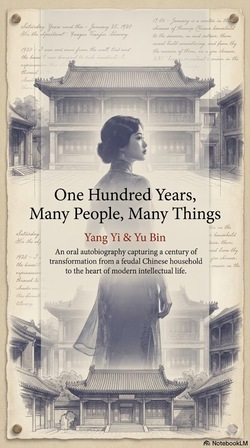
Yang Yi, a beloved Chinese translator and centenarian, invites readers into her extraordinary life in this intimate oral memoir. Born into a prominent aristocratic family in early 20th-century Tianjin, she recounts her sheltered yet constrained childhood, shaped by traditional family hierarchies and the shadow of her mother’s concubine status. Her journey takes a dramatic turn during the Sino-Japanese War, as she escapes her stifling home to study at the renowned Southwest Associated University in Kunming, where she befriends literary giants like Ba Jin and Shen Congwen, falls in love with fellow scholar Zhao Ruihong, and discovers her passion for translation. The memoir traces her post-war years in Chongqing and Nanjing, the joys and struggles of marriage and motherhood, and her later rise to fame for translating *Wuthering Heights* into Chinese. More than a personal story, it’s a vivid firsthand account of China’s turbulent 20th century, told with warmth, candor, and the sharp memory of a woman who lived through a century of change.

The Shadow of the Sun summary and key insights by Ryszard Kapuściński
Loading…

The Shadow of the Sun

Ryszard Kapuściński

4.5527 learners

For decades, Polish journalist Ryszard Kapuściński wandered across Africa, embedding himself in the continent’s rawest, most unfiltered moments—from Ghana’s triumphant independence to the horrors of the Rwandan genocide, from chaotic military coups to the quiet resilience of nomadic tribes. Rejecting Western stereotypes of a monolithic "Africa," he captures the continent’s dizzying diversity: the communal warmth of Ghanaian street life, the rigid clan rules of the Ashanti, the brutal legacy of colonial border-drawing, and the daily fight for survival amid famine, disease, and war. Through intimate encounters with leaders, rebels, and ordinary villagers, Kapuściński reveals Africa not as a land of despair, but as a place where ancient traditions clash with modern upheaval, where every hardship is met with unyielding spirit, and where the sun casts shadows holding untold stories of hope and suffering.