Best Books on Qing Dynasty

Qing Dynasty Total 8 books

1901: The Back View of an Empire summary and key insights by Wang Shuzeng
Loading…

1901: The Back View of an Empire

Wang Shuzeng

2.81276 learners

Set against the crumbling backdrop of late 19th-century China, *1901: The Back View of an Empire* pulls back the curtain on the Qing Dynasty’s final years, weaving intimate, untold stories into a vivid narrative of power, chaos, and quiet transformation. Starting with the 1899 medical exam of Emperor Guangxu—a small event that shattered the imperial court’s secrecy and exposed bitter power struggles between the emperor and Empress Dowager Cixi—the book traces the empire’s downward spiral: the catastrophic Sino-Japanese War rooted in systemic corruption, the failed Hundred Days’ Reform derailed by court intrigue, the rise of the Boxer Rebellion as a desperate outcry of impoverished peasants, and the brutal foreign invasion that led to the humiliating 1901 Boxer Protocol. Through vivid details—from Viceroy Yulu’s jade thumb ring symbolizing bureaucratic decay to Li Hongzhang’s grueling negotiations with foreign powers—author Wang Shuzeng captures the full complexity of the era: a dying empire clinging to tradition, while glimmers of modernity (Western clothing, women’s public speaking, telegraph technology) began to pierce the darkness. More than a history lesson, this book reveals how the chaos of 1901 laid the groundwork for China’s 20th-century transformation.
The Death of Woman Wang summary and key insights by Jonathan Spence
Loading…

The Death of Woman Wang

Jonathan Spence

4.1472 learners

Jonathan Spence’s *The Death of Woman Wang* pulls back the curtain on 17th-century rural China, using the remote Shandong county of Tancheng as a raw, intimate microcosm of chaos and resilience. Set against a relentless cycle of catastrophic earthquakes, brutal famines, warlord raids, and Qing Dynasty conquests, the book weaves together official gazettes, magistrate Huang Liuhong’s memoirs, and tales from Pu Songling’s *Strange Tales* to bring ordinary people’s struggles to life. At its core is the tragic story of Woman Wang, a young wife whose desperate elopement and eventual murder expose the suffocating constraints of gender norms, poverty, and familial violence in a society shattered by decades of crisis. Spence doesn’t just recount disasters—he explores how local officials fought to restore order, how widows clung to dignity amid systemic oppression, and how marginalized people navigated a world where survival often meant making impossible choices. This vivid narrative turns dry historical documents into a compelling portrait of human endurance, offering American readers a rare, unflinching look at a forgotten corner of early modern China.

Zeng Guofan's Family Letters summary and key insights by Zeng Guofan
Loading…

Zeng Guofan's Family Letters

Zeng Guofan

4.4903 learners

More than just personal correspondence, *Zeng Guofan's Family Letters* offers an intimate window into the life of one of the Qing Dynasty's most revered statesmen. Spanning decades, these letters cover every facet of Zeng's world: his struggles as a cash-strapped Beijing official, his grueling military campaigns against the Taiping Rebellion, and his unwavering guidance for his family on self-cultivation, academic pursuit, and household management. Zeng shares timeless wisdom—from the importance of frugality and humility to the value of persistence in learning and strategic caution in power. He emphasizes core principles like avoiding arrogance and laziness, adhering to the 'eight-character family motto' centered on scholarship and farming, and maintaining balance during times of success. For readers, these letters aren't just historical documents; they're a practical guide to navigating life, career, and family with integrity and foresight.

The Metabolism of Modern Chinese Society summary and key insights by Chen Xulu
Loading…

The Metabolism of Modern Chinese Society

Chen Xulu

3.8976 learners

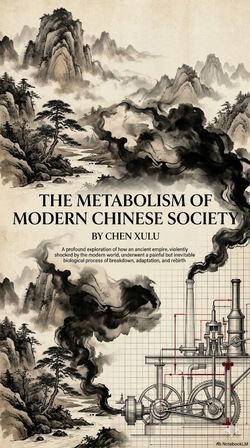
This book dissects the profound 'metabolism' of Chinese society from the late feudal era through the turbulent 19th and early 20th centuries. Starting with a deep dive into the rigid yet resilient structure of China’s 2,000-year feudal system—its small-scale peasant economy, centralized bureaucracy, and Confucian ideology—it contrasts China’s stagnation with Western Europe’s rapid capitalist rise. It then traces how the Opium War shattered the old order, triggering a cascade of transformations: the Taiping Rebellion’s challenge to feudal norms, the Self-Strengthening Movement’s tentative modernization efforts, the Hundred Days’ Reform’s push for institutional change, and the Xinhai Revolution’s overthrow of the monarchy. The narrative culminates in the New Culture Movement’s intellectual awakening and the eventual rise of Marxism, explaining how each wave of change interacted with foreign pressures and internal uprisings to reshape China’s social fabric. Packed with vivid historical details and sharp analysis, it reveals the complex, often contradictory forces that drove China’s transition from a traditional empire to a modern nation.

The Expensive Peace summary and key insights by Ji Chen
Loading…

The Expensive Peace

Ji Chen

3.5995 learners

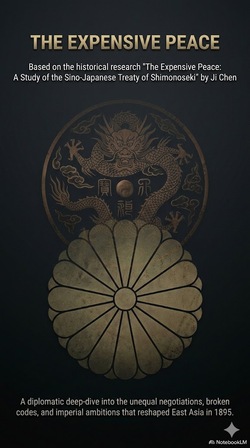
Dive into the tangled diplomacy, internal power struggles, and devastating aftermath of the First Sino-Japanese War in The Expensive Peace. Ji Chen unpacks the lead-up to the 1894 conflict, from the superficial cordiality between the Qing Dynasty and Meiji Japan to the eruption of war over Korea. The book lays bare the Qing court’s bitter divide between war hawks and peace advocates, tracking Li Hongzhang’s desperate, unauthorized attempts to avoid battle and the court’s fumbling efforts to seek foreign mediation as losses mounted. It chronicles the dramatic Shimonoseki negotiations—including Li’s assassination attempt that forced minor Japanese concessions—and the signing of the 1895 Treaty of Shimonoseki, which stripped China of Taiwan, the Liaodong Peninsula, and imposed crippling war reparations. Ji also explores the Three-Power Intervention that forced Japan to return Liaodong (for a hefty ransom) and the lasting scars of this 'expensive peace' on China’s national identity, urging readers to move beyond resentment to learn critical historical lessons.

Muskets and Ledgers summary and key insights by Li Boyong
Loading…

Muskets and Ledgers

Li Boyong

31303 learners

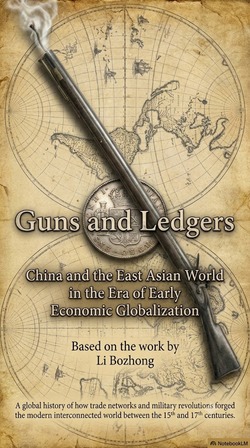
From the rise of global history as a field to the untold story of early economic globalization, *Muskets and Ledgers* redefines how we view pre-17th-century East Asia. Moving beyond traditional nation-state narratives, this book weaves together two powerful forces: the spread of firearm technology (the "muskets") and interconnected global trade networks built on silver and merchant enterprise (the "ledgers"). It debunks the myth of Ming-era Chinese isolationism, revealing China as the linchpin of early global commerce—by the 18th century, half the world’s silver flowed into its coffers. The text explores shifting East Asian cultural spheres, the crippling border crises facing the late Ming, and the mixed successes of its military reforms: innovations that later propelled the Qing Dynasty to dominance, only to stagnate and set the stage for 19th-century decline. Packed with vivid case studies, from the Manila Galleon trade to the Sino-Japanese Korean War, it offers a sharp, timely look at globalization’s dual nature of opportunity and conflict.

Life Like Morning Frost summary and key insights by Ke Lan
Loading…

Life Like Morning Frost

Ke Lan

3.81233 learners

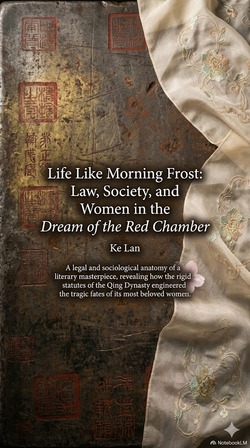
Life Like Morning Frost uses the unforgettable female characters from *Dream of the Red Chamber* as a lens to unpack the brutal realities of 18th-century Qing Dynasty China. From Zhen Yinglian (later Xiangling), a kidnapped girl sold into lifelong servitude, to Qin Keqing, a noble mistress trapped by scandal and patriarchal power, and the tragic You sisters, each woman’s story reveals how rigid social systems—unequal servant laws, forced marriage customs, collective punishment, and caste hierarchies—stripped women of autonomy, regardless of their class or talent. The book goes beyond literary analysis, diving into historical records and legal texts to show why even privileged women like Lin Daiyu and Xue Baochai couldn’t escape their fates, while marginalized figures like opera girls and servant wives faced even harsher cruelty. It’s a vivid, eye-opening exploration of how a deeply patriarchal society crushed countless lives, framing *Dream of the Red Chamber* as a searing critique of a broken system, not just a romance.

Autumn in the Heavenly Kingdom summary and key insights by Stephen R. Platt
Loading…

Autumn in the Heavenly Kingdom

Stephen R. Platt

4.2427 learners

Stephen R. Platt’s *Autumn in the Heavenly Kingdom* delivers a vivid, immersive account of the 19th-century Taiping Rebellion, one of China’s deadliest civil wars. At its core is Hong Rengan, cousin of Taiping leader Hong Xiuquan, whose escape from imperial forces led him to Hong Kong, where he absorbed Western political and scientific ideas. Upon joining the Taiping in Nanjing, he drafted the *Zizheng Xinpian*—a radical modernization blueprint advocating railroads, banks, and equal foreign relations. Platt masterfully interweaves Hong’s story with the tangled role of Western powers: British officials wavered between curiosity about the Taiping’s Christian-inspired ideology, neutrality, and eventual support for the Qing Dynasty to protect trade interests. The narrative also intersects with the Second Opium War, the burning of the Summer Palace, and the rise of Zeng Guofan, the scholar-warrior who led the Xiang Army to crush the rebellion. It reveals how foreign interference and internal strife reshaped China’s trajectory, setting the stage for decades of upheaval.