Best Books on Resilience

Resilience Total 8 books

Sensibel: Über moderne Empfindlichkeit und die Grenzen des Zumutbaren summary and key insights by Svenja Flaßpöhler
Loading…

Sensibel: Über moderne Empfindlichkeit und die Grenzen des Zumutbaren

Svenja Flaßpöhler

3.71004 learners

From medieval knights who ate with unwashed hands and embraced violence as a way of life to modern middle-class educators reworking language to center gender equity, *Sensibel* explores how human sensitivity has evolved over a millennium through Norbert Elias’s landmark civilizing process theory. This book unpacks the fiery debate between Nietzsche’s call for resilience and Levinas’s focus on vulnerable empathy, using real-world clashes—from #MeToo to political correctness wars—to illustrate both perspectives’ flaws. It delves into how trauma has shifted from physical pain to psychological distress, the double-edged power of language to empower marginalized groups or stifle free expression, and the hard limits of empathy that even the most well-meaning people can’t cross. Drawing on Tocqueville’s paradox, it argues that as society grows more equal, we fixate more intensely on remaining inequalities. Ultimately, it calls for a balanced middle ground: honoring our sensitivity to injustice while cultivating the resilience to act, avoiding both cold indifference and fragile overprotection.
Upside Down Years summary and key insights by Xu Xiaodi
Loading…

Upside Down Years

Xu Xiaodi

3.21071 learners

Upside Down Years is a raw, unflinching memoir by Xu Xiaodi that chronicles her coming-of-age amid China’s turbulent Cultural Revolution and its aftermath. From her childhood in Beijing—marked by lost opportunities, kind mentors, and the sudden cruelty of political upheaval—to her years as an educated youth (zhiqing) in the Inner Mongolia Production Corps, Xu lays bare the chaos, hardship, and quiet humanity of an era defined by ideological fervor. She grapples with guilt over betraying a beloved teacher, the trauma of family separation and political persecution, and the resilience of ordinary people who clung to kindness amid despair. Through intimate anecdotes of friends, teachers, and strangers, she illuminates how the "upside down" years shaped her identity, forcing her to confront the cost of conformity and the enduring power of memory. This memoir is not just a personal story; it’s a testament to the untold struggles of a generation silenced by history.

Floating Wood summary and key insights by Yang Benfen
Loading…

Floating Wood

Yang Benfen

3.1452 learners

Floating Wood, by Yang Benfen, delivers raw, intimate first-person narratives of life in rural China spanning decades. Through unflinching, vivid storytelling, it chronicles the author’s family’s brutal struggles: her mother’s relentless labor to raise six children, the heart-wrenching loss of infant brother Yang Rui to untreated illness, and her older brother’s persecution during the Cultural Revolution for standing against corruption. It also weaves in tales of neighboring villagers—from a disfigured mother who rejects her daughter to a childless woman’s tragic end—painting a rich portrait of ordinary people clinging to hope amid hardship. Later chapters shift to the author’s own journey: raising her kids through financial strain, caring for her ailing husband, and finding quiet joy in her golden years with her granddaughter and elderly partner. These stories aren’t just about suffering; they’re a testament to the quiet resilience, deep love, and unbreakable bonds that sustain people through life’s darkest tides.

Jane Eyre summary and key insights by Charlotte Bronte
Loading…

Jane Eyre

Charlotte Bronte

3.9657 learners

Jane Eyre, Charlotte Brontë’s timeless classic, follows the journey of a resilient orphan who defies the constraints of 19th-century society to claim her identity, equality, and love. From the cruel neglect at Gateshead Hall, where she’s abused by her aunt and cousins, to the harsh discipline of Lowood School, where she forges lifelong friendships and finds mentorship, Jane grows into a fiercely independent woman. As a governess at Thornfield Hall, she falls for the brooding Edward Rochester, only to discover a devastating secret that forces her to flee. Finding refuge at Marsh End, she reconnects with long-lost family and inherits unexpected wealth, yet her heart remains tied to Rochester. When she learns of Thornfield’s destruction and Rochester’s tragic fate, she returns to him, proving that true love is rooted in mutual respect and unwavering loyalty.

Learned Optimism summary and key insights by Martin E. P. Seligman
Loading…

Learned Optimism

Martin E. P. Seligman

4.3760 learners

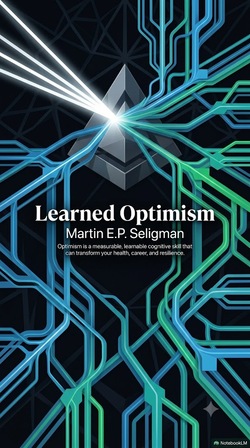
Based on decades of rigorous psychological research, Martin E.P. Seligman’s *Learned Optimism* unpacks the science behind how our explanatory styles shape every corner of our lives. Starting with his groundbreaking learned helplessness experiments with dogs, Seligman reveals that pessimism isn’t a fixed trait—it’s a habit we can unlearn. He breaks down the three core dimensions of explanatory style: permanence, pervasiveness, and personalization, explaining how pessimistic thinking fuels depression, limits professional and academic success, and even harms physical health. The book introduces evidence-based cognitive therapy techniques to reframe negative thoughts, using the practical ABCDE model to turn setbacks into growth opportunities. It also explores optimism’s real-world impact: boosting sales performance at MetLife, improving athletic outcomes, strengthening immune function, and even predicting U.S. presidential election results. Plus, it offers actionable strategies to teach optimism to kids and adults alike, positioning learned optimism as a critical antidote to the modern epidemic of depression driven by inflated self-awareness and eroding community ties.

Late Bloomers summary and key insights by Rich Karlgaard
Loading…

Late Bloomers

Rich Karlgaard

4.41285 learners

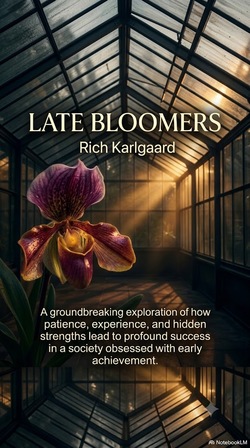
In a culture obsessed with "making it big by 30"—fueled by Forbes’ 30 Under 30 lists, SAT mania, and tech giants’ youth-focused hiring—Rich Karlgaard’s *Late Bloomers* dismantles the myth that early success equals lifelong achievement. He exposes the toxic toll of this hype: skyrocketing teen anxiety and depression, cutthroat college admissions arms races, and rampant age discrimination in the workplace. Drawing on neuroscience (the prefrontal cortex doesn’t fully mature until 25), psychology, and real-life stories—from Morgan Freeman to Geraldine Weiss—Karlgaard argues that late bloomers thrive because of their unique strengths: curiosity, empathy, resilience, and wisdom forged through life’s setbacks. He offers actionable strategies for breaking free from societal pressure: learning to strategically abandon unfit paths, managing self-doubt with self-compassion, and seeking environments that nurture your growth. This book is a rallying cry for anyone who feels left behind by the "success by 30" narrative, proving that your greatest achievements can come at any age when you embrace your own timeline.

The Protagonist summary and key insights by Chen Yan
Loading…

The Protagonist

Chen Yan

3.21035 learners

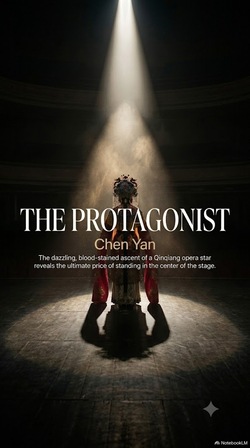
Follow Yi Qin’e, an 11-year-old mountain goat herder from rural China, as she clawed her way from a humble kitchen helper to a legendary star of Qin Opera—one of China’s oldest and most dramatic traditional art forms. Plucked from her village by her drum-playing uncle, she faces brutal training, petty theater politics, and devastating losses: her uncle’s wrongful imprisonment, a stage collapse that kills innocent lives, a disabled son, and toxic online attacks that smear her reputation. Through every setback, her unshakable devotion to her craft keeps her going, as she navigates love, betrayal, and the slow decline and eventual revival of the art she holds dear. This raw, sweeping story is a tribute to resilience, the cost of fame, and the enduring power of art to heal and connect.

Street of Eternal Happiness summary and key insights by Rob Schmitz
Loading…

Street of Eternal Happiness

Rob Schmitz

4.2799 learners

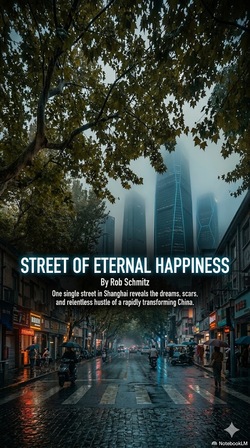
Stretching 2 miles through central Shanghai, Changle Road is a living microcosm of China’s dramatic transformation over the past century. Rob Schmitz weaves intimate portraits of ordinary residents whose lives intersect along this iconic street, revealing the human cost and resilience behind the nation’s rise. Meet CK, a former accordion seller turned café owner chasing artistic fulfillment amid city pressures; Zhao Shiling, a rural migrant who built a flower shop empire after escaping an abusive marriage and factory layoffs; “Mayor Chen,” a lifelong resident fighting to save his family’s shikumen home from forced demolition; and Aunt Fu, a retired worker drawn to church and risky get-rich-quick schemes. Through their stories, Schmitz unpacks pivotal forces shaping modern China: the hukou system’s grip on education and mobility, the clash between urban development and personal property rights, the allure and danger of unregulated capitalism, and the search for spiritual meaning in a materialistic era. Each narrative captures the tension between tradition and progress, individual dreams and systemic constraints, painting a vivid, unfiltered picture of life in one of the world’s fastest-changing cities.