Personal Growth Book Summaries & Key Insights

Personal Growth Total 55 books

Take Control summary and key insights by Zhang Zhanhui
Loading…

Take Control

Zhang Zhanhui

3.4510 learners

In a world where remote work distractions, back-to-back meetings, and blurred work-life lines leave most feeling drained and unmoored, *Take Control* is your actionable roadmap to reclaiming power over your days. Packed with real-world stories from Silicon Valley professionals, freelance creatives, and busy parents, author Zhang Zhanhui breaks down proven strategies to cut through chaos: from the time-block method that boosts productivity by 30%, to simple boundary-setting scripts for saying 'no' without guilt, and 5-minute emotion reset tricks to beat midday burnout. Unlike generic self-help books, this guide focuses on small, daily shifts that add up to lasting change—helping you hit career goals, make time for what matters, and stop feeling like you’re just treading water. Whether you’re stuck in a productivity rut or struggling to balance work and family, *Take Control* gives you the tools to take charge of your mindset, schedule, and future.
The User's Manual for Human Body summary and key insights by Wu Qingzhong
Loading…

The User's Manual for Human Body

Wu Qingzhong

3.41171 learners

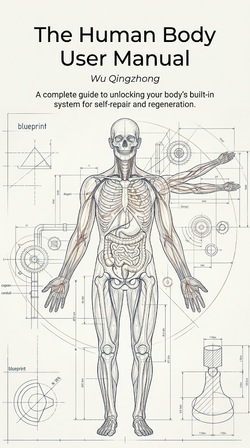
For decades, modern medicine has fixated on treating symptoms instead of root causes, leaving chronic conditions like diabetes, hypertension, and cancer effectively uncurable. In *The User's Manual for Human Body*, author Wu Qingzhong challenges this flawed approach by leveraging Traditional Chinese Medicine (TCM) principles to frame the body as an interconnected, self-sustaining system. He breaks down core concepts like blood qi (vital energy), meridians, and trapped cold, explaining how poor lifestyle choices and Western medical interventions disrupt the body’s natural balance. Wu shares practical, low-effort strategies—including tapping the gallbladder meridian, prioritizing early sleep, and massaging the pericardium meridian—to boost blood qi, clear blocked pathways, and eliminate lingering cold. The book also debunks common myths about obesity, insomnia, and chronic disease, offering a actionable roadmap to reclaim health without relying on lifelong medications. Whether you’re navigating a persistent condition or aiming to optimize wellness, this guide empowers you to work with your body’s innate wisdom rather than against it.

Complications summary and key insights by Atul Gawande
Loading…

Complications

Atul Gawande

4.41172 learners

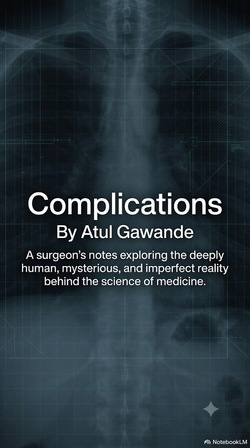
From fumbling his first central line placement to confronting the messy reality of medical error, Atul Gawande’s *Complications* pulls back the curtain on modern medicine through the eyes of a young surgical resident. This unflinching memoir blends raw personal anecdotes with rigorous analysis, exploring the gap between medicine’s polished public image and its chaotic, human core. Gawande delves into the brutal learning curve of surgical training—where trainees practice on real patients, grappling with guilt and self-doubt—and the systemic flaws that fuel medical mistakes, from overworked doctors to fragmented care. He examines the ethical tightrope of patient autonomy, the surprising value of autopsies in uncovering misdiagnoses, and the role of intuition alongside evidence-based medicine. Through stories of near-disasters, small triumphs, and profound moral dilemmas, Gawande reveals that medicine is not a perfect science but a practice rooted in humility, resilience, and the constant struggle to do better for those in our care.

Eat That Frog! summary and key insights by Brian Tracy
Loading…

Eat That Frog!

Brian Tracy

4.3913 learners

Brian Tracy’s *Eat That Frog!* is a timeless guide to beating procrastination and mastering time management, anchored by the vivid metaphor: if you eat a live frog first thing in the morning, nothing worse will happen the rest of your day. This means tackling your most critical, daunting task first to build momentum and wipe out overwhelm. Tracy lays out actionable, no-nonsense strategies to supercharge productivity: a 7-step goal-setting framework that turns vague wishes into concrete plans, leveraging the 80/20 Principle to focus on the 20% of tasks driving 80% of results, and the ABCDE prioritization system to sort tasks by urgency and impact. He also shares creative procrastination to cut low-value work, task breakdown techniques for large projects, and tips to balance productivity with personal well-being—prioritizing family, health, and rest to sustain long-term success. Packed with real-world examples and easy-to-implement steps, this book transforms how you approach each day, helping you build discipline, reduce stress, and achieve your biggest goals faster.

Out of the Darkest Hours summary and key insights by He Xulin
Loading…

Out of the Darkest Hours

He Xulin

3.71074 learners

Growing up in the dust-choked villages of rural Shaanxi, He Xulin’s life was shaped by hardship from the start: severe famines, a strict but loving father, and a mother who sacrificed everything to keep him alive. At 21, a tragic fall from a walnut tree left him paraplegic, trapping him in a small room and drowning him in despair. But with the unwavering care of his mother and sister-in-law, he turned to writing—his only escape. Starting with a 400-word fable published in 1980, he poured his rural roots, family bonds, and observations of Guanzhong’s legendary bandit culture into pages. His breakthrough came when his novel *Last Night’s Wind and Rain* was adapted into the hit TV series *Guanzhong Bandit Tales*, catapulting him to literary acclaim. This memoir traces his journey from a bedridden farm boy to a celebrated writer, highlighting how resilience, family love, and the power of words turned his darkest hours into a life of purpose.

Anti-Burnout Energy Station summary and key insights by Dao Xiong
Loading…

Anti-Burnout Energy Station

Dao Xiong

3.8708 learners

Fed up with the myth that willpower is the fix for every life struggle? *Anti-Burnout Energy Station* flips the script, arguing that sustainable success doesn’t come from forcing yourself to be "disciplined"—it comes from building a personalized energy system that works with your natural strengths. Packed with actionable, science-backed strategies, this book shows you how to break free from mental drain, stop energy leaks caused by phone addiction, and beat procrastination with tricks like the 5-second rule and snowball task method. You’ll learn to close task loops to recharge energy, leverage small wins to rebuild self-efficacy, and use external feedback to stay motivated. It also teaches you to identify unique energy triggers, protect your influence circle from draining environments, and shift from passive consumption to active creation. Whether you’re stuck in burnout, overwhelmed by inner chaos, or craving consistent motivation, this guide turns exhaustion into sustained, joyful productivity.

Penetrating Learning summary and key insights by Fang Jun
Loading…

Penetrating Learning

Fang Jun

4.2819 learners

Penetrating Learning is the ultimate playbook for adult learners fed up with “fake learning” cycles—buying courses, reading books, and walking away with zero actionable skills. Built on Joseph Campbell’s Hero’s Journey, it lays out a 3-stage “Learning Journey” framework: the Call (sparked by career demands or growth hunger), the Ordeal (navigating confusion and setbacks to master new knowledge), and the Return (applying skills to real-world tasks to close the loop). It breaks down why so many of us stall—either never starting our learning goals or quitting at the first hurdle—and shares actionable fixes: start with the least-resistance action, seek mentors, or narrow your focus to small, problem-solving loops. You’ll dive into micro-learning, a cycle that replaces the outdated “learn first, apply later” model with quick, problem-driven bursts. Packed with real-world examples from Andy Grove, Steve Jobs, and Mark Zuckerberg, this book also teaches you to build a personal knowledge system, use OKRs for learning plans, master deliberate practice, and achieve deep work, turning vague goals into measurable progress.

To Sell Is Human summary and key insights by Daniel H. Pink
Loading…

To Sell Is Human

Daniel H. Pink

4.41214 learners

In *To Sell Is Human*, Daniel H. Pink dismantles the outdated idea that selling is only for career salespeople, revealing that 8 out of 9 Americans engage in "non-sales selling" every day—persuading colleagues to collaborate, convincing funders to back projects, or even getting kids to stick to bedtime routines. He tracks the fall of traditional sales models (like Fuller Brush’s iconic door-to-door approach) as information parity transforms the marketplace, where buyers often know more about products than sellers do. Pink introduces the new ABCs of modern influence: Attunement (empathic perspective-taking), Buoyancy (resilience amid constant rejection), and Clarity (uncovering hidden needs instead of just solving stated problems). He also shares actionable strategies, from crafting concise, engaging pitches to using improvisational techniques for unscripted conversations, and emphasizes that service—improving others’ lives—is the ultimate key to authentic persuasion. This book redefines selling as a universal life skill, essential for success in both work and daily interactions.

Writing is a Craft summary and key insights by Liu Junqiang
Loading…

Writing is a Craft

Liu Junqiang

3.21305 learners

Writing Is a Craft tackles the frustrating gap between high school essay writing and college academic papers— a top source of stress for students and educators alike. It breaks down the core differences: essays are personal, formulaic, and exam-focused, while papers demand original arguments, rigorous evidence, and independent critical thinking. This book reframes writing not as an innate talent, but as a learnable skill, like driving or cooking, emphasizing mastery requires both explicit rules and silent knowledge (intuitive judgment built through consistent practice and targeted feedback). Covering a complete, practical training system, it guides readers through refining a "glass-like" clear writing style, using the hourglass method to narrow research questions, applying variable thinking for sharp analysis, structuring arguments with a tree-like framework, following the TAIMRDR academic paper structure, weaving narrative elements into scholarly work, and adopting a reader-centric approach. It equips students to transition from passive knowledge consumers to active creators, and gives professionals the tools to communicate ideas clearly and persuasively in the workplace.

Range summary and key insights by David Epstein
Loading…

Range

David Epstein

4.61191 learners

In *Range*, David Epstein dismantles the widely held belief that early, narrow specialization is the surefire path to success. Through riveting case studies—from the Polgár chess prodigies’ hyper-focused training to Nintendo’s game-changing 'lateral thinking with old technology' strategy—he explains why deep expertise only flourishes in predictable, 'kind' learning environments. For our complex, fast-paced modern world, however, generalists who embrace broad exploration, cross-domain learning, and slow, concept-driven education hold the critical edge. Drawing on psychology, economics, and real-world success stories, Epstein demonstrates that skills like analogical thinking, flexible problem-solving, and the ability to pivot between roles are far more valuable than hyper-specialization. He also critiques modern education systems that prioritize narrow expertise over transferable thinking, offering actionable insights for individuals and organizations to unlock creativity, make smarter decisions, and thrive amid uncertainty by cultivating range.

Essential Thinking summary and key insights by Soichi Yonezawa
Loading…

Essential Thinking

Soichi Yonezawa

3.6442 learners

Essential Thinking by Soichi Yonezawa is a practical, actionable guide to cutting through surface-level confusion and solving problems at their root. Starting with the critical link between precise language and sharp thinking, it explains how vague communication and unexamined assumptions derail personal and professional interactions. The book breaks down 9 common thinking traps—from mental laziness and cognitive distortion to emotional bias and responsibility avoidance—that keep people stuck in cycles of wasted effort. It then outlines 9 targeted strategies to escape these traps, such as zero-based thinking, layered root cause analysis, and introspection for emotional regulation. Yonezawa emphasizes that essential thinking isn’t about overthinking; it’s about building a healthy cycle of action, feedback, and intentional reflection. Packed with relatable workplace and daily life examples, this book equips readers to make smarter decisions, avoid unnecessary mistakes, and cultivate a habit of getting to the heart of every challenge.

The Value Mindset summary and key insights by Jiang Hushuo
Loading…

The Value Mindset

Jiang Hushuo

3.8852 learners

Tired of feeling boxed in by your background, education, or career path? The Value Mindset is your playbook for breaking free from limiting beliefs and building a life of sustainable growth, wealth, and impact. Drawing on relatable examples—from TikTok creators turning side hustles into full-time careers to Warren Buffett’s decades of value investing success—this book lays out actionable frameworks to rewire your thinking. You’ll learn to embrace the "third choice" instead of binary thinking, operate your life like a CEO with systematic self-management, master efficient reading and critical thinking, and turn passions into profitable ventures. It also demystifies value investing, teaching you to avoid cognitive traps and build a resilient portfolio. At its core, the book argues that the best investment you’ll ever make is in yourself: by prioritizing lifelong learning, compound growth, and creating real value for others, you’ll turn time into lasting wealth and purpose.

Lean In summary and key insights by Sheryl Sandberg
Loading…

Lean In

Sheryl Sandberg

4.4842 learners

Based on her journey as Facebook’s COO and decades of research, Sheryl Sandberg’s *Lean In* exposes the invisible barriers holding women back in the workplace. She dives into how internal self-doubt—like the pervasive imposter syndrome—and deep-seated societal biases push women to shrink themselves, avoid negotiation, and step back from career opportunities prematurely. Sandberg shares actionable strategies: leaning into confidence (even faking it till you make it), adopting a flexible "grid" career model instead of a rigid ladder, communicating authentically, and building equal partnerships at home. She also calls on women to stop staying silent about gender inequality and on men to become allies, arguing that true progress happens when everyone can thrive without being boxed in by gender expectations. Packed with relatable anecdotes and data-backed insights, this book is a rallying cry for women to own their power and build a more equitable world.

Essentialism summary and key insights by Greg McKeown
Loading…

Essentialism

Greg McKeown

3.71210 learners

Essentialism: The Disciplined Pursuit of Less by Greg McKeown redefines success not as doing more, but as focusing on what truly matters. McKeown dismantles three pervasive non-essentialist myths: "I have to do everything," "All tasks are equally important," and "I can have it all." He introduces three core truths that free readers from mindless busyness: choosing your own priorities, recognizing only a small fraction of work drives meaningful impact, and accepting you can excel at anything but not everything. The book outlines an actionable three-step process—Explore, Eliminate, Execute—to help readers identify their "Personal Contribution Peak," gracefully say "no" to non-essential demands, and design systems (like buffers, routines, and decision frameworks) to make important work effortless. Packed with real-world examples, from his own law school dropout decision to Warren Buffett’s investment strategy and Southwest Airlines’ focused business model, McKeown shows how embracing "less, but better" leads to greater control, clarity, and a life aligned with your deepest values.

Emma summary and key insights by Jane Austen
Loading…

Emma

Jane Austen

4.3626 learners

Set in the cozy village of Highbury, Jane Austen’s *Emma* follows sharp-witted, privileged Emma Woodhouse—who’s convinced she’s a master matchmaker. After her beloved governess marries, Emma takes sweet, uncertain Harriet Smith under her wing, determined to pair her with the charming Mr. Elton. But her carefully laid plans collapse when Elton reveals his true affection is for Emma, not Harriet, forcing her to confront her blind spots and overconfidence. As Emma navigates awkward social mishaps, the delayed arrival of Frank Churchill, and the quiet grace of Jane Fairfax, she learns meddling in others’ lives isn’t as easy as she thought. Through her clashes with the grounded Mr. Knightley and growing self-awareness, Austen weaves a warm, witty tale about love, class, and the humbling journey of realizing you don’t have all the answers.

Haidilao You Can't Learn summary and key insights by Huang Tieying
Loading…

Haidilao You Can't Learn

Huang Tieying

4.4500 learners

Haidilao You Can't Learn pulls back the curtain on how a humble Sichuan hot pot chain became a global service icon—revealing why its success is nearly impossible to copy. Founder Zhang Yong didn’t rely on rigid standardization; instead, he built a culture rooted in treating frontline staff like family. Unlike most restaurant workers who cram into basements, Haidilao employees live in city apartments with cleaning services, have access to subsidized childcare, and even get monthly stipends sent directly to their parents. Zhang’s radical trust in his team lets even entry-level servers comp dishes or waive bills for unhappy guests. The book dives into real stories: from a manager who faced down 60 armed thugs to protect her store, to a former kitchen worker who rose to run 6 locations. It also explores Haidilao’s growing pains—like scaling challenges with its apprenticeship model—and why competitors fail when they only mimic surface-level services, not the human-centric values at its core.

Designing Your Life summary and key insights by Bill Burnett;Dave Evans
Loading…

Designing Your Life

Bill Burnett;Dave Evans

4.3947 learners

Based on Stanford’s beloved life design course, *Designing Your Life* delivers a practical, actionable framework to help you break free from stagnation, reframe unchangeable "gravity problems," and escape self-imposed "anchor problems." It guides you to assess your life holistically using the HWPL Dashboard (Health, Work, Play, Love), craft aligned workviews and lifeviews, and leverage flow states to uncover your true passions. The book introduces transformative tools like the Odyssey Plan (three distinct 5-year life visions), low-risk prototyping experiences to test paths without overinvesting, and strategies to tap into hidden job markets. It also teaches multi-perceptual decision-making to make confident choices and an "infinite game" mindset to embrace failure as growth fuel. Whether navigating career transitions, seeking work-life balance, or redefining purpose, this book turns abstract self-discovery into concrete steps to build an authentic, fulfilling life tailored to you.

Getting Things Done summary and key insights by David Allen
Loading…

Getting Things Done

David Allen

4.11241 learners

Feeling swamped by endless tasks, overflowing inboxes, and constant mental clutter? David Allen’s *Getting Things Done* (GTD) is the game-changing system designed to help you break free from overwhelm and achieve stress-free productivity. Rooted in proven psychological principles, GTD teaches you to offload every unfinished task from your mind into a reliable external system, freeing up mental space for deep thinking and creativity. The system’s core lies in five interconnected horizontal stages—Capture, Clarify, Organize, Review, and Act—that guide you from collecting every loose thought to taking intentional, focused action. It also includes a vertical natural planning model for tackling complex projects, plus a six-level framework to align daily actions with long-term goals and values. Whether you’re a busy professional juggling deadlines, a parent balancing work and family, or anyone craving more control over their days, GTD provides actionable steps to turn chaos into calm, ensuring you always know exactly what to do next.

Radical Focus summary and key insights by Christina Wodtke
Loading…

Radical Focus

Christina Wodtke

4.2596 learners

Follow the rollercoaster journey of TeaBee, a startup founded by tea-obsessed entrepreneurs Hannah and Jack, as they navigate early-stage business chaos and discover the transformative power of OKR (Objective and Key Results). When internal conflicts, misaligned priorities, and stagnant growth threaten to derail their dream, veteran investor Jim Frost introduces them to the radical focus framework that saved Intel from collapse. Through trial and error—from botched initial OKR implementations to refining their approach with a single core goal, measurable key results, and weekly accountability check-ins—TeaBee evolves from a disjointed team into a high-performing unit that hits bold targets, secures funding, and stays true to its mission. Packed with real-world startup stories, actionable strategies, and Silicon Valley insights, this book teaches you to cut through noise, align your team, and turn ambitious goals into tangible results, whether you’re leading a startup or a corporate team.

The Power of Habit summary and key insights by Charles Duhigg
Loading…

The Power of Habit

Charles Duhigg

4.5905 learners

In The Power of Habit, Charles Duhigg demystifies the hidden forces shaping our daily lives by unpacking the neural and psychological mechanisms behind habits. Drawing on groundbreaking neuroscience experiments, real-world case studies—from Starbucks’ willpower training programs to Alcoa’s safety-driven corporate turnaround—and compelling human narratives, Duhigg breaks down the core habit loop: cue, routine, reward, and the critical role of craving in cementing automatic behaviors. He outlines a proven framework for rewriting bad habits by retaining cues and rewards while replacing harmful routines, and explains how "core habits" trigger cascading positive changes across personal, professional, and organizational spheres. The book also explores how organizational habits can fuel growth or spark crisis, how social habits drove movements like the Montgomery Bus Boycott, and the ethical questions surrounding responsibility for habit-driven actions. Whether you’re aiming to overhaul personal routines, lead team change, or understand societal shifts, this book equips you to harness habit power for lasting transformation.