



Thorp proves that math beats emotion, showing how probability tracking helps investors avoid losses.
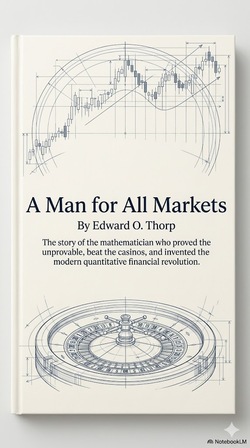
Your Review
Thorp proves that math beats emotion, showing how probability tracking helps investors avoid losses.

Thorp shows how counting cards in blackjack teaches us to track market odds, adjust our bets based on data, and avoid emotional decisions that ruin our wealth over time.

Thorp proves that counting probabilities, not luck, builds sustainable wealth by applying blackjack logic to stock markets and avoiding emotional traps during crashes, making complex quant strategies accessible for everyday investors to spot mispriced assets and manage risk without needing a PhD or millions in capital, ultimately showing that disciplined risk control and evidence-based choices can protect your money even when the market crashes. The book is a powerful reminder that every financial choice is a probability game where tracking metrics like P/E ratios helps you adjust your bets based on data rather than fear or greed, allowing you to turn chaos into opportunity by staying calm and following the math instead of the hype. His story of turning blackjack into a solvable math problem and then applying the same principles to Wall Street demonstrates that anyone can take control of their finances by thinking like a mathematician, ditching gut feelings for hard data to build a resilient portfolio that survives any market cycle.

Thorp proved that counting cards in blackjack and tracking market probabilities can beat the house, turning gambling into a solvable math problem where discipline and data replace luck, allowing anyone to manage risk by adjusting bets based on odds rather than emotions, which I found revolutionary for understanding how to avoid catastrophic losses in both casinos and on Wall Street by sticking to evidence-based strategies instead of chasing hot streaks or trusting gut feelings that often lead to ruin when markets crash.

I felt the chapter on spotting Madoff's fraud by checking for independent audits was the most practical lesson for avoiding scams without needing a finance degree or expensive tools.

The blackjack counting section helped me understand market probabilities better, showing how tracking data beats guessing when making financial decisions, which feels empowering for everyday investors trying to avoid emotional mistakes during volatile times instead of chasing quick wins based on gut feelings alone.
Thorp's stress testing method helps me prepare for market crashes before they happen.

Thorp's blackjack math logic helps me see stock risks clearly now.

Simple math rules for investing.

Thorp's math approach to investing really changed how I see risk.

This book showed me how to calculate the real odds before making big life choices like changing careers.

Thorp transforms gambling math into investing wisdom, teaching me to track probabilities like a card counter instead of chasing gut feelings for sustainable wealth.

Thorp explains how counting probabilities in blackjack taught him to manage risk on Wall Street, showing that avoiding emotional decisions and sticking to data-driven strategies like checking independent audits and maintaining liquidity buffers allows everyday investors to protect their capital from market crashes and scams without needing a PhD or millions of dollars to start building sustainable wealth through disciplined risk management rather than chasing hot tips or trusting gut feelings over hard evidence.

The guaranteed return claims in this book felt unrealistic to me.

I felt the book was too focused on complex quant strategies that felt hard to apply for someone just starting out with regular investing and limited math skills.

Thorp transforms complex probability theory into actionable life lessons, proving that disciplined math beats emotional gambling in both casinos and markets. His detailed breakdown of converting blackjack counting systems into investment strategies, like using P/E ratios as a running count to spot undervalued assets, makes sophisticated quant concepts accessible for everyday investors without needing a PhD or expensive software. By emphasizing risk-adjusted betting and stress-testing portfolios against worst-case scenarios, he offers a practical framework to protect capital during inevitable crashes rather than chasing risky hot streaks. This book successfully bridges the gap between casino mathematics and sustainable wealth building, showing how evidence-based decisions rooted in data can help anyone avoid scams and make smarter choices regardless of market volatility. Ultimately, Thorp's legacy is not just about beating the house but empowering readers to think like mathematicians instead of gamblers.

Thorp proved that math beats emotion in investing, and his blackjack counting story makes it easy to understand complex probability concepts without needing advanced degrees or complex formulas. His clear explanation of how to adjust bets based on changing odds inspired me to stop chasing hot stocks and start tracking data instead. The section on avoiding scams like Madoff's was especially useful because it taught me to always verify audits and trade confirmations before trusting any investment promise that sounds too good to be true. This book shifted my focus from guessing market trends to building a disciplined, evidence-based approach that protects my capital while allowing steady growth through compound interest rather than risky speculation. I appreciate how he breaks down complex financial strategies into simple steps anyone can follow, making quant investing accessible to everyday people who just want to build wealth safely.

Thorp's math mindset changes how I view money.

The idea of tracking market metrics like a card counter feels overwhelming for beginners.

I learned how to calculate expected value for big life choices like career changes.