


Harford explains how trial and error beats rigid planning using clear examples like the Spitfire and Iraq war, showing why we must embrace messy adaptation.
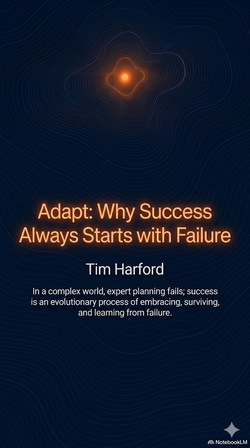
Your Review
Harford explains how trial and error beats rigid planning using clear examples like the Spitfire and Iraq war, showing why we must embrace messy adaptation.


The book argues that tight systems need safeguards, while loose ones should use trial and error to find better solutions.

Harford argues top-down planning fails in complex systems like Iraq, where rigid orders ignored local realities, causing chaos until leaders decentralized control to let frontline troops experiment and adapt tactics based on immediate feedback instead of following a flawed centralized blueprint that couldn't handle unpredictable sectarian tensions or shifting ground conditions.

This book changed how I see rigid plans and complex systems.

Harford uses the Spitfire story to show how trial and error beats perfect top-down planning in unpredictable environments, making his argument about decentralized experimentation and the limits of expert control very clear and convincing throughout the book, ultimately helping me understand why rigid strategies often crumble when faced with messy reality instead of just relying on data or intuition to solve complex problems like war or business failures where small local experiments and learning from mistakes are essential for true success and adaptation.

This book changed how I view planning and failure.

The guppy story illustrates how trial and error drives adaptation in nature, showing that bright colors fail under predators while dull ones survive, proving that messy experimentation beats perfect planning.

This book taught me that rigid plans often fail when the world gets unexpectedly complex.

This book changed how I view failure as a necessary tool for learning instead of something to avoid when trying to solve difficult problems in business or life.

This book changed my mindset about failure and adaptation.

Good read but I still struggle to fully trust plans.
The guppy experiment explains adaptation in a simple way.

The book explains how loosely coupled systems like markets thrive on trial and error while tightly coupled ones like banks need safeguards to prevent cascading failures from small mistakes.

Harford explains how small mistakes help us learn better.

Sometimes plans just do not work as expected.

Harford brilliantly explains why rigid plans fail in complex systems like the Iraq war, proving that decentralized trial and error is the only real path to success.

This book argues that trial and error is necessary for success in complex systems where top-down planning often fails due to human cognitive limits and structural flaws in hierarchies, leading to the illusion of control that harms outcomes like the Iraq war or corporate strategies, while suggesting decentralization and tolerance for failure as better paths for loosely coupled systems though tightly coupled ones need safeguards.

The Iraq story shows why rigid plans fail against chaos.

Thought-provoking with room for debate. Thumbs up.
Harford explains how rigid top-down plans often collapse when faced with unpredictable real-world variables, using clear examples from military history and business to show that embracing small, managed failures is actually the most reliable way to navigate complex systems. Instead of clinging to the illusion of control through detailed spreadsheets or expert predictions, we need to build organizations that allow local actors to experiment and adapt in real time, turning what feels like setbacks into essential data points that refine our strategies until they finally work in the messy, evolving environment we all inhabit.