Others Book Summaries & Key Insights

Others Total 155 books

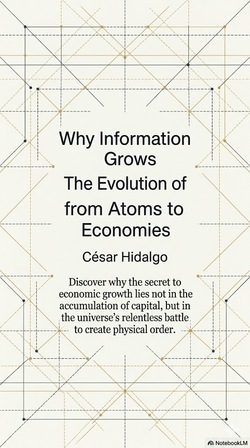
Why Information Grows summary and key insights by César Hidalgo
Loading…

Why Information Grows

César Hidalgo

3.9537 learners

Drawing from a pivotal moment waiting for his daughter’s birth, César Hidalgo redefines information not as data, but as the physical order that shapes matter—from a baby’s blanket to a $2.5M Bugatti Veyron. Blending Boltzmann’s entropy theory with Shannon’s information science, he unpacks why ordered states are rare and how they resist the universe’s drift toward chaos. Beyond physics, Hidalgo explores the social and economic engines of information growth: how human imagination turns ideas into tangible products, how tacit knowledge and social networks constrain or enable technical progress, and why global inequality stems from uneven access to these knowledge networks. Introducing the Economic Complexity Index, he reveals how a region’s ability to build and leverage interconnected technical expertise predicts long-term prosperity. This book bridges physics, economics, and sociology to offer a radical new framework for understanding how information drives civilization’s evolution.
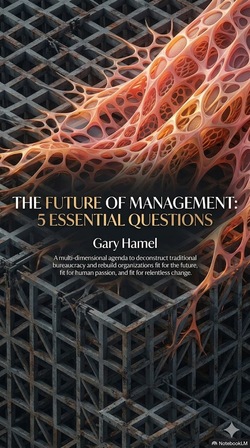
What Matters Now summary and key insights by Gary Hamel
Loading…

What Matters Now

Gary Hamel

4.31025 learners

In an era of widespread business distrust, rapid technological upheaval, and high-profile moral failures—from the 2008 subprime crisis to scandals like Enron and Bernie Madoff’s Ponzi scheme—Gary Hamel’s *What Matters Now* delivers an urgent blueprint for reinventing modern organizations. Spanning five core pillars—values, innovation, adaptability, passion, and human-centric management—this book uses real-world case studies to dismantle the outdated, control-focused hierarchical systems that stifle growth and trust. Hamel highlights how trailblazers like Apple thrive by embedding bold values and design thinking, how W.L. Gore and Morningstar redefine success with self-managed teams, and how stagnant giants collapse due to organizational entropy and strategic complacency. He argues that lasting success demands prioritizing moral leadership, fostering relentless innovation, building agile organizations that adapt to change, igniting employee passion by putting people first, and dismantling bureaucratic barriers to empower every team member. This isn’t just a management guide; it’s a call to rebuild business on principles of integrity, creativity, and human dignity.

Richer, Wiser, Happier summary and key insights by William Green
Loading…

Richer, Wiser, Happier

William Green

4.2504 learners

In *Richer, Wiser, Happier*, William Green pulls back the curtain on the minds of legendary investors like Monish Pabrai, John Templeton, and Howard Marks, revealing that lasting financial success isn’t about flashy innovation or market timing—it’s about mastering timeless principles. Through gripping real-life stories, Green breaks down how these pros built their fortunes by emulating proven wisdom (not reinventing the wheel), embracing contrarian thinking to buy when others panic, and prioritizing long-term value over short-term gains. But the book goes beyond investing: it explores how these same principles—discipline, emotional control, delayed gratification—translate to a fulfilling life. From Pabrai’s radical honesty during market crashes to Templeton’s unshakable faith guiding his bold bets, and from Bezos’ obsession with long-term cash flow to Arnold Van den Berg’s commitment to using wealth for good, Green shows that true richness combines financial security, clear judgment, and a life rooted in purpose.

Review summary and key insights by Qiu Zhaoliang
Loading…

Review

Qiu Zhaoliang

3.4887 learners

Derived from the Go term for post-game analysis, 'Review' has evolved into a structured, evidence-based method for turning past experiences into actionable growth—for both individuals and organizations. Popularized by Lenovo founder Liu Chuanzhi, this framework goes beyond generic work summaries: it requires teams to revisit goals, compare actual outcomes, dig into root causes of gaps, and translate lessons into concrete next steps. Unlike routine summaries that focus on performance bragging, Review prioritizes learning, collaborative discussion, and factual accuracy. Drawing on real-world examples from the U.S. military’s After-Action Reviews (AAR), British Petroleum’s project post-mortems, and Lenovo’s decades of corporate practice, this book breaks down how to implement Review across personal tasks, team activities, large-scale projects, and strategic planning. It addresses common misconceptions, provides step-by-step guides, and shows how to embed Review into company culture to build a self-improving learning organization that avoids repeating mistakes and drives consistent performance gains.

No Rules Rules summary and key insights by Reed Hastings;Erin Meyer
Loading…

No Rules Rules

Reed Hastings;Erin Meyer

4.4581 learners

From a $40 late fee that sparked a revolution to navigating the 2001 dot-com bust, Reed Hastings and Erin Meyer pull back the curtain on Netflix’s unconventional corporate culture in *No Rules Rules*. This book breaks down how Netflix built its global streaming empire by prioritizing extreme talent density—cutting underperformers to assemble a team of high-caliber innovators who thrive on mutual accountability. It dives into core practices like radical transparency, the 4A feedback framework, unlimited paid time off, and ditching rigid expense approvals, all rooted in the belief that trust and responsibility outperform red tape. Packed with real-world anecdotes, this playbook shows how freedom paired with clear context drives unprecedented innovation, making it a must-read for leaders and anyone looking to reimagine workplace dynamics.

Adapt summary and key insights by Tim Harford
Loading…

Adapt

Tim Harford

3.91078 learners

Tim Harford’s *Adapt* dismantles the myth of top-down perfection, arguing that trial and error—not rigid plans—is the driving force behind progress in complex, uncertain worlds. Drawing on vivid examples from biology, economics, military strategy, and innovation, Harford shows how spontaneous order (as Hayek theorized) and iterative testing solve problems that experts and leaders can’t. From the 'toaster project' exposing global supply chain complexity to General McMaster’s successful decentralized tactics in Iraq, from Muhammad Yunus’s iterative microfinance breakthroughs to the risky bet that spawned the Spitfire fighter plane, the book demonstrates that failure isn’t a setback—it’s critical data. It also warns of the dangers of tight-coupled systems (like banks and nuclear plants) where mistakes cascade into catastrophe, advocating for loose coupling and structured experimentation. For individuals, Harford explores how to overcome cognitive biases that deny failure, embracing 'ordered diversity' to adapt and thrive.

Content is Brand summary and key insights by Liu Fei
Loading…

Content is Brand

Liu Fei

3.3440 learners

Content is Brand is a practical playbook for creators aiming to turn their work into a sustainable, trusted brand—no viral luck required. Drawing on real-world insights from top creators like Banfo and Jiang Dora, this book breaks down core principles to build content that resonates and lasts. It starts with three frameworks to judge content value: centering user needs (not creator ego), prioritizing long-term impact over fleeting trends, and crafting content that connects emotionally and functionally. You’ll learn to find your niche by blending strengths and passions, avoid pitfalls like the "quarter trap" (overestimating your output quality), and launch with a minimum viable content version to iterate quickly. The book also covers choosing the right platform, refining work through user-focused reviews, building trust via consistent output, and navigating monetization paths that don’t erode audience loyalty. Whether you’re new or experienced, this guide gives actionable strategies to cut through noise, build lasting connections, and turn content into an enduring, valuable brand.

The Compound Effect summary and key insights by Darren Hardy
Loading…

The Compound Effect

Darren Hardy

4.41134 learners

The Compound Effect by Darren Hardy demystifies how tiny, consistent choices—when multiplied over time—create exponential results that shape every area of your life. Hardy uses relatable, eye-opening examples: the classic penny-doubling experiment that outpaces $3 million in 31 days, the stark life differences between two men making daily small choices, and a former paycheck-to-paycheck assistant who built a seven-figure career starting with saving $33 a month. Beyond the math, he breaks down actionable frameworks: taking 100% ownership of your choices to escape unconscious decision traps, replacing bad habits with intentional routines, building unstoppable momentum (the "Big Mo") through daily discipline, curating your circle to amplify growth, and accelerating results with extra effort that exceeds expectations. This book isn’t just about financial growth—it’s a blueprint for leveraging delayed gratification and long-term consistency to transform your health, career, relationships, and overall well-being.

Just Keep Buying summary and key insights by Nick Maggiulli
Loading…

Just Keep Buying

Nick Maggiulli

4.4987 learners

Just Keep Buying dismantles the rigid, one-size-fits-all financial advice that plagues American savers and investors, offering a flexible, evidence-based approach to building long-term wealth. Drawing on decades of U.S. economic data, author Nick Maggiulli debunks myths like the "20% savings rule" and "cutting lattes to get rich," emphasizing that income volatility and individual circumstances make fixed rules impractical. He guides readers through smart strategies: saving what you can without guilt, using the "50% raise rule" to balance current spending and future goals, leveraging debt strategically when it reduces risk or boosts returns, and simplifying retirement planning with tools like the 4% rule. For investing, Maggiulli advocates for index funds over stock picking, warns against market timing, and explains how to optimize tax-advantaged accounts. Finally, he underscores that time is your most valuable asset—prioritizing career growth and long-term consistency over quick wins leads to lasting financial security and life satisfaction.

Evicted summary and key insights by Matthew Desmond
Loading…

Evicted

Matthew Desmond

4.3980 learners

Based on years of immersive fieldwork in Milwaukee’s poorest neighborhoods, Matthew Desmond’s *Evicted* lays bare the brutal cycle of housing insecurity gripping America’s low-income families. Following landlords like Sherrena, who turns blighted properties into profit centers by exploiting tenant desperation, and tenants such as Arleen, a single mother bouncing from shelter to unsafe apartment, Desmond exposes how eviction isn’t just a consequence of poverty—it’s a driver of it. He documents the cascading harm: lost jobs, shattered mental health, disrupted childhoods, and fractured communities where trust and stability vanish overnight. More than a collection of heartbreaking stories, *Evicted* is a searing sociological analysis that challenges the myth of individual failure, revealing how broken housing policies and predatory practices trap families in endless hardship. It sparked a national conversation about housing as a fundamental human right, pushing for reforms like expanded rental vouchers and tenant legal aid to dismantle systemic barriers keeping millions without stable homes.

Kawaru Chikara summary and key insights by Toshifumi Suzuki
Loading…

Kawaru Chikara

Toshifumi Suzuki

3.91019 learners

In 'Kawaru Chikara' (The Power of Change), Toshifumi Suzuki, the visionary behind 7-Eleven, shares his decades of retail wisdom and the transformative journey of building a global convenience empire. Starting from his early days at a publishing company, Suzuki’s career shifted to retail when he joined Ito-Yokado, where he challenged industry norms to launch Japan’s first true convenience store in 1974. He pioneered game-changing strategies: dense store placement to boost brand recognition and logistics efficiency, joint distribution to cut delivery costs, and 'item management'—a data-driven 'hypothesis-execution-verification' cycle to match inventory with customer demand. Beyond 7-Eleven, Suzuki led bold cross-industry moves, like founding Seven Bank to meet customers’ urgent cash needs, and restructured the 7&I Group to unify diverse retail formats. When he acquired the struggling U.S. 7-Eleven parent company, he reversed its decline by empowering frontline staff with ordering autonomy and applying Japanese retail principles. Throughout, Suzuki emphasizes that success comes not from following conventions, but from prioritizing customer needs, embracing change, and never compromising on quality—lessons that redefined global retail.

The Danaher Way summary and key insights by Yang Yi;Chen Chaowei
Loading…

The Danaher Way

Yang Yi;Chen Chaowei

4.2782 learners

Dive into the playbook that turned Danaher from a small industrial firm into a global powerhouse with The Danaher Way. This book breaks down the iconic Danaher Business System (DBS)—the operational framework driving relentless improvement, cross-functional alignment, and consistent results across every subsidiary. It pulls back the curtain on how Danaher executes strategic mergers, integrating acquired companies into its culture without losing their core strengths, and shares actionable tools for leaders to embed lean thinking, data-driven decision-making, and a culture of continuous learning into their own teams. Whether you’re a startup founder, mid-level manager, or Fortune 500 executive, this guide offers real-world insights to streamline operations, boost productivity, and build a business that thrives through market shifts and growth phases.

The Rational Optimist summary and key insights by Matt Ridley
Loading…

The Rational Optimist

Matt Ridley

4.4673 learners

In *The Rational Optimist*, Matt Ridley dismantles nostalgic myths and doomsday prophecies to make a compelling case that we’re living in humanity’s best era—and it’s only getting better. Drawing on centuries of historical data, archaeological evidence, and economic analysis, Ridley argues that human progress isn’t a fluke: it’s driven by our unique ability to trade, specialize, and share ideas, creating a 'collective brain' that fuels endless innovation. He debunks claims that the past was simpler or more moral, highlighting how even today’s global poor enjoy comforts 19th-century billionaires could only dream of. From the rise of agriculture to the industrial revolution, from falling global poverty rates to improving environmental health, Ridley shows how exchange and division of labor have lifted living standards across the globe. He addresses critics’ biggest concerns—Africa’s development challenges and climate change—arguing that with better institutions, free trade, and continued innovation, these issues can be solved without sacrificing prosperity. A refreshing counterpoint to pervasive pessimism, this book celebrates human ingenuity and the power of market-driven progress.

Game Theory summary and key insights by Wang Chunyong
Loading…

Game Theory

Wang Chunyong

3.3606 learners

This practical guide to game theory unpacks how strategic decision-making shapes every corner of life—from U.S. plea bargains and corporate price wars to workplace negotiations and family dynamics. It demystifies core concepts like Nash equilibrium, the Prisoner’s Dilemma, and mixed strategies, using relatable real-world examples and classic models to explain how interdependent choices drive outcomes. You’ll learn to identify the four key elements of any game (players, resources, strategies, information), navigate common dilemmas like zero-sum vs. non-zero-sum games, and apply actionable tactics—from tit-for-tat cooperation to minority strategies—to make smarter, more rational decisions. Whether you’re aiming to outthink competitors, strengthen personal relationships, or understand global events, this book turns abstract game theory into accessible insights for everyday success.

Hidden America summary and key insights by Jeanne Marie Laskas
Loading…

Hidden America

Jeanne Marie Laskas

4.41081 learners

Jeanne Marie Laskas pulls back the curtain on America’s invisible backbone in *Hidden America*, taking readers on immersive, on-the-ground journeys with unsung workers who power daily life. From Ohio’s coal mines, where miners risk collapse and methane explosions to fuel half the nation’s electricity, to Maine’s blueberry fields, where migrant laborers harvest the state’s iconic fruit while navigating immigration fears, Laskas spends months living alongside these communities. She debunks stereotypes: NFL cheerleaders hold construction jobs to make ends meet, air traffic controllers work in crumbling towers to keep skies safe, and Alaskan oil rig workers find redemption in the frozen north. Each story captures raw humanity—pride in labor, struggles with loss, and quiet resilience—while highlighting the cultural divides and shared bonds that define these overlooked groups. This book is a powerful reminder of the people we pass by every day, whose unseen work sustains our homes, tables, and freedoms.

Protagonist Mode summary and key insights by Fan Deng
Loading…

Protagonist Mode

Fan Deng

3.2490 learners

"Protagonist Mode" is a no-fluff playbook for ditching passive, "waiting to be saved" mindsets and stepping into intentional growth—for both individuals and leaders. Fan Deng breaks down the hidden traps holding you back: confirmation bias that locks your beliefs in closed loops, the "learning paradox" that keeps you stuck in your comfort zone, and the "ordinary person paradox" that limits your potential with self-imposed limits. Using relatable stories—from character actor Lin Xue’s decades-long rise to Dong Yuhui’s career shift from teacher to top streamer—he shows growth isn’t a copyable linear path; it’s a unique, iterative journey rooted in your own experiences. For leaders, the book lays out critical qualities (optimism, humility, fairness) and actionable tools like the GROW Model, 10x Better thinking, and intentional boundaries to unlock team creativity and drive collective success. At its core, it’s about embracing self-responsibility: becoming the author of your own story, not a side character in someone else’s.

Soft Skills summary and key insights by Wan Weigang, Wu Jun, Xiang Shuai, and 27 others
Loading…

Soft Skills

Wan Weigang, Wu Jun, Xiang Shuai, and 27 others

3.4475 learners

Soft Skills redefines success in today’s AI-driven, fast-changing world, moving beyond generic communication tips to deliver actionable frameworks for personal and professional growth. Co-authored by Luo Zhenyu and Tuobuhua, this book breaks down critical soft skills into practical strategies: cultivating ambition to escape mediocrity, building strategic networks with experts, and developing vision to spot hidden trends. It explores probability-based decision-making to reduce cognitive biases, self-directed learning by “reading life’s manuals,” and non-authoritative leadership that drives impact in large organizations. Packed with real-world examples—from a father’s self-taught medical research to Marshall’s legendary leadership—it also offers tools like the relationship quadrant model to navigate workplace dynamics, intimate partnerships, and social interactions. Soft Skills equips readers with adaptable skills to thrive in career transitions, resolve conflicts, and build lasting influence, no matter their role or industry.

The Start-up of You summary and key insights by Reid Hoffman;Ben Casnocha
Loading…

The Start-up of You

Reid Hoffman;Ben Casnocha

4.1872 learners

In a world where traditional corporate ladders have crumbled under globalization and technological disruption, *The Start-up of You* redefines career success by teaching readers to treat their professional lives like a high-growth startup. Reid Hoffman and Ben Casnocha argue that the old "climb and retire" model is obsolete—today’s workers need entrepreneurial resilience to thrive amid constant change. The book breaks down actionable strategies: building a dynamic competitive advantage by aligning your assets, aspirations, and market needs; adopting the ABZ planning framework to stay agile amid uncertainty; cultivating a robust professional network that fuels opportunities and support; seizing breakthrough chances through curiosity and rapid action; and mastering risk management by distinguishing manageable risks from catastrophic ones. Using real-world examples, from Detroit’s auto industry decline to Airbnb’s scrappy early days, the authors show how embracing a "permanent beta" mindset, prioritizing continuous learning, and leveraging your network’s collective intelligence can turn career uncertainty into control. Whether you’re an employee, entrepreneur, or career changer, this guide equips you to navigate shifting job markets and build a fulfilling, sustainable career.

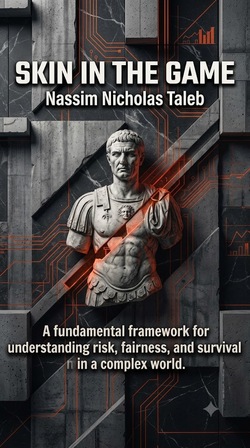
Skin in the Game summary and key insights by Nassim Nicholas Taleb
Loading…

Skin in the Game

Nassim Nicholas Taleb

3.9700 learners

In his sharp, no-nonsense addition to the 'Incerto' series, Nassim Nicholas Taleb centers on the principle of 'skin in the game': every person must bear the risks tied to their rewards, opinions, and decisions. Drawing on ancient myths, the Hammurabi Code, and modern financial failures, Taleb exposes the harm of asymmetric risk—from bankers who pocket bonuses while shifting losses to taxpayers, to 'intellectuals' who spout untested theories without facing consequences. He breaks down how uncompromising minorities shape societal norms, why agent problems erode fairness, and how the Lindy Effect validates time-tested wisdom over trendy ideas. Critiquing empty 'fairness' rhetoric and abstract universalism, Taleb argues true resilience and justice come from embedding risk-sharing into every layer of society. This isn’t just theory—it’s a practical guide to navigating uncertainty by aligning actions with accountability, helping readers spot hypocrisy, make smarter choices, and build systems that stand the test of time.

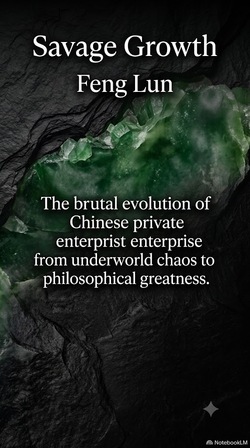
Savage Growth summary and key insights by Feng Lun
Loading…

Savage Growth

Feng Lun

3.2712 learners

As a co-founder of Wantong Group, Feng Lun pulls back the curtain on the wild, unregulated rise of China’s private sector since reform and opening up. In *Savage Growth*, he shares hard-won lessons from navigating crisis—from the heated "original sin" debate over early private enterprise legitimacy to the messy, necessary evolution of partner dynamics (like his own split with Pan Shiyi). He breaks down the tricky dance of government-business relations, contrasts successful leaders like Wang Shi (who prioritized systems over personal gain) with cautionary tales like Mu Zhongzhong, and dives into investment wisdom, corporate governance, and even life’s big questions: balancing desire and happiness, facing mortality, and building businesses that outlast their founders. Packed with real-world anecdotes and sharp insights, this book is a must-read for anyone looking to understand China’s business landscape or build resilient, ethical enterprises.