
Loading…
An Essay on the Principle of Population

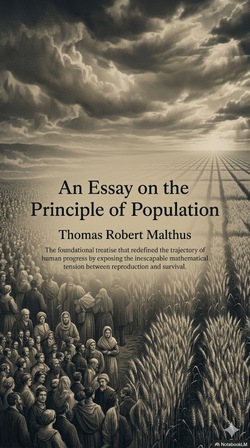
In the wake of the French Revolution and surging utopian ideals of human perfectibility, Thomas Robert Malthus’s *An Essay on the Principle of Population* offers a provocative, foundational analysis of a natural law governing human society. Malthus starts with two unshakable axioms: food is indispensable for human survival, and sexual desire between men and women is a constant, unchanging part of human nature. He argues that unchecked population grows exponentially (geometrically), while food production can only increase linearly (arithmetically)—a mismatch that creates unavoidable scarcity. To balance population and resources, humanity faces two types of "checks": preventive checks (delayed marriage due to fears of inability to support a family) and positive checks (poverty, disease, war, and vice). Malthus dismantles utopian visions from thinkers like William Godwin and Marquis de Condorcet, proving their idealized societies would collapse under unsustainable population pressure. He also critiques England’s Poor Laws, arguing they worsen poverty by encouraging reckless reproduction and eroding individual self-reliance. This seminal work redefined debates about social progress, economics, and human nature, remaining a cornerstone of social science discourse.
Understand the Book
Choose how you want to explore this book.




Explore with AI
 Ask about the book's ideas and how they relate to your life.