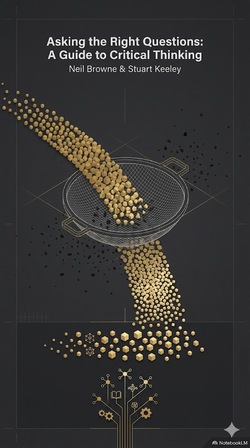
The book teaches me how to question sources instead of just accepting what I see on social media or news feeds. It explains that passive thinking makes us vulnerable to misinformation and emotional manipulation. By learning to separate descriptive facts from prescriptive opinions, I can better evaluate arguments about politics or health. The framework for identifying hidden assumptions and logical fallacies is especially useful for avoiding tricks in ads or political speeches. I appreciate the emphasis on humility and curiosity as habits, not just one-time skills. This approach helps me feel less overwhelmed when facing conflicting information daily. It transforms my reading from a sponge-like activity into an active search for truth. The step-by-step process for analyzing evidence makes complex topics feel manageable. I will use these questions to check every claim I encounter now. Overall, it empowers me to think independently without needing experts to tell me what is real. This shift from passive to active thinking changes how I navigate the world every day.