



This book made me feel the weight of silence in every wall and empty corner.
Your Review
This book made me feel the weight of silence in every wall and empty corner.

The way buildings hold secrets changed how I see my own home forever.

Sebald turns architecture into a haunting archive where every stone and forgotten corner whispers the silenced stories of the past, making the buildings feel like living witnesses to trauma.

The idea that structures like fortresses can become cages of cruelty rather than places of safety is a haunting and powerful insight.

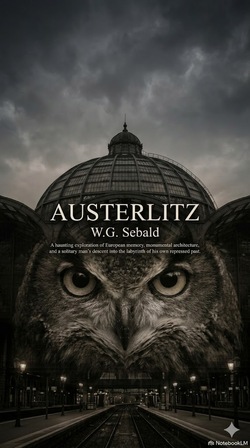
Austerlitz uses architecture to show how buildings hide trauma. His obsession with train stations and fortresses reveals that these structures are not just stone and steel but repositories of unspoken stories. Sebald writes about how a fortress built for safety became a cage for cruelty during the war, and how a grand library in Paris sits on a foundation of stolen Jewish belongings. The protagonist, Jacques, slowly pieces together his lost childhood through these spaces, realizing that his memory was fractured by the deliberate silence of his foster home. He discovers that architecture is a language of silence, and by listening to the cracks in walls and the forgotten corners, he finally confronts the ghosts of his past. The journey from Antwerp to Prague and back to London feels less like a travelogue and more like an excavation of the soul. It is a powerful reminder that the past does not go away; it warps our memories and shapes the spaces we inhabit. We cannot ignore the ghosts in the walls forever, and healing starts with remembering even when it hurts. The blurring of fact and fiction makes the story feel as unreliable and layered as real memory itself, forcing us to question what we truly know about our own history.

Sebald makes architecture feel alive, showing how every building holds hidden trauma and silenced stories that we must listen to.
The way memory fragments like broken glass was beautifully described here.

Finally a story that made me look at old buildings with new eyes.

A powerful exploration of how architecture holds our forgotten stories and forces us to finally listen to the silence.

The architecture feels heavy with secrets that I could not ignore.

Beautifully written and deeply moving.

This book feels urgent now.

A haunting exploration of how spaces preserve the ghosts we try to forget.

The silence in the foster home felt so real and heavy that I could barely breathe.

Austerlitz finally found his parents after listening to the ghosts in the walls.

The way Sebald links crumbling architecture to repressed childhood trauma made me feel the weight of unspoken history in every stone wall.

This book changed how I see the spaces I walk through every single day.

Austerlitz's obsession with architecture feels less like academic study and more like a desperate attempt to listen to the stories hidden in walls, where every forgotten corner and locked door acts as a clue to a past he spent decades trying to erase. Sebald uses these buildings not just as settings but as active participants in his trauma, showing how structures built for safety or power often become cages that trap us in our own unspoken histories. The way he traces the cracks in stone to uncover the truth of his childhood on the Kindertransport makes the abstract concept of memory feel tangible and terrifyingly real. It's a powerful reminder that we cannot outrun the ghosts living in the spaces we inhabit, no matter how hard we try to sweep them under the rug or ignore the silence they leave behind. The book doesn't offer easy answers or a neat resolution, but instead forces the reader to sit with the discomfort of confronting what has been buried, whether it is personal trauma or the collective amnesia of a society that chooses to forget its painful past in favor of a polished, unified narrative.

I felt deeply connected to Austerlitz as he searched for his lost family.

The book made me feel the weight of silence in every empty room I walk through today.