History Book Summaries & Key Insights

History Total 180 books

Democracy in America summary and key insights by Alexis de Tocqueville
Loading…

Democracy in America

Alexis de Tocqueville

01590 learners

First published in the 1830s after Alexis de Tocqueville’s extended field research across the United States, *Democracy in America* remains one of the most incisive, timeless accounts of how American democratic systems operate from the ground up. Starting with the grassroots New England township governance model, Tocqueville breaks down how local self-rule cultivates public participation, shared civic belonging, and collective habits that sustain a free society far more effectively than top-down state mandates. He unpacks the carefully calibrated checks and balances of the U.S. federal system, the hidden risks of "tyranny of the majority" that suppress independent thought, and the unique American tradition of voluntary associations that counter the isolating effects of individualism born from widespread social equality. He also explores underdiscussed tensions between democratic civilian priorities and military ambition, the evolution of social honor in a commercialized equal society, and deep structural divides around race and federal vs state power that still shape U.S. politics today.
Augustine_ A Very Short Introduction(Henry Chadwick [Chadwick, Henry],2001) summary and key insights
Loading…

Augustine_ A Very Short Introduction(Henry Chadwick [Chadwick, Henry],2001)

4.51003 learners

Henry Chadwick’s *Augustine: A Very Short Introduction* offers a concise, illuminating exploration of one of Western civilization’s most pivotal thinkers. Spanning Augustine’s turbulent life—from youthful indulgences and his Manichaean phase to his conversion to Christianity and rise as Bishop of Hippo—the book unpacks the intellectual currents shaping his thought: Cicero’s philosophical spark, Neoplatonism’s metaphysical framework, and biblical truths anchoring his theology. Chadwick delves into Augustine’s core ideas: original sin, the tension between divine grace and human free will, the 'two cities' (earthly and heavenly) defining his political theology, and groundbreaking reflections on time and memory in *Confessions*. The book also examines his enduring legacy, from medieval scholasticism and the Protestant Reformation to modern debates on ethics, faith, and human nature. Accessible yet rigorous, this introduction reveals why Augustine remains a cornerstone of Western philosophy and Christian thought.

Augustine of Hippo: A Life summary and key insights by Henry Chadwick
Loading…

Augustine of Hippo: A Life

Henry Chadwick

4.4495 learners

This definitive biography by Henry Chadwick traces Augustine of Hippo’s extraordinary journey from a rebellious, pleasure-seeking youth in Roman North Africa to one of Christianity’s most influential theologians. Born in 354 CE, Augustine navigated conflicting influences—his pagan father’s worldly ambitions and his devout Christian mother Monica’s unwavering faith—before diving into philosophical inquiry, briefly embracing Manichaeism, and finding his spiritual anchor in Milan through Ambrose’s teachings and a transformative conversion experience. Chadwick vividly recounts Augustine’s years of monastic contemplation, his reluctant rise to bishop of Hippo, and his pivotal theological battles with Donatists and Pelagians. The book unpacks his groundbreaking ideas: the primacy of divine grace over free will, the dual-city framework of *The City of God*, and his nuanced analogies for the Trinity, while grounding his intellectual evolution in the turbulent social and religious landscape of late antiquity.

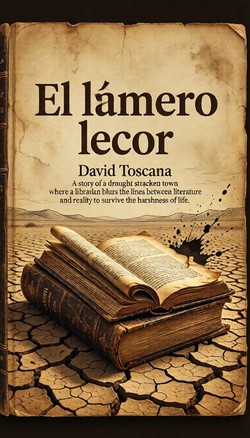
The Last Reader summary and key insights by David Toscana
Loading…

The Last Reader

David Toscana

0587 learners

Set in parched Icamole, a remote Mexican village where drought has drained both land and hope, David Toscana’s *El último lector* weaves a haunting tapestry of fiction, history, and quiet despair. When farmer Remigio discovers the body of a young visitor in his dry well—matching a missing girl’s description—he turns to Lucio, the cantankerous librarian who guards a dwindling book collection, dismissing most as “trash” unworthy of space. Lucio draws parallels between the girl and Babette, the tragic protagonist of an 1789 Parisian novel, framing both as victims of forces larger than themselves: revolution in France, drought and indifference in Icamole. As police bungle their investigation, villagers flee the dying town, and beloved water-carrier Melquisedec is wrongfully arrested, the novel delves into Icamole’s hidden past—a forgotten 1876 battle that left scars on the land and its people. When rain finally falls, Lucio and Remigio rename the library in Babette’s honor, a bittersweet tribute to the lost, overlooked, and those clinging to quiet resilience.

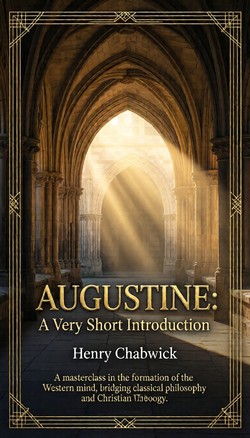
Augustine: A Very Short Introduction summary and key insights by Henry Chadwick
Loading…

Augustine: A Very Short Introduction

Henry Chadwick

0965 learners

This concise introduction by Henry Chadwick traces Augustine of Hippo’s transformative intellectual and spiritual journey—from his youthful skepticism and immersion in Manichaeism, to his pivotal encounter with Neo-Platonism that paved his path to Christian conversion. It unpacks the core ideas that made Augustine one of Western thought’s most influential figures: his nuanced views on evil as a misuse of free will, the necessity of divine grace over human self-reliance, the doctrine of original sin, and his groundbreaking explorations of the Trinity through psychological analogies. The book also delves into his seminal works, including *Confessions*, his intimate autobiographical meditation on faith and memory, and *City of God*, his sweeping response to Rome’s fall that redefined the relationship between secular and sacred. Chadwick contextualizes Augustine’s debates with heretics like the Donatists and Pelagians, highlighting how his teachings shaped medieval theology and continue to resonate in modern discussions of faith, ethics, and human nature.

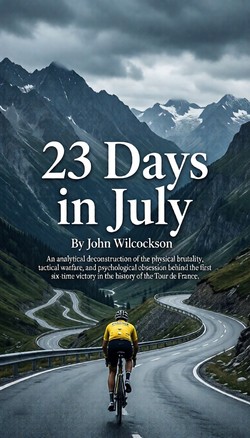
23 Days in July: Inside the Tour de France and Lance Armstrong's Record-Breaking Victory summary and key insights by John Wilcockson
Loading…

23 Days in July: Inside the Tour de France and Lance Armstrong's Record-Breaking Victory

John Wilcockson

4.51479 learners

Join veteran cycling journalist John Wilcockson for an immersive, day-by-day journey through the 2004 Tour de France—23 days of grueling climbs, high-stakes sprints, and intense rivalries that culminated in Lance Armstrong’s historic sixth consecutive victory. From the opening prologue in Liège to the iconic Champs-Élysées finish, this book pulls back the curtain on the peloton’s inner workings: witness Armstrong’s strategic battles with Jan Ullrich, Ivan Basso, and Tyler Hamilton; the heartbreak of Hamilton’s mid-race withdrawal due to injury; the drama of doping scandals that rocked the sport; and the unbreakable teamwork of the U.S. Postal Service Team. Wilcockson’s on-the-ground reporting captures the raw emotion, physical toll, and tactical genius that define cycling’s most prestigious race, offering fans an unprecedented look at one of Armstrong’s most dominant Tour campaigns.

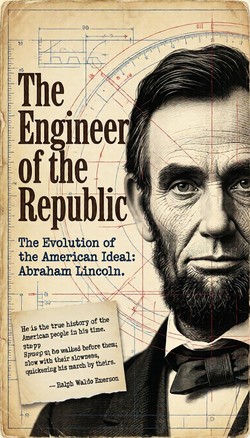
Abraham Lincoln: The Gettysburg Speech and Other Papers summary and key insights by Carl Schurz;Abraham Lincoln
Loading…

Abraham Lincoln: The Gettysburg Speech and Other Papers

Carl Schurz;Abraham Lincoln

4.2657 learners

This comprehensive collection brings Abraham Lincoln’s most pivotal speeches—including the iconic Gettysburg Address and his two inaugural addresses—alongside firsthand tributes, biographical sketches, and contemporary reflections from figures like Carl Schurz, Ralph Waldo Emerson, and Oliver Wendell Holmes. Traversing Lincoln’s journey from a Kentucky log cabin to the White House, the book chronicles his leadership during the U.S. Civil War, his gradual yet unyielding push for emancipation, and his unwavering commitment to preserving the Union. Beyond policy and politics, it reveals the man behind the legend: his empathy for the marginalized, his quiet resilience amid crisis, and his tragic assassination just as peace dawned. Through primary texts and intimate accounts, readers gain a nuanced, human portrait of America’s defining leader, whose legacy of freedom, unity, and compassion continues to shape the nation’s identity.

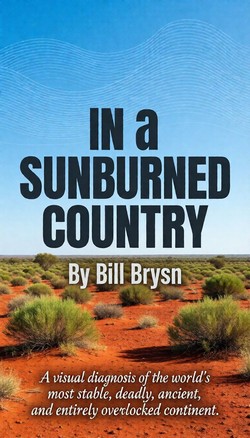
In a Sunburned Country summary and key insights by Bill Bryson
Loading…

In a Sunburned Country

Bill Bryson

4.31231 learners

Join best-selling author Bill Bryson on a hilarious, insightful journey across Australia—a vast, sun-scorched continent often overlooked by the rest of the world. From the bustling streets of Sydney and Melbourne to the remote red heart of the Outback, Bryson blends self-deprecating humor with deep dives into the nation’s quirky history: its origins as a British penal colony, the messy birth of the Australian Federation, and the tragic, overlooked stories of Aboriginal peoples. He explores iconic natural wonders like Uluru and the Great Barrier Reef, encounters bizarre native wildlife (including the egg-laying duck-billed platypus), and captures the laid-back charm of Aussie pub culture, the obsession with cricket, and the quiet resilience of small outback towns. More than a travelogue, this book is a love letter to Australia’s hidden surprises, inviting readers to see the continent through fresh, curious eyes.

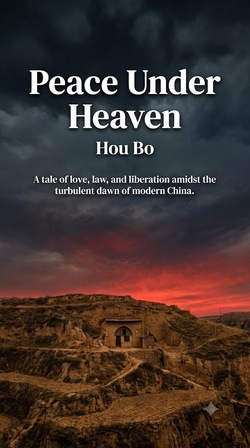
Peace Under Heaven summary and key insights by Hou Bo
Loading…

Peace Under Heaven

Hou Bo

3.5587 learners

Set in the rugged rural hills of northern China in the 1940s, amid the chaos of the Chinese Civil War, *Peace Under Heaven* follows the journey of Ren Yuexiu, a spirited young farmer’s daughter. What starts as a joyful Lantern Day filled with yangko dances quickly unravels into a fight for her future: betrothed in childhood to a kind but poor boy, Qian Chengcheng, her greedy father tries to marry her off to a wealthy, abusive gambler for a large bride price. Fueled by the new Marriage Regulations of the Shaan-Gan-Ning Border Region, Yuexiu defies her father and old traditions, navigating family feuds, forced abduction, wartime raids, and crippling famine. As she grows from a naive girl into a bold community leader, she fights for her love, rescues her village from starvation, and stands against both corrupt local bullies and invading Nationalist troops. The novel weaves a vivid tale of resilience, love, and the struggle for freedom in a time of upheaval.

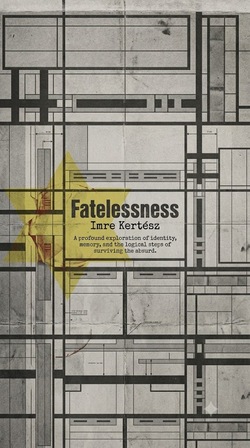
Fatelessness summary and key insights by Imre Kertesz
Loading…

Fatelessness

Imre Kertesz

4.2988 learners

Based on Imre Kertész’s own Holocaust experiences, *Fatelessness* follows 15-year-old György Köves, a Jewish boy in WWII-era Budapest. What begins as a quiet life helping his family run a lumber shop unravels when Nazi occupation forces Jews to wear yellow stars, his father is drafted for forced labor, and György is seized mid-commute to a factory job. Sent to Auschwitz-Birkenau, then to camps like Czestochowa and Buchenwald, György navigates brutal, dehumanizing survival rules—enduring hunger, violence, and constant death threats—without the fiery anger or tragic victimhood typical of Holocaust narratives. When liberated and back in Budapest, he finds his home occupied, his father dead, and a world expecting him to grieve or rage. Kertész’s unflinching, detached prose captures György’s quiet confusion, struggle to reconnect with an alien life, and the strange 'fatelessness' of someone who survived not by fighting, but simply enduring. It’s a raw, intimate look at trauma without easy answers.

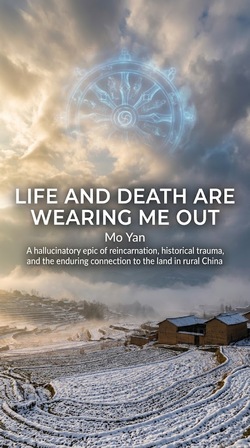
Life and Death Are Wearing Me Out summary and key insights by Mo Yan
Loading…

Life and Death Are Wearing Me Out

Mo Yan

4.21289 learners

In Mo Yan’s sweeping, darkly humorous epic *Life and Death Are Wearing Me Out*, Ximen Nao, a wealthy landowner wrongfully executed during China’s 1950s land reform, refuses to let go of his anger—even when the King of Hell sends him back to Earth not as a man, but as a series of animals. Over five reincarnations, he becomes a donkey, ox, pig, dog, and monkey, each time retaining memories of his past life. Through his animal eyes, he witnesses the turbulent decades of 20th-century China: the rise of collective farming, the chaos of the Cultural Revolution, and the dizzying shifts of the reform era. He watches his former servants, enemies, and family members navigate love, betrayal, and survival in his hometown of Gaomi Northeast Township. By the time he is finally reborn as a human boy, Lan Qianshui, he confronts the weight of his lifelong grudges—and discovers that letting go might be the only way to find peace.

The Emperor of All Maladies summary and key insights by Siddhartha Mukherjee
Loading…

The Emperor of All Maladies

Siddhartha Mukherjee

4.2852 learners

Siddhartha Mukherjee’s *The Emperor of All Maladies* is a sweeping, deeply researched narrative tracing humanity’s millennia-long struggle against cancer—dubbed the “emperor” for its relentless, pervasive grip. From ancient surgical attempts to the dawn of radiation and chemotherapy, the book chronicles bold missteps and groundbreaking triumphs of medical pioneers: Sidney Farber’s first leukemia remission with folate antagonists, the rise of the Jimmy Fund that galvanized public support, and the 1971 National Cancer Act that launched a national “war on cancer.” It delves into the molecular revolution unlocking cancer’s genetic secrets—oncogenes, tumor suppressor genes, and chromosomal abnormalities like the Philadelphia chromosome—paving the way for targeted therapies like Herceptin and Gleevec. Blending rigorous science with intimate patient stories, Mukherjee reveals cancer not as a single disease, but a complex family of maladies, capturing the hope, despair, and unyielding resilience defining humanity’s fight to outsmart this formidable foe.

A History of Chinese Architecture summary and key insights by Liang Sicheng
Loading…

A History of Chinese Architecture

Liang Sicheng

4814 learners

Written by Liang Sicheng, the pioneer of modern Chinese architectural studies, *A History of Chinese Architecture* is the definitive exploration of China’s 5,000-year architectural legacy. It unpacks the defining traits of China’s unique building system—from its iconic wooden framework and dougong bracket assemblies to its sweeping curved roofs—while linking architectural evolution to cultural values, social norms, and environmental needs across dynasties. The book traces key eras: pre-Qin foundational designs, grand Han and Tang imperial complexes, intricate Song Dynasty craftsmanship, and the opulent Ming and Qing imperial palaces. It also compares two pivotal official building manuals, the *Yingzao Fashi* (Song Dynasty) and *Gongcheng Zuofa Zeli* (Qing Dynasty), and examines how traditional structures reflect Chinese philosophy, ethics, and daily life. Plus, it covers modern preservation efforts and the future of merging traditional wisdom with contemporary design, making it essential for anyone curious about China’s cultural heritage through architecture.

The Bauhaus Ideal summary and key insights by William Smock
Loading…

The Bauhaus Ideal

William Smock

3.6589 learners

William Smock’s *The Bauhaus Ideal* explores the revolutionary German design school that redefined 20th-century art, architecture, and everyday objects. Founded by Walter Gropius post-WWI, the Bauhaus broke down long-standing walls between fine art and craft, merging artistic vision with industrial functionality. Smock introduces iconic faculty—from Wassily Kandinsky’s abstract art teachings to Mies van der Rohe’s "less is more" mantra—and tracks how many fled Nazi Germany to reshape American design at Harvard, the New Bauhaus, and beyond. The book unpacks core Bauhaus principles: form follows function, truth to materials, and democratic design for the masses. It also examines the movement’s legacy, from its mid-century American golden age to the 1970s postmodern backlash, and the gap between its egalitarian ideals and the commercialization of Bauhaus pieces as luxury collectibles in institutions like MoMA. A vivid look at how a radical school turned bold visions into the foundation of modern design we know today.

1901: The Back View of an Empire summary and key insights by Wang Shuzeng
Loading…

1901: The Back View of an Empire

Wang Shuzeng

2.81276 learners

Set against the crumbling backdrop of late 19th-century China, *1901: The Back View of an Empire* pulls back the curtain on the Qing Dynasty’s final years, weaving intimate, untold stories into a vivid narrative of power, chaos, and quiet transformation. Starting with the 1899 medical exam of Emperor Guangxu—a small event that shattered the imperial court’s secrecy and exposed bitter power struggles between the emperor and Empress Dowager Cixi—the book traces the empire’s downward spiral: the catastrophic Sino-Japanese War rooted in systemic corruption, the failed Hundred Days’ Reform derailed by court intrigue, the rise of the Boxer Rebellion as a desperate outcry of impoverished peasants, and the brutal foreign invasion that led to the humiliating 1901 Boxer Protocol. Through vivid details—from Viceroy Yulu’s jade thumb ring symbolizing bureaucratic decay to Li Hongzhang’s grueling negotiations with foreign powers—author Wang Shuzeng captures the full complexity of the era: a dying empire clinging to tradition, while glimmers of modernity (Western clothing, women’s public speaking, telegraph technology) began to pierce the darkness. More than a history lesson, this book reveals how the chaos of 1901 laid the groundwork for China’s 20th-century transformation.

Gone with the Wind summary and key insights by Margaret Mitchell
Loading…

Gone with the Wind

Margaret Mitchell

4.8683 learners

Set against the backdrop of the American Civil War and Reconstruction, Gone with the Wind follows the fiery Scarlett O’Hara, a spoiled Georgia plantation heiress whose world crumbles when war tears through the Old South. From her unrequited obsession with the gentle Ashley Wilkes to her desperate fight to save her family’s beloved Tara Plantation, Scarlett transforms from a frivolous debutante into a ruthless survivor. Along the way, she crosses paths with the roguish Rhett Butler, a sharp-tongued opportunist who sees through her facade and becomes both her greatest ally and her deepest heartbreak. Margaret Mitchell’s epic tale captures the chaos of a nation in upheaval, exploring love, loss, resilience, and the stubborn pride of a region clinging to its vanishing past—all through the eyes of a woman who refuses to be broken by tragedy.

Ordinary World summary and key insights by Lu Yao
Loading…

Ordinary World

Lu Yao

4.7709 learners

Set against China’s rugged Loess Plateau during the 1970s-80s transition from the Cultural Revolution to economic reform, *Ordinary World* follows two brothers navigating hardship and hope. Sun Shaoan, the steadfast elder, stays home to support his impoverished family, risking everything to launch a brick factory that rises and falls with shifting village fortunes. Sun Shaoping, the restless younger brother, leaves his rural roots to work as a day laborer and coal miner, clinging to books and dignity amid brutal conditions. The novel weaves tales of unrequited love, family loyalty, and small-town drama, capturing the quiet heroism of ordinary people fighting to survive and thrive in a rapidly changing world. It’s a raw, heartfelt portrait of rural China’s transformation, where every choice carries weight and every struggle reveals the strength of the human spirit.

White Deer Plain summary and key insights by Chen Zhongshi
Loading…

White Deer Plain

Chen Zhongshi

4.51305 learners

Set against the sweeping backdrop of rural China from the late Qing Dynasty to the 1949 liberation, *White Deer Plain* unfolds an epic saga of two feuding clans—the upright, tradition-bound Bai family and the ambitious, power-hungry Lu family. At its core is Bai Jiaxuan, the stoic clan leader who fights to uphold ancestral norms amid plague, famine, and political upheaval, while his rival Lu Zilin chases status at any cost. We follow unforgettable characters: Hei Wa, the rebellious farmhand who swings from revolution to banditry to redemption; Bai Ling, the fiery daughter who defies feudal oppression to join the Communist cause; and Mr. Zhu, the wise scholar who guards the plain’s cultural soul. Through generations of love, betrayal, sacrifice, and struggle, the novel lays bare the clash between tradition and progress, and the quiet resilience of people tied to their land.

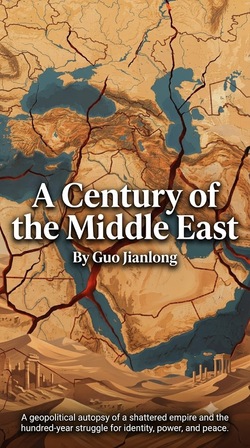
Journey through a hundred years in the Middle East summary and key insights by Guo Jianlong
Loading…

Journey through a hundred years in the Middle East

Guo Jianlong

3.41211 learners

Take a gripping dive into the Middle East’s turbulent 20th and 21st centuries, starting with the collapse of the Ottoman Empire after World War I. Guo Jianlong unpacks how arbitrary border draws by British and French powers laid the groundwork for decades of sectarian strife, ethnic tensions, and political upheaval. Follow the rise of Turkey’s secular founder Kemal Atatürk, the shift to Erdoğan’s conservative rule, and the bitter Israeli-Palestinian conflict rooted in competing national identities. Explore the violent Sunni-Shia divide that fueled wars in Iraq and Lebanon, the evolution of Islamic extremism from the Muslim Brotherhood to ISIS, and the chaotic aftermath of the Arab Spring in Egypt and Syria. This book doesn’t just recount events—it connects the dots between colonial meddling, religious rivalries, and power struggles to explain why the Middle East remains trapped in cycles of conflict today.

Upside Down Years summary and key insights by Xu Xiaodi
Loading…

Upside Down Years

Xu Xiaodi

3.21071 learners

Upside Down Years is a raw, unflinching memoir by Xu Xiaodi that chronicles her coming-of-age amid China’s turbulent Cultural Revolution and its aftermath. From her childhood in Beijing—marked by lost opportunities, kind mentors, and the sudden cruelty of political upheaval—to her years as an educated youth (zhiqing) in the Inner Mongolia Production Corps, Xu lays bare the chaos, hardship, and quiet humanity of an era defined by ideological fervor. She grapples with guilt over betraying a beloved teacher, the trauma of family separation and political persecution, and the resilience of ordinary people who clung to kindness amid despair. Through intimate anecdotes of friends, teachers, and strangers, she illuminates how the "upside down" years shaped her identity, forcing her to confront the cost of conformity and the enduring power of memory. This memoir is not just a personal story; it’s a testament to the untold struggles of a generation silenced by history.