


Great guide for stopping quick judgments.
Your Review
Great guide for stopping quick judgments.

Great practical guide for daily thinking traps.

The section on distinguishing between feelings and evidence helped me pause before reacting to fake news online.

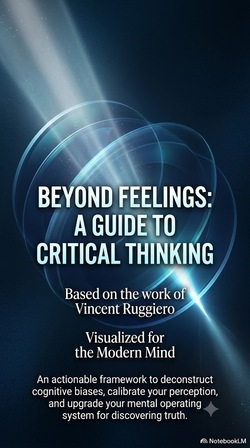
Ruggiero explains that truth is objective, not invented, using the gas tank example. This helped me stop dismissing facts just because they clash with my beliefs. The book breaks down traps like the 'my better' bias clearly. I learned to pause before sharing angry headlines and check sources instead of trusting my gut. The step-by-step guide on narrowing topics and finding common ground in arguments is practical for real life. Now I try to separate my feelings from reasoned judgments before making big decisions about health or money. It feels like a superpower to catch my own biases early. Highly recommend for anyone tired of echo chambers.

The book teaches me to pause and check evidence instead of letting feelings drive my daily choices like buying coffee or trusting viral posts about health claims, which reduces my stress and helps me build stronger relationships with friends who have different views by focusing on facts rather than emotions in arguments.

While the concepts are clear, I found some of the workplace examples a bit too specific for my industry, though the core principles on bias still apply well.


The section on workplace groupthink was eye-opening; I now ask targeted questions in meetings to challenge unspoken assumptions and encourage diverse views.

Learning to distinguish between personal preferences and reasoned judgments changed how I approach debates with friends and family members today.

The coffee shop rumor example perfectly illustrates how quickly we jump to conclusions without verifying facts before reacting.
This book changed how I see my own reactions, especially the trap of thinking my first feeling is always the truth. The example about the coffee shop donation was a perfect mirror of my own recent social media mistakes where I rushed to judge without checking facts. Ruggiero explains that feelings are just starting points, not final answers, which helped me pause before sending angry texts to friends. I learned to look for evidence instead of relying on viral posts that feel scary or exciting, turning my impulse to share rumors into a habit of verifying sources first. The section on separating personal preferences from reasoned judgments was eye-opening because I realized I often treated my opinions as facts. By using the step-by-step framework to narrow topics and check for biases like the "my better" blind spot, I now catch myself when I'm overgeneralizing or falling into either-or thinking. It feels like gaining a superpower to stop being controlled by algorithms and instead make choices based on real evidence and empathy, which has already improved my relationships and reduced my stress during heated arguments.

I appreciate how the book explains that feelings are valid starting points but we must verify them with evidence before acting on them.

Truth is objective, not a matter of opinion, so I must check evidence instead of just trusting my gut feelings.

Ruggiero explains how to separate feelings from facts using clear steps. The section on identifying whether a claim is a personal preference or a reasoned judgment was particularly helpful for me, as I often mistake my emotional reactions for solid arguments when debating with friends. Instead of just feeling defensive or excited about a topic, I now know to ask for evidence and check sources first. This practical approach helps me avoid falling into the trap of thinking my initial reaction is always correct. By learning to evaluate the origin of my thoughts and considering alternative perspectives, I can make more balanced decisions in my daily life, from choosing products to navigating workplace conflicts. The book successfully demystifies critical thinking, making it an accessible tool rather than an abstract academic concept that feels impossible to apply in real situations.

I finally understand why I often jump to conclusions, and the tools in this book give me practical ways to slow down my thinking process.

This book is a survival tool for modern life.

The step-by-step guide on spotting logical fallacies helped me build stronger arguments based on evidence rather than just personal opinions.

The advice on navigating office politics by focusing on shared goals instead of winning arguments feels like a refreshing change from how I usually handle conflicts.

The section on separating feelings from reasoned judgments helped me pause before reacting to viral posts. Instead of sharing a story that made me angry immediately, I now check the source and look for evidence first. This simple habit has stopped me from spreading misinformation and hurting my friends over false claims. Ruggiero explains how our brains love shortcuts, but the book gives us a way to override those instincts. I appreciate that it doesn't tell us to ignore emotions, but to balance them with logic. The step-by-step process for building arguments is clear and easy to follow. It turns critical thinking from a boring school lesson into a useful skill I actually use when shopping or debating with family. The workplace examples show how to handle meetings without falling into groupthink, which is something I struggle with. Overall, this guide helps me make better decisions without feeling overwhelmed by noise or bias.

This book taught me how to pause before reacting to viral posts and check facts instead of letting my feelings drive my decisions.

I struggled to connect the abstract ideas about cognitive traps to my daily life, making the book feel a bit dry and less useful for someone with my background.