



It felt really frustrating reading about how Sun Yat-sen was rejected by Li Hongzhang despite his good ideas, which made me think about how hard it is to change a broken system.
Your Review
It felt really frustrating reading about how Sun Yat-sen was rejected by Li Hongzhang despite his good ideas, which made me think about how hard it is to change a broken system.

Sun's move from reform to revolution felt real after reading about his rejection by Li Hongzhang. It made me understand why he eventually chose to fight instead of waiting.

Sun's journey from hopeful reformer to determined revolutionary reminds us that systemic change rarely happens politely.

Sun's rejection by Li Hongzhang really made me realize how hard it is to change a corrupt system without fighting back.

It was interesting to see how Sun tried to modernize agriculture and education instead of just focusing on military power when he first petitioned Li Hongzhang.

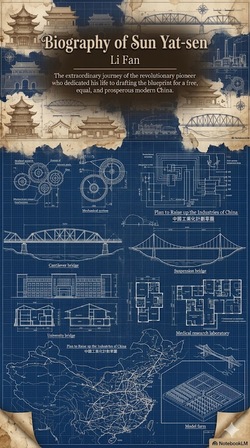
Sun Yat-sen's story shows how rejection fuels resilience. After Li Hongzhang dismissed his 1894 petition promising modernization through education and trade, Sun realized the Qing system served elites, not people. This rejection at age 28 forced him to abandon polite reform for radical revolution. He spent the next seventeen years traveling globally, raising funds from overseas Chinese communities, and organizing failed uprisings until the 1911 Xinhai Revolution finally ended imperial rule. The biography highlights that systemic change rarely happens politely, requiring leaders willing to walk away from the status quo. His journey from a hopeful doctor treating poor patients to a determined revolutionary reminds us that persistence through failure is essential for meaningful progress, making his legacy relevant for anyone fighting broken systems today.

It is inspiring to see how Sun kept going even after losing friends and facing repeated failures during his long struggle against the Qing dynasty.

The part where Sun refuses every bribe from the Qing government even when they offer him high office really highlights his strong commitment to the revolution.
It was hard to read about Sun being ignored by Li Hongzhang during the war, but seeing how he kept going instead feels really inspiring.

This book makes me realize how Sun Yat-sen's early rejection by Li Hongzhang forced him to abandon reform and start a revolution instead.

It is amazing how his medical practice revealed his deep frustration.

The story of Sun treating poor patients for free really shows his deep empathy before he ever became a revolutionary leader.
Learning about how Sun organized overseas Chinese communities to fund the revolution makes me realize that financial support from ordinary people is just as important as political ideas.

The decision to step down for Yuan Shikai feels complicated and raises questions about whether Sun prioritized short-term peace over long-term democratic ideals.

The part about Sun giving free medicine to poor patients really shows how his empathy drove his later revolution.

The story of his medical practice in Guangzhou really showed how his compassion for poor patients grew into a deep frustration with the corrupt government.

The detailed account of the 1911 Wuchang uprising explains exactly how ordinary soldiers and citizens helped end two thousand years of imperial rule.

This book really showed me how Sun's early medical work made him care deeply for poor people, which explains his later focus on helping the masses.

Sun's ability to turn every failed uprising into a lesson for the next attempt shows incredible resilience and makes his eventual success feel even more earned.

I felt deeply moved by how Sun's early medical practice in Guangzhou showed his care for poor patients before he ever turned to revolution.