


Gates explains how state rules and family business logic mixed in old China without using Western ideas.
Your Review
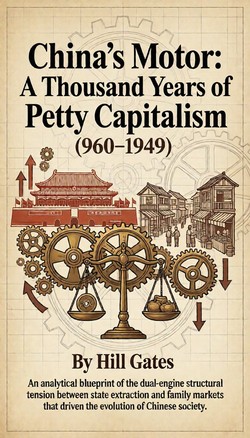
Gates explains how state rules and family business logic mixed in old China without using Western ideas.

Gates uses fieldwork in Taipei to show how ordinary people balance state rules and family business needs every single day.

This book challenges the idea that China was stagnant. Gates shows how two systems pushed each other forward over centuries.

I found Gates' focus on the tension between state power and family business really helpful for understanding China's history.

Gates spent twenty years living in Taipei neighborhoods, sitting in tofu shops and chatting with housewives about budgets and side businesses, which gave me a deep understanding of how ordinary people navigate economic rules.

Gates proves China wasn't stagnant, showing how state and family systems actually drove growth instead of blocking it.

This book explains why China never became Western-style capitalism by focusing on two competing systems.

This book challenges standard views on non-Western development by showing how China's internal tensions shaped its economy instead of relying on foreign models.

Gates explains how petty capitalism and the tributary system created China's unique path, showing why Western industrialization didn't happen naturally there.

The section on Fujian clans using kinship networks to fund trade voyages while avoiding state suppression really clarified how China's economy adapted over centuries.

The book makes me rethink how ordinary families really built wealth through kinship networks.

I was surprised by how Gates uses old family tofu shops to explain big economic history.

Gates provides clear examples like the salt merchants and self-combing women to illustrate how family ties and state control constantly clashed in Chinese society.

Gates explains why China didn't become Western capitalism by showing how state power and family businesses fought and helped each other over time.

I finally understand why China developed differently. Gates shows how family businesses and state power balanced each other over centuries instead of just copying the West.

I found the idea that petty capitalism and tributary power constantly push and pull each other really helpful for understanding why China didn't become Western style.

The idea that China's motor is tension between state extraction and family profit changed how I see history.

Interesting ideas about Chinese history but the constant focus on tributary versus petty capitalism felt a bit repetitive throughout the whole reading experience.

This book changes how I see Chinese history by explaining the tension between state power and family businesses.