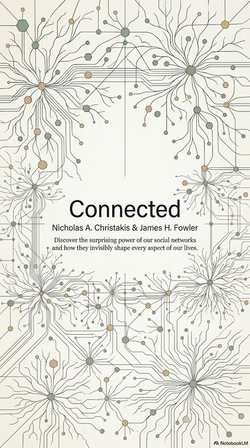


Connected: Reader Reviews & Ratings

Connected
Loading…

Connected

James H. Fowler;Nicholas A. Christakis

Write a Review

Your Review

0/500

Other reviews

39 total
Flora

The concept that happiness spreads through third-degree connections blew my mind because the 6% statistic proves we are never truly alone in our emotional lives. Christakis and Fowler dismantle the myth of individualism by showing how mirror neurons and facial feedback turn our social webs into biological engines for contagion. I realized that my own joy or loneliness isn't just a personal feeling but a ripple effect caused by people I may never have met, making the invisible structure of our networks feel like a physical reality that shapes every single one of our daily choices and health outcomes without us even noticing the process.


Knox

The idea that happiness spreads to friends of friends feels surprising but backed by clear data from the text, making the concept of invisible social rules feel real and explaining why my own mood often shifts without me noticing.

April95

This book completely changed how I see my daily life, revealing that even my weight gain isn't just my fault but influenced by friends three degrees away.

Nolan

This book made me realize my weight gain wasn't just about my willpower but about shifting social norms when my distant friend gained weight, proving we are never truly alone in our choices.

Kennedy86

The idea that happiness and obesity spread through our friends friends friends is a powerful reminder that we are never truly alone, even when we feel isolated, because invisible social threads connect us all in ways we rarely notice daily.

Frank9

It changes how I see my daily choices.

Christophe8

I was shocked to learn that loneliness spreads through networks just like happiness does, and that being on the edge of a social web makes you more vulnerable to negative contagions while missing out on positive ones. The book explains how our position in these invisible webs, rather than just our income or hard work, deeply shapes our opportunities and emotional well-being in ways we rarely notice until we read about the specific mechanisms like mirror neurons and Dunbar's Number that drive these patterns. It completely changes how I view my own social circle, making me realize that I am not just an independent actor making choices in a vacuum, but a node in a dynamic system where my neighbors' moods and habits directly influence my own life outcomes without me even realizing it, which is both a bit unsettling and strangely comforting to know that I am part of something bigger than myself.

Zane95

I realized my loneliness risk jumped 52% when a direct friend felt disconnected, which was a shocking realization.

Blake

The concept of third-degree influence blew my mind, showing how a distant friend's happiness can lift my mood by six percent without me noticing.

Arnold02

Reading this changed how I see my own choices and the invisible influence of my social circle.

Lonnie

Reading about how loneliness spreads through our connections made me feel deeply concerned for everyone.

Romeo

The idea that happiness spreads three degrees away blew my mind. I used to think my mood was 100% mine, but this book proves we are nodes in a massive web where a friend's friend's friend can lift my spirits by 6% without me ever meeting them. The research on mirror neurons and facial feedback explains exactly why we mimic emotions so easily, making loneliness and joy contagious forces rather than just personal feelings. It challenges the Western myth of rugged individualism hard, showing how our evolutionary brain wiring makes us dependent on these invisible connections for survival and well-being. Even structural inequalities like access to jobs or health outcomes are tied to where you sit in this network, not just your hard work. Understanding these rules helps me realize I can't just fix my life alone; I need to nurture weak ties and support peripheral nodes to make the whole web healthier for everyone involved.

Fritz

I didn't expect my friend's choices would impact my life.

Arthur

Mind-blowing read that changed how I see social ties.

Jonah

The section on weak ties for finding jobs was the most useful part for my career planning.

Zoe07

Interesting idea that my weight gain might not be my fault alone.

Annabelle

The book completely changed my perspective on individual responsibility.

Sebastian

Finished with a good mood—already shared with a friend.

Anita

The concept of third-degree influence changes how I see happiness and loneliness spreading through my social circle in ways I never realized before, making me rethink the invisible web of connections that actually drives my daily choices and emotions rather than just my individual willpower.

Athena

Good read.