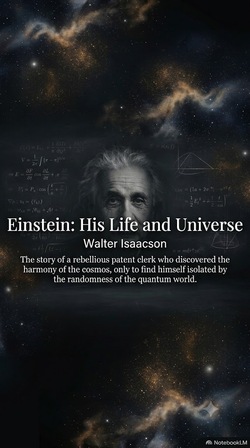



Einstein: His Life and Universe: Reader Reviews & Ratings

Einstein: His Life and Universe
Loading…

Einstein: His Life and Universe

Walter Isaacson

Write a Review

Your Review

0/500

Other reviews

28 total
Delaney

The book details how Einstein escaped strict schooling to find freedom. This rebellion allowed him to question accepted physics truths and eventually rewrite our understanding of space and time. While his personal relationships were difficult, his refusal to conform to authority clearly fueled the genius that changed the world. It shows that breaking rules can lead to big discoveries.


Tim

A compelling look at Einstein's rebellious human side.

Elaine

This biography humanizes the icon by revealing the messy personal costs behind his genius, making Einstein feel like a relatable person rather than a distant myth.

Wallace

This biography brilliantly connects Einstein's messy personal life with his scientific rebellion, showing how his refusal to conform to authority in school and society fueled his revolutionary physics theories while costing him dearly in his relationships. It feels less like a distant history lesson and more like a raw, human story about the tension between genius and humanity, proving that his greatest discoveries came from questioning every rule rather than following the expected path of academic success.

Zahra

Isaacson shows how Einstein's outsider status fueled his genius by challenging rigid academic norms and questioning assumptions others took for granted, proving that real innovation often comes from those outside the establishment rather than from following traditional rules within universities.

Chase

Einstein proved that breaking free from rigid schooling allows the mind to explore truths that others miss.

Marcus

The story of Einstein as a patent clerk who revolutionized physics from a desk job is incredibly inspiring and proves that you don't need a fancy degree to change the world.

Emily

Isaacson brilliantly captures Einstein not just as a scientific icon but as a flawed, rebellious human being whose personal struggles and refusal to conform to authority fueled his revolutionary ideas about physics and morality.

Andrew

Einstein was not a perfect hero, but a flawed human whose messy relationships make his story more inspiring than any idealized version of a genius.

Damon95

This biography shows Einstein as a flawed human, not just a distant genius, which makes his story feel surprisingly real and relatable.

Neo

His decision to never return to Germany after Hitler's rise demonstrates incredible moral courage, proving that safety should never require sacrificing one's principles or silence in the face of injustice.

Gael

This book shows that questioning the status quo is the key to both scientific and moral progress.

Earl

This biography captures Einstein's messy humanity and rebellious spirit perfectly.

Penny27

Isaacson captures Einstein not just as a genius but as a flawed human, showing how his rebellion against authority fueled both his physics breakthroughs and his moral courage against racism and war.

Emil

This biography perfectly captures how Einstein's messy life fueled his genius. It feels like a real human story rather than just science facts.

Percy

Isaacson brilliantly shows how Einstein's messy personal life and rebellious nature fueled his genius, making this biography feel deeply human rather than just a dry list of scientific achievements.

Sheila

The account of his marriage breakdown feels heavy because it highlights how his single-minded obsession with physics came at the expense of intimacy, reminding us that genius often requires painful personal sacrifices we must acknowledge.

Dominique2

Einstein's refusal to sign the pro-war manifesto during WWI shows that true integrity means acting on moral principles even when it costs you your professional reputation or friendship with powerful colleagues.

Patricia

While the book excels at linking his scientific rebellion to his moral activism, it sometimes feels too focused on his grand ideas, leaving his personal struggles with his children feeling slightly distant and less explored than his public legacy.

Charlotte

The book highlights how Einstein's rejection of authority allowed him to question assumptions that others took for granted, leading to his revolutionary ideas in physics while also showing his personal struggles with balancing his scientific ambitions and family life, which makes his story feel much more relatable than just a list of achievements.