
Loading…
Emotions and Institutions

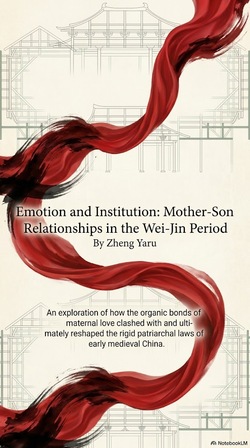
Focused on the Wei-Jin period (220–420 CE) of medieval China, *Emotions and Institutions* explores the tense interplay between patriarchal norms and real-life mother-child bonds. Drawing on historical records, ritual texts, and case studies—most notably the tragic story of Yu Shi, a childless wife who fought to keep her adopted son—the book examines how patriarchal systems (from mourning rituals to lineage rules) defined and constrained maternal roles, while also highlighting how maternal love, nurture, and filial piety pushed back against these rigid structures. Inspired by anthropologist Margery Wolf’s 'uterine family' concept and Adrienne Rich’s distinction between institutionalized motherhood and lived maternal experience, this work fills gaps in existing scholarship by integrating both institutional and emotional dimensions. It delves into debates over mourning practices for mothers, the formation of mother-son cliques in polygamous households, and how women leveraged maternal roles to challenge patriarchal authority, offering a nuanced portrait of women’s lives and family dynamics in ancient China.
Understand the Book
Choose how you want to explore this book.




Explore with AI
 Ask about the book's ideas and how they relate to your life.