
Grain Brain: Complete Chapter-by-Chapter Summary
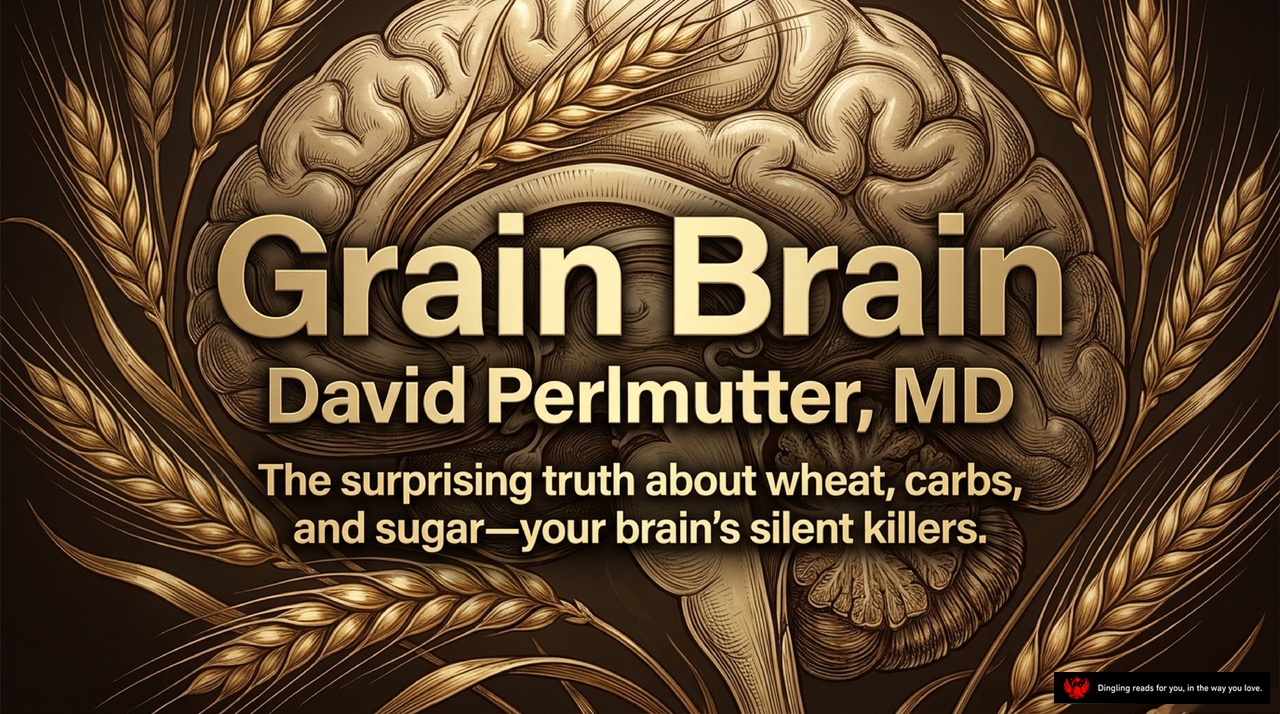
Welcome to a revolutionary look at what we eat and how it shapes our minds. Today, we're diving into the core message of *Grain Brain* by Dr. David Perlmutter.
The image you see captures the central conflict of the book: our brain, wrapped in wheat. For decades, we've been told that grains like wheat are healthy staples. But Dr. Perlmutter reveals a startling truth: these very grains, along with excessive sugar and refined carbohydrates, might be the silent killers of our brain health.
The book argues that modern grains have evolved into something our bodies simply cannot handle. They trigger chronic inflammation, spike our blood sugar, and lead to insulin resistance right inside our brain cells. When our brain can't use glucose effectively, it begins to starve, leading to cognitive decline and even Alzheimer's.
Furthermore, the book highlights a hidden danger in gluten. It's not just a digestive issue; gluten can cross-react with proteins in the brain, causing inflammation that damages neural pathways. This isn't just about digestion; it's about protecting the very organ that makes us who we are.
So, the question isn't just about losing weight—it's about saving your mind. By understanding the true impact of wheat, carbs, and sugar, we can take control of our brain's future and move toward a diet that actually nourishes our intelligence.

Have you ever stopped to wonder why the food we consider "healthy" might actually be sabotaging our brains? Look at the chart on your screen. On the left, we see the "Evolutionary Mismatch"—a pyramid built on breads, grains, and fruits that our bodies simply weren't designed to thrive on. For the last few centuries, the modern introduction of high-yield wheat has fundamentally broken our biology.
But look at the right side: our "Genetic Default." For 2.6 million years, the human genome thrived on a high-fat, low-carb diet of meats, eggs, nuts, and leafy greens. That was our natural state.
Here is the real shocker that flips the script on everything you know about nutrition. The bar graph at the bottom reveals a massive deception: whole wheat bread spikes your blood sugar faster than a candy bar. With a Glycemic Index of 71, it beats out table sugar at 68 and even a Snickers bar at 55. This isn't just about weight; it's about your brain. When we flood our system with these refined carbs, we trigger chronic inflammation and insulin resistance, which are the silent drivers of cognitive decline and Alzheimer's.
It's time to stop eating what feels good and start eating what our DNA demands. It's time to swap the evolutionary mismatch for our genetic default.

Today's slide breaks down the most dangerous misconception about Alzheimer's: it's not just a disease of aging, but a metabolic crisis known as "Type 3 Diabetes."
The diagram clearly maps the killer chain reaction starting with high carbohydrate intake. When we consume too many carbs, we trigger chronic insulin spikes. Over time, our cells stop responding to insulin, leading to cellular insulin resistance. This is the critical turning point. In the brain, this resistance prevents glucose from reaching neurons, starving them of energy while simultaneously triggering brain inflammation and the buildup of amyloid plaques. The final result, as shown in the last box, is cognitive decline and actual brain shrinkage.
But here is the scary part highlighted at the bottom: the danger isn't reserved for those with diagnosed diabetes. A study from Australian National University found that even blood sugar levels at the "high end of normal" can increase brain shrinkage by 6 to 10%. If you have full-blown diabetes, your risk of developing Alzheimer's doubles. This means the silent metabolic damage is happening in people who feel perfectly healthy, quietly eroding their brain health long before any symptoms appear.

The Silent Enemy: Gluten. Imagine a substance so common in our diet that it's quietly rewriting your brain's chemistry. Today's slide breaks down exactly how gluten attacks from the inside out.
First, look at the "Inflammatory Trigger." Up to 40% of us simply can't digest gluten properly. When we eat it, our immune system goes into overdrive, releasing inflammatory cytokines that don't just hurt our gut—they directly attack our brain tissue.
Then, we have "Neurological Symptoms." Gluten is the hidden culprit behind chronic migraines, ADHD, Tourette's syndrome, and that frustrating, unexplainable brain fog you can't shake. It's not just a digestive issue; it's a neurological one.
Finally, consider "The Addiction Loop." This is the most dangerous part. Gluten crosses the blood-brain barrier as polypeptides called "exorphins." These molecules bind to the brain's receptors, mimicking drugs like morphine to create intense food cravings. We aren't just eating bread or pasta; we are triggering a chemical reward system that keeps us hooked.
The message is clear: if you're struggling with brain fog, behavioral issues, or chronic pain, it might be time to question your relationship with gluten.

The Sugar Trap: Advanced Glycation End Products (AGEs)
When excess blood sugar binds to proteins, it creates AGEs through the Maillard reaction. This literally stiffens brain tissue and destroys plasticity.
Look at this visual comparison. On the left, you have healthy tissue: flexible and resilient, capable of adapting and healing. But on the right, once that sugar binds, the structure becomes glycated—rigid and broken. These crystallized spikes represent the damage that locks your brain in place, preventing the very neuroplasticity we need to learn, remember, and recover.
This process isn't just about skin wrinkles; it's a silent thief stealing your cognitive reserve. As these proteins cross-link and stiffen, they disrupt neural signaling and accelerate aging at the cellular level. The good news is that limiting refined sugars and high-fructose corn syrup can significantly slow this rate of glycation, helping to keep your brain tissue soft, flexible, and ready for life's challenges.

Imagine a world where the very fats we've been told to fear are actually the brain's best friends. Today, we're flipping the script on cholesterol. While the brain makes up only 2% of our body weight, it hoards a staggering 25% of the body's total cholesterol. This isn't a bug; it's a feature. Cholesterol is the vital carrier protein that delivers life-giving nutrients to neurons, fueling the increased language fluency, better abstract reasoning, and superior executive function you see on this slide.
Contrary to popular belief, high cholesterol isn't the enemy. In fact, the Framingham Heart Study revealed that participants with higher total cholesterol levels consistently scored higher on cognitive tests than those with "ideal" levels. Low cholesterol can actually be dangerous, leading to memory loss and brain fog. The real culprits behind brain decline aren't healthy fats, but rather the hidden inflammation triggered by modern grains and refined sugars. By understanding that cholesterol is essential for brain health, we can stop fighting our biology and start fueling our minds with the nutrients they were evolutionarily designed to crave.
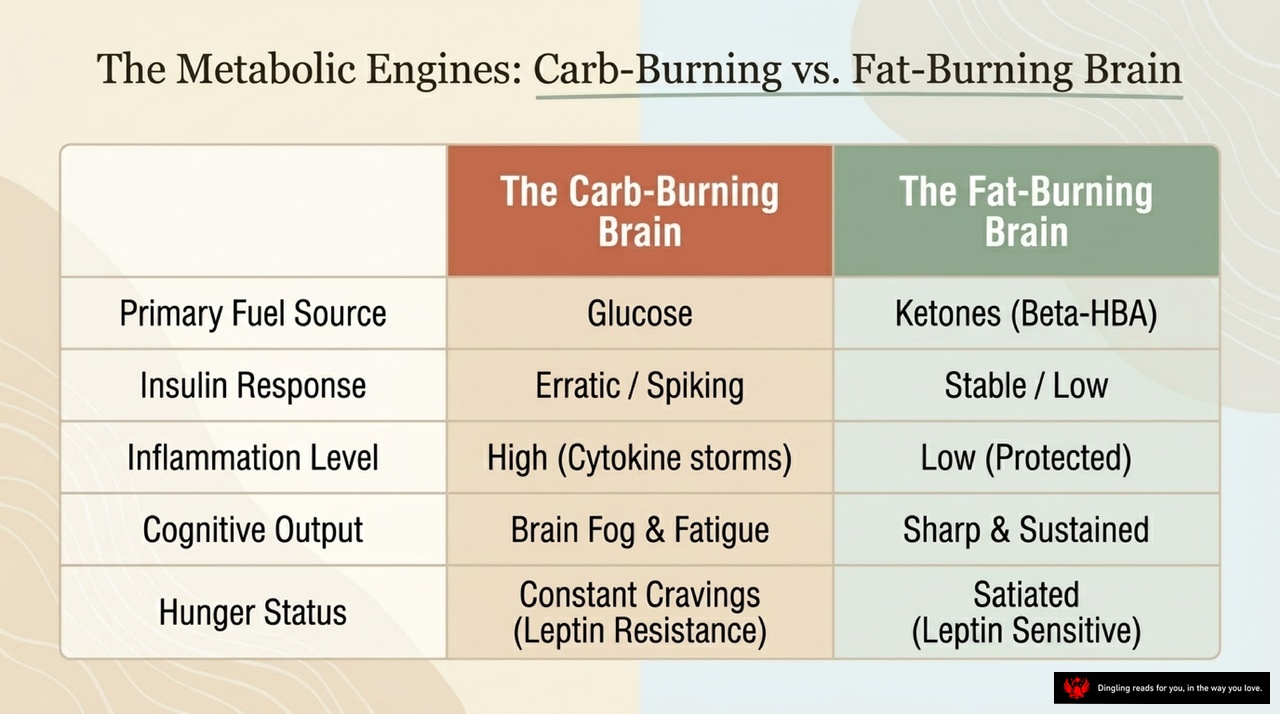
Look at this comparison chart. It lays out the fundamental difference between how our brain runs on sugar versus how it runs on fat. On the left, we have the "Carb-Burning Brain." It relies on glucose, which causes erratic insulin spikes, leads to high inflammation, and often results in brain fog and constant cravings due to leptin resistance. It's a reactive, unstable state.
Now, look at the green column: the "Fat-Burning Brain." This is the ideal state. It uses ketones, specifically Beta-HBA, as its primary fuel. This keeps insulin stable and low, drastically reduces inflammation, and protects the brain from damage. The result? Sharp, sustained cognitive output and a feeling of true satiety.
The takeaway is clear: shifting from a reactive, sugar-dependent mode to a stable, fat-burning mode isn't just about weight loss; it's about upgrading your brain's engine for clarity, focus, and long-term protection.

Imagine your DNA not as a fixed life sentence, but as a dynamic code that lifestyle choices actively rewrite. As this slide illustrates, your genes are not destiny; in fact, your daily habits control roughly 70% of how your genetic expression unfolds. Think of that DNA double helix not as a static ladder, but as a control panel filled with switches. Most of the time, these switches might be in the "OFF" position, but through your choices—what you eat, how you move, how you rest—you hold the power to flip them "ON."
At the heart of this transformation is a specific master switch known as BDNF, or Brain-Derived Neurotrophic Factor. You can think of BDNF as the brain's very own growth hormone. When this switch is activated, it does something incredible: it stimulates neurogenesis, which is literally the birth of new brain cells, while simultaneously protecting the neurons you already have from inflammation and damage. This is the biological mechanism that allows your brain to stay sharp, adaptable, and resilient well into old age.
The beauty of epigenetics is that you don't need to change your genes to improve your brain; you only need to change the environment around them. By prioritizing healthy fats, engaging in regular aerobic exercise, and managing stress, you create the conditions for BDNF to flourish. You are essentially taking the wheel, rewriting the instructions your brain follows, and deciding for yourself whether to let your genes limit you or empower you.
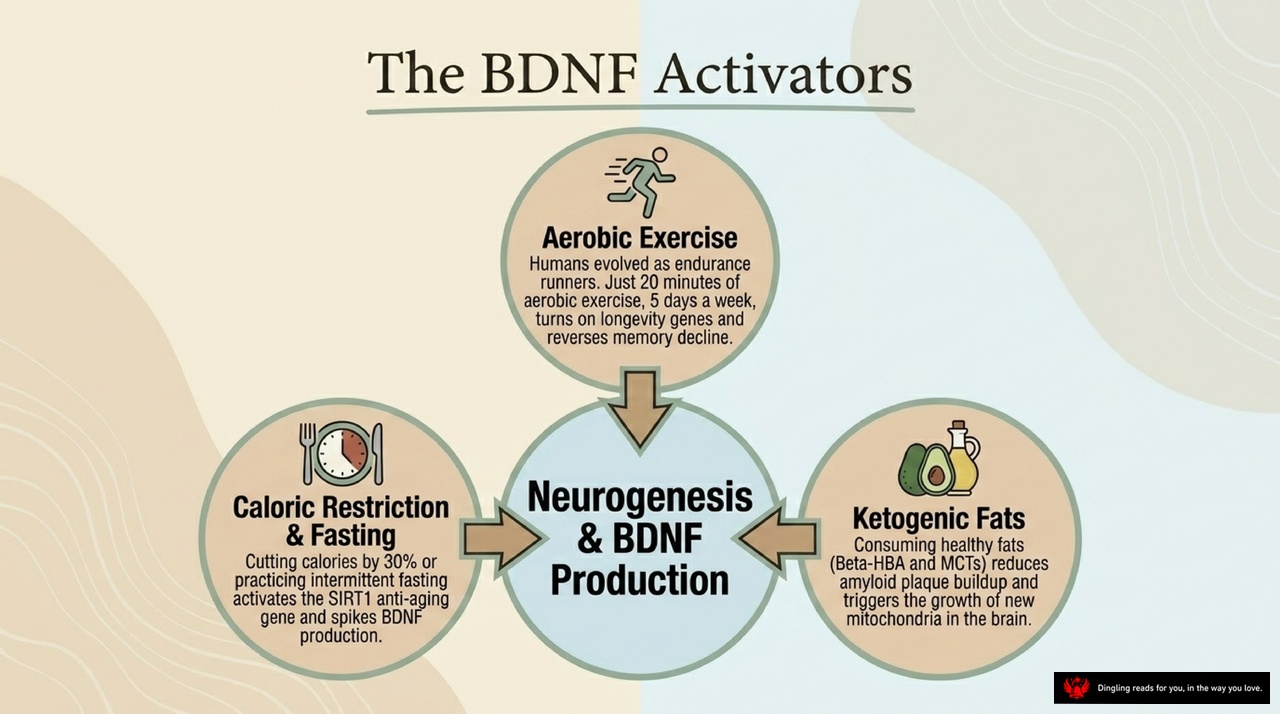
Today's slide breaks down exactly how we can supercharge our brain's natural ability to grow new neurons—a process called neurogenesis. At the heart of this is BDNF, or Brain-Derived Neurotrophic Factor, which acts like a growth hormone for our brain cells.
The image highlights three powerful activators for boosting BDNF. First, we have Aerobic Exercise. Think of our ancestors as endurance runners; just 20 minutes of cardio, five days a week, flips on longevity genes and reverses memory decline. Second is Caloric Restriction and Fasting. Cutting calories by 30% or practicing intermittent fasting activates the SIRT1 anti-aging gene, creating a spike in BDNF production. Finally, there are Ketogenic Fats. Consuming healthy fats like Beta-HBA and MCTs reduces amyloid plaque buildup and triggers the growth of new mitochondria in the brain.
When these three pillars work together, they drive Neurogenesis and BDNF Production, essentially giving your brain the fuel and environment it needs to repair itself, stay sharp, and protect against cognitive decline.

Have you ever felt that one bad night of sleep makes you crave sugar the next day, creating a cycle you can't seem to break? You aren't alone. This slide reveals the secret behind that cycle: it all comes down to a master hormone called leptin and your sleep quality.
On the left, we see "The Vicious Cycle." When you suffer from sleep deprivation, your body develops leptin resistance. Think of leptin as a gatekeeper that tells your brain you're full and keeps inflammation in check. But when sleep is missing, this signal gets blocked. Your brain doesn't know it's full, so you crave intense carbohydrates, leading to high insulin levels and fat storage. This triggers systemic inflammation, which further damages your body, making you sleep even worse. It's a trap that keeps you stuck.
But look at the right side: "The Virtuous Cycle." When you get seven or more hours of deep sleep, leptin sensitivity is restored. Your brain finally receives the "full" signal, and those intense carb cravings disappear. With leptin working correctly, your inflammation drops, cognitive clarity returns, and fat burning gets unlocked. This positive loop boosts your energy and mental sharpness, making it easier to sleep well the next night.
The takeaway is simple but powerful: sleep isn't just about resting your body; it's about resetting your brain's hormonal signals. By prioritizing deep sleep, you can flip the switch from a cycle of fatigue and cravings to one of clarity and control.
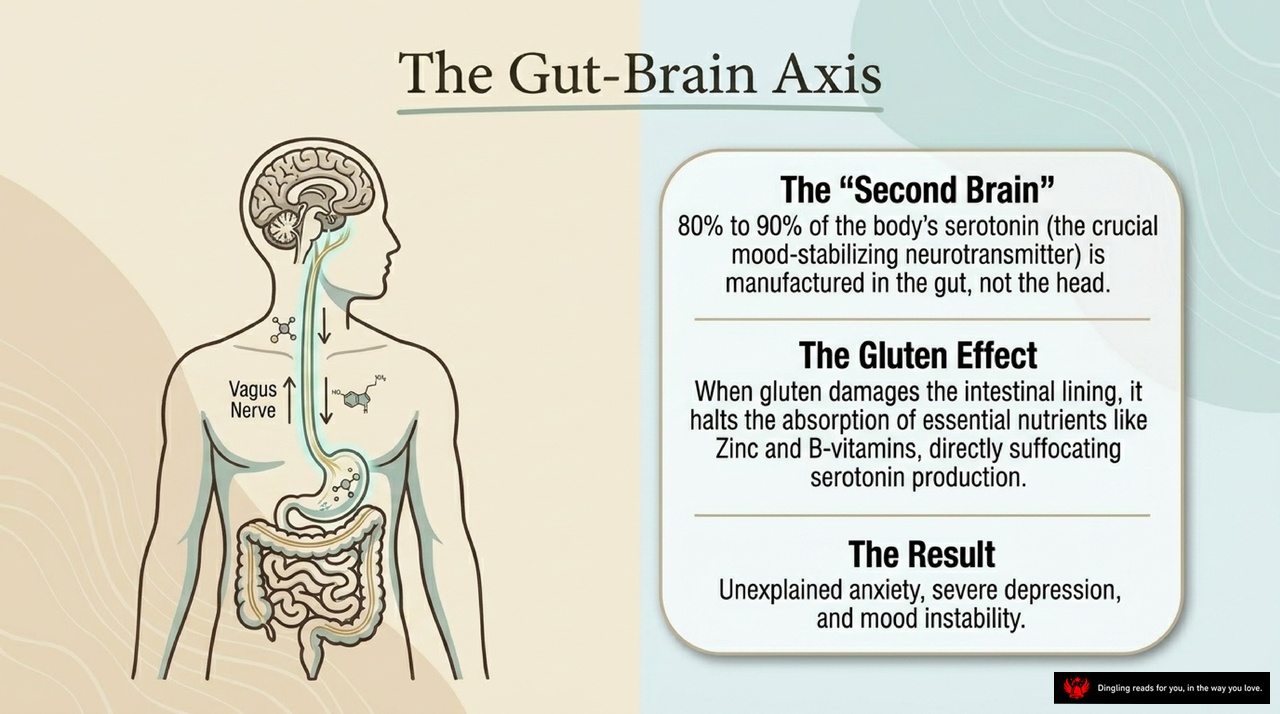
Think about your gut as your "second brain." Did you know that 80% to 90% of the body's serotonin, the chemical that actually stabilizes your mood, is manufactured right there in your digestive tract, not in your head? This connection is managed by the Vagus Nerve, the superhighway linking your gut to your brain. But here's the catch: when gluten damages your intestinal lining, it creates a barrier that stops essential nutrients like Zinc and B-vitamins from being absorbed. Without these building blocks, serotonin production literally chokes, leaving you with unexplained anxiety, severe depression, and wild mood swings. The fix? Eliminating gluten to heal that gut lining and restore the chemical balance your brain desperately needs.
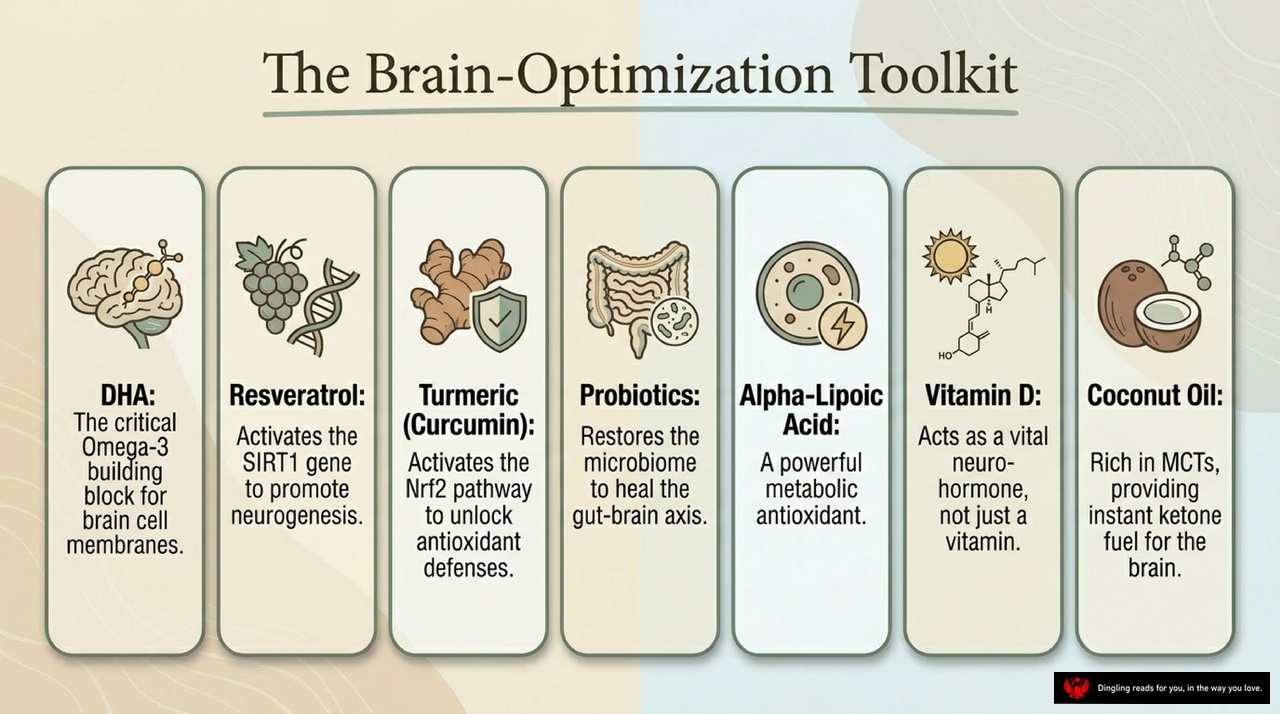
Imagine your brain isn't just a passive organ, but a dynamic, self-repairing machine that can grow new neurons throughout your life. This concept, known as neuroplasticity, is the key to reversing cognitive decline. At the heart of this process is a protein called BDNF, often called the brain's "growth hormone." It fuels the creation of new brain cells and strengthens the connections between them.
So, how do we activate this growth? The answer lies in a specific toolkit of nutrients and lifestyle choices. First, consider **DHA**, the critical Omega-3 building block for brain cell membranes. It doesn't just protect your brain; it actively regulates the genes that produce BDNF. Studies show that simply eating two servings of fish a week can slash your Alzheimer's risk by nearly 60%.
Next, look to **Resveratrol**, found in grapes and red wine, which activates genes linked to longevity and boosts blood flow to the brain. Then there's **Turmeric**, specifically its active compound Curcumin. It's a powerful antioxidant that unlocks your body's natural defense systems and has been shown to directly boost BDNF levels, explaining why cultures with high curry consumption often have lower rates of dementia.
Don't forget the gut-brain connection. **Probiotics** restore your microbiome, healing the axis that links your digestive health to your mental state. And for immediate fuel, **Coconut Oil** acts as a supercharger, providing ketones that the brain loves, offering a stable energy source that prevents the crashes associated with sugar.
Finally, include **Alpha-Lipoic Acid** as a metabolic antioxidant that crosses the blood-brain barrier, and **Vitamin D**, which functions more like a vital neuro-hormone than a simple vitamin. By combining these elements—DHA, Resveratrol, Turmeric, Probiotics, Alpha-Lipoic Acid, Vitamin D, and Coconut Oil—you aren't just taking supplements; you are equipping your brain with the exact tools it needs to regenerate, protect itself, and thrive.
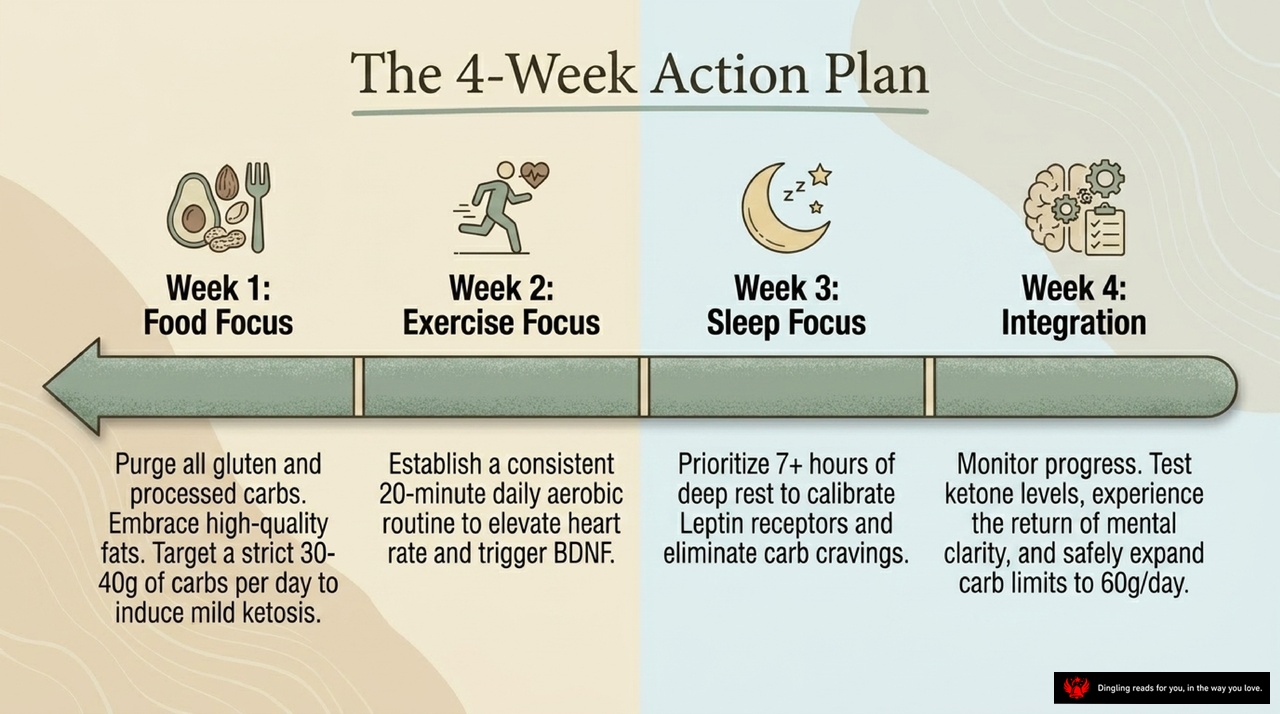
Look at this roadmap for the next 30 days. This isn't just a checklist; it's a strategic reset for your brain, moving from one pillar of health to the next.
We start in Week 1 with Food Focus. The goal is simple but powerful: purge all gluten and processed carbs. By embracing high-quality fats and targeting a strict 30 to 40 grams of carbs per day, you induce mild ketosis. This shifts your brain from relying on glucose to burning fat, cutting out the inflammation that silently damages your neurons.
Once your diet is stable, Week 2 shifts to Exercise Focus. You don't need an hour at the gym; just establish a consistent 20-minute daily aerobic routine. This elevates your heart rate and triggers BDNF, the brain's growth hormone, which literally builds new connections and protects against cognitive decline.
By Week 3, we turn to Sleep Focus. Prioritize 7+ hours of deep rest every night. This isn't just about waking up refreshed; it's about calibrating your leptin receptors and eliminating those relentless carb cravings that keep you stuck in a cycle of fatigue and hunger.
Finally, Week 4 is about Integration. Now that the habits are forming, monitor your progress. Test your ketone levels to ensure you're in the right metabolic zone, experience the return of mental clarity, and safely expand your carb limits to 60 grams a day. This plan moves you from reactive survival to proactive brain health, one week at a time.
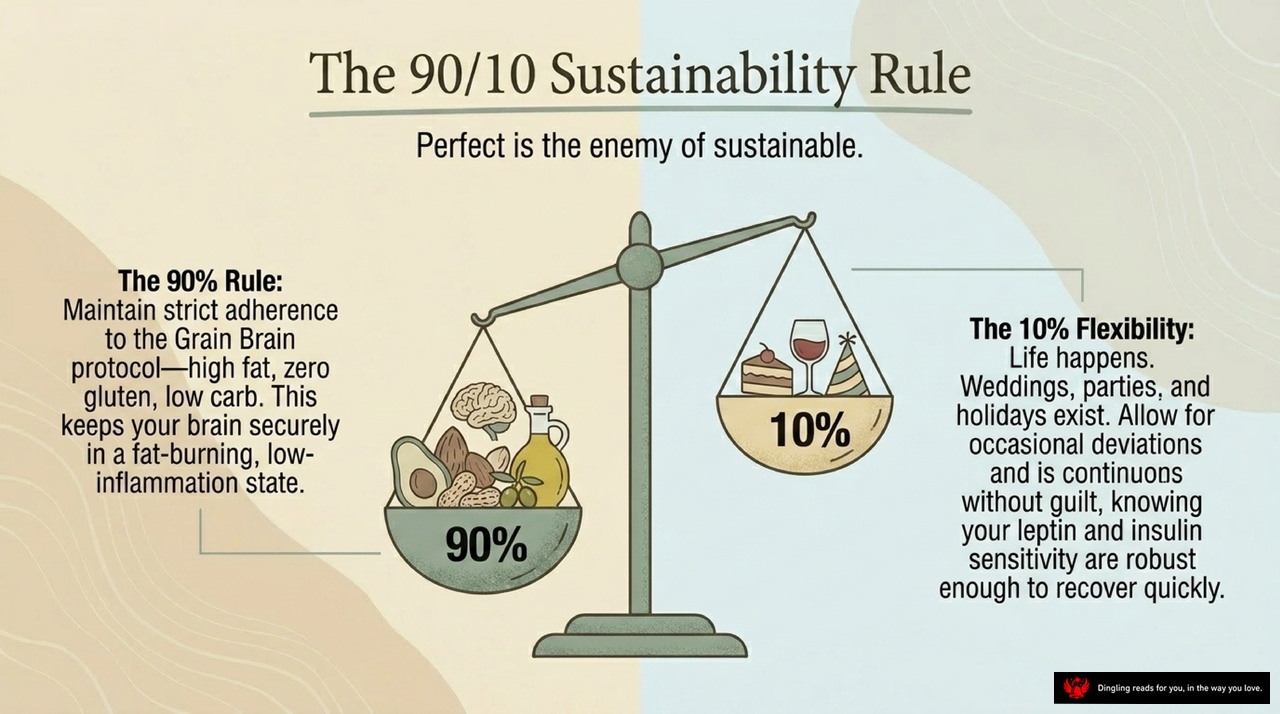
Look at this scale. It perfectly illustrates the "90/10 Sustainability Rule," a concept that shifts the entire mindset around brain health. On the left, the heavy 90% side holds your brain, avocados, nuts, and healthy fats. This represents the non-negotiable foundation: maintaining strict adherence to a high-fat, zero-gluten, low-carb protocol. This is what keeps your brain in a fat-burning, low-inflammation state, protecting it from the chronic damage caused by sugar and processed grains.
But look at the right side. That 10% isn't a failure; it's your freedom. Life happens. Weddings, parties, and holidays exist. This slide reminds us that perfection is actually the enemy of sustainability. You don't need to be rigid all the time. The 10% flexibility allows for occasional deviations—like enjoying a glass of wine or a slice of cake—without guilt. The key is knowing that your leptin and insulin sensitivity are robust enough to recover quickly. By balancing strict daily discipline with occasional treats, you create a lifestyle you can actually maintain, ensuring long-term brain health without burning out.
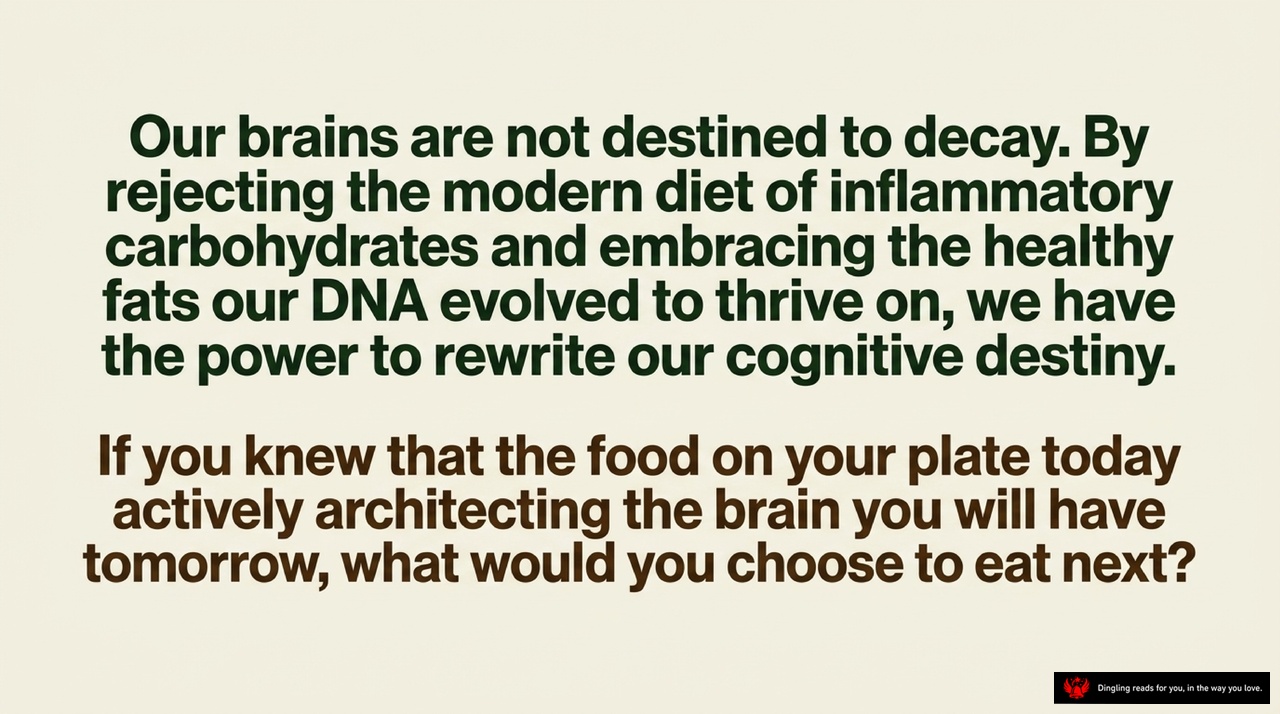
Have you ever wondered if the food on your plate today is secretly designing the brain you'll have tomorrow? The answer is a resounding yes. Your brain isn't destined to decay; in fact, it has the power to rewrite its own destiny, but only if you choose the right fuel.
Most of us are stuck on a modern diet loaded with inflammatory carbohydrates that actually sabotage our cognitive potential. By rejecting those and embracing healthy fats—the very thing our DNA evolved to thrive on—we can stop the slow erosion of our minds. Think of your brain as an architect; what you eat provides the bricks and mortar for tomorrow's structure.
The key lies in shifting your energy source. Instead of relying on glucose, which spikes and crashes, your brain can run on ketones, a far more efficient and stable fuel derived from fat. This switch reduces inflammation, protects your neurons from toxins, and even stimulates the growth of new brain cells. It's not about deprivation; it's about upgrading your engine. When you feed your body quality fats like olive oil, avocados, and wild fish, you aren't just losing weight—you're building a sharper, more resilient mind that is ready to tackle whatever comes next.