



Interesting but feels too focused on tech.
Your Review
Interesting but feels too focused on tech.

The four-stage loop explains app retention well, yet the ethical boundaries remain vague.

Hoover explains how external triggers turn into internal emotional habits, showing why apps like Instagram stick while others fail.

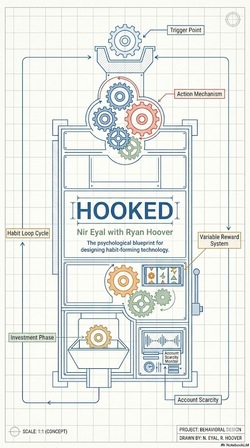
Ryan Hoover's framework of Trigger, Action, Variable Reward, and Investment perfectly explains why some apps stick while others vanish. He distinguishes between external prompts like push notifications and internal emotional triggers like boredom or FOMO, showing how successful products like Instagram evolve from one to the other to become essential habits rather than disposable tools. The book also wisely emphasizes ethical boundaries, warning creators against exploiting psychological vulnerabilities for short-term gains. By prioritizing user autonomy and designing for genuine value instead of manipulation, entrepreneurs can build loyal communities that trust their product. The four-stage model provides actionable steps for simplifying actions and using variable rewards to keep users engaged without feeling forced. Ultimately, Hooked offers a blueprint for creating responsible habit-forming products that solve real problems and respect user well-being, ensuring long-term success over fleeting viral moments. This is a must-read for anyone building digital products.

This book finally explains why I keep deleting apps.

Hoover shows how to turn apps into habits without tricks. He explains that external triggers like push notifications work well initially, but the real magic happens when users develop internal triggers driven by emotions like boredom or FOMO. By simplifying the action to make it effortless and using variable rewards that feel unpredictable, creators can build trust instead of exploiting users. The four-stage model of Trigger, Action, Variable Reward, and Investment is clear and practical for anyone wanting to design products that stick. Ultimately, the book reminds us that ethical design, which respects user autonomy and solves genuine needs, is the only way to create lasting loyalty rather than just short-term engagement that eventually fails.

Three out of five stars because the four-stage model feels too theoretical for my small startup, though the examples on triggers are helpful.

I struggled to understand the concept of variable rewards at first, but Hoover clarifies it perfectly by explaining how unpredictable social likes and prey-like news feeds trigger dopamine. He distinguishes between healthy habit promoters who solve real pain points and peddlers who use hollow badges just to boost metrics. This ethical distinction is crucial because it reminds us that building an addictive product doesn't automatically make it valuable. The case study of FocusFlow really helped me visualize how a startup can use internal triggers for procrastination guilt instead of relying on expensive paid ads. Most importantly, the advice to start with your own pain point resonates deeply; successful products like Instagram or Buffer came from founders solving their own problems, not from market research spreadsheets. While the model is powerful, I remain cautious about dealers who exploit vulnerabilities for profit, as the two-question ethical test is essential to ensure we build tools that respect user autonomy rather than manipulating them for short-term engagement gains.

Ryan Hoover's four-stage model of Trigger, Action, Variable Reward, and Investment brilliantly explains why some apps stick while others fail, offering a clear ethical roadmap for building products that serve users instead of exploiting them.

This guide explains why some apps stick while others fail quickly.

The distinction between external and internal triggers really changed how I see my own daily habits.

This book helped me understand why I delete apps daily.

This book solved my confusion about why apps fail so quickly.

Starting with your own pain point is the most important lesson in this book. When I built my first app, I focused on features instead of solving a real problem I faced. That mistake led to low retention and user frustration. Hoover explains that simplicity drives habit formation better than complex features ever could. Google and Twitter succeeded because they reduced friction, not because they added bells and whistles. This reminded me that ease of use is often more critical than functionality. I now understand why I delete apps that feel like work instead of help. The book also warns against dark patterns that exploit user vulnerabilities. Ethical design builds long-term trust, while manipulation destroys it quickly. This perspective changed how I approach future product ideas.

The internal trigger concept changed how I see my own daily habits.

Ryan Hoover explains why apps fail by showing how triggers, actions, and rewards build real habits instead of just forcing usage.

This book clarifies why apps stick by explaining how internal triggers turn emotions like boredom into habits without needing constant notifications.

The distinction between external and internal triggers really clarified why I keep opening apps I don't actually need.

Investment stage ideas like the IKEA Effect explain why I keep using certain apps. I spent hours customizing my to-do list categories, so switching feels like losing part of myself. Hoover shows how small efforts create emotional attachment over time. This makes sense when I think about my Spotify playlists or LinkedIn profile. I value them not just for utility but because I built them personally. The book warns against forcing engagement through spammy notifications. Respecting user autonomy keeps trust alive instead of breaking it. This balance between engagement and ethics is hard to maintain but essential.

This book explains why some apps stick while others fail quickly.