

The explanation of hiring 'learning animals' by focusing on past failures rather than resume credentials really changed how I think about recruiting, and the flat hierarchy advice makes sense for my small team.
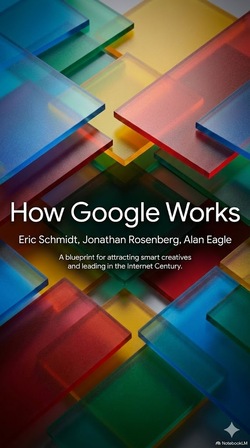
Your Review
The explanation of hiring 'learning animals' by focusing on past failures rather than resume credentials really changed how I think about recruiting, and the flat hierarchy advice makes sense for my small team.

This book changed how I see hiring and trust.
The examples of Google's culture show that trust and autonomy drive innovation far better than perks or rigid hierarchies, making this book a practical guide for any leader wanting to empower their team to solve problems creatively without waiting for permission.


Data driven decisions feel scary at first but they remove so much bias from our team meetings now.

The flat hierarchy idea changed how I see my own team structure.

This book shows why trust beats perks when hiring creative elites for your team today.

The 70/20/10 rule helps balance core work with wild ideas without risking the business. Allocating ten percent of time to unproven experiments, like Google's self-driving car projects, ensures the company doesn't stagnate while maintaining stable revenue. This framework forces leaders to bet on the future rather than just optimizing the present. By dedicating resources to emerging opportunities and side projects, teams can discover game-changing innovations that might otherwise get trapped in bureaucracy or ignored for short-term gains. It's a simple but powerful way to keep an organization agile and forward-thinking.

Google proves that hiring for growth mindset matters more than past achievements in fast changing industries.

Reading this felt like a long journey. I learned that Google succeeded not because of free gourmet meals or fancy gyms, but because they prioritized a culture built on deep trust instead. The authors explain how they fought against the highest-paid person dominating decisions, which was a huge eye-opener for me. Instead of relying on titles, they used data and logic to win arguments, ensuring the best ideas rose to the top regardless of who proposed them. This shift from hierarchy to merit is something any business can adopt to stop losing creative talent. I was also impressed by their hiring committee model, which removes bias by having diverse panels evaluate candidates rather than letting one manager call the shots. This ensures everyone is judged on their potential to learn and grow, not just past achievements. Another key takeaway was their focus on retaining top performers by offering flexible roles and challenging assignments, proving that people stay when they feel trusted and valued. Finally, the idea of using simple tools like OKRs to set bold, measurable goals helped me understand how to focus my own team on impact rather than just busy work. This book is a practical playbook that moves beyond theory to give real strategies for building a resilient and innovative organization that puts people first above all else.

I learned how to hire 'learning animals' by asking about past failures instead of just listing past achievements.

The advice on hiring learning animals really changed my perspective on recruitment.

The 20 percent time policy inspired my team to start a new side project that is now generating extra revenue.

This book really helped me understand how to keep my best employees from leaving.

Great advice on hiring the right people.

Too much focus on perks without real trust makes employees feel manipulated instead of valued.

The story about Jeff Dean fixing irrelevant ads overnight perfectly illustrates why empowering employees matters so much.

This book shows that prioritizing people and trust creates a culture where top talent wants to stay and grow long term.

The section on hiring committees changed how I view recruitment today.

Schmidt and Rosenberg explain how flat hierarchies and data-driven decisions help teams avoid bureaucratic delays, showing that trust empowers employees to solve problems without waiting for permission.

I learned that flat hierarchies actually speed up decision making for everyone.