History Book Summaries & Key Insights

History Total 104 books

The Emperor of All Maladies summary and key insights by Siddhartha Mukherjee
Loading…

The Emperor of All Maladies

Siddhartha Mukherjee

4.2852 learners

Siddhartha Mukherjee’s *The Emperor of All Maladies* is a sweeping, deeply researched narrative tracing humanity’s millennia-long struggle against cancer—dubbed the “emperor” for its relentless, pervasive grip. From ancient surgical attempts to the dawn of radiation and chemotherapy, the book chronicles bold missteps and groundbreaking triumphs of medical pioneers: Sidney Farber’s first leukemia remission with folate antagonists, the rise of the Jimmy Fund that galvanized public support, and the 1971 National Cancer Act that launched a national “war on cancer.” It delves into the molecular revolution unlocking cancer’s genetic secrets—oncogenes, tumor suppressor genes, and chromosomal abnormalities like the Philadelphia chromosome—paving the way for targeted therapies like Herceptin and Gleevec. Blending rigorous science with intimate patient stories, Mukherjee reveals cancer not as a single disease, but a complex family of maladies, capturing the hope, despair, and unyielding resilience defining humanity’s fight to outsmart this formidable foe.
Future Engine summary and key insights by Shao Chunbao
Loading…

Future Engine

Shao Chunbao

4976 learners

"Future Engine" by Shao Chunbao is a forward-thinking roadmap that unpacks the core technological engines reshaping global business and society over the next decade. Drawing on real-world case studies of U.S. industry leaders like OpenAI, Amazon, and Google, the book demystifies complex innovations—from generative AI and quantum computing to edge computing and Web3—and explains how they’re redefining supply chains, customer experiences, and organizational structures. Beyond tech breakdowns, it delivers actionable frameworks for startup founders, corporate executives, and tech professionals to assess, adopt, and scale these tools. It also addresses critical societal shifts, such as workforce adaptation and ethical governance of emerging tech, helping readers navigate uncertainty and build resilient, future-ready strategies. Whether you’re aiming to stay ahead of industry trends or lead your organization’s digital transformation, this book turns abstract future tech into tangible competitive advantage.

Cognitive Surplus summary and key insights by Clay Shirky
Loading…

Cognitive Surplus

Clay Shirky

41020 learners

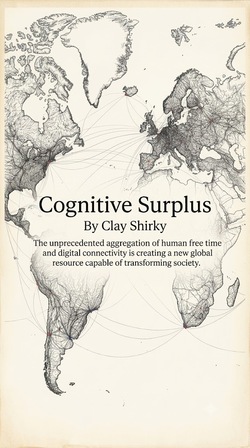
In *Cognitive Surplus*, Clay Shirky unpacks how the billions of hours we once spent passively consuming TV—dubbed "cognitive surplus"—are being reclaimed as a transformative social resource via digital and social media. Using vivid real-world examples, from the Ushahidi crisis-mapping platform that tracked Kenyan election violence to viral "Lolcat" memes and South Korea’s youth-led candlelight protests, Shirky explains why people are shifting from passive consumers to active creators, collaborators, and sharers. He dives into the intrinsic motivations fueling this shift: the human desire for autonomy, competence, belonging, and generosity. Shirky also outlines four tiers of value generated by cognitive surplus—personal, communal, public, and civic—and explores how intentional governance and cultural norms can turn scattered individual efforts into meaningful collective impact. This book is both a sharp analysis of media evolution and a practical guide to leveraging shared free time to solve problems, build communities, and reshape society.

Models of My Life summary and key insights by Herbert A. Simon
Loading…

Models of My Life

Herbert A. Simon

4.3480 learners

Models of My Life is the compelling autobiography of Herbert A. Simon, a Nobel Prize-winning polymath whose work redefined economics, psychology, computer science, and management. From his curious Milwaukee childhood—where he devoured encyclopedias, explored wilderness, and nurtured interdisciplinary thinking—to his transformative years at the University of Chicago, Simon’s journey reveals how he shattered academic silos. He introduced the groundbreaking theory of bounded rationality, challenging neoclassical economics’ perfect rationality assumption with the pragmatic concept of 'satisficing' (seeking good-enough solutions). Alongside Allen Newell, he co-founded artificial intelligence, creating the Logic Theorist program and pioneering cognitive science research. The memoir also chronicles his role in building Carnegie Mellon’s innovative business school, his engagement in social and political issues, and his international collaborations. More than a career retrospective, it offers insights into Simon’s life philosophy: embracing limited rationality as a guide for both scientific inquiry and everyday decision-making. This book is a must-read for anyone interested in the intersection of science, innovation, and human behavior.

The Principia summary and key insights by Isaac Newton
Loading…

The Principia

Isaac Newton

4.41267 learners

Isaac Newton’s *The Principia* is the foundational work of classical physics, reshaping humanity’s grasp of motion and cosmic harmony. Through rigorous mathematical proof and empirical observation, Newton establishes core definitions of mass, inertia, and force, then unveils his three laws of motion—the backbone of modern mechanics. He extends these principles to derive the law of universal gravitation, uniting terrestrial phenomena (like falling objects) with celestial motion (planetary orbits, comet trajectories). The text also includes pioneering analyses of fluid dynamics, orbital mechanics, and pendulum behavior, alongside four rules for scientific inquiry that laid the groundwork for the modern scientific method. By merging mathematics and physics, Newton created a unified framework to explain everything from a falling apple to the orbits of planets, a paradigm that dominated scientific thought for centuries.

The Nature of Technology summary and key insights by W. Brian Arthur
Loading…

The Nature of Technology

W. Brian Arthur

4.4895 learners

We’ve all grown dependent on tech—from smartphone apps to jet engines—yet rarely stop to ask: What *is* technology, really? In *The Nature of Technology*, W. Brian Arthur upends the common view of tech as just tools, arguing its core is the capture and programming of natural phenomena. He introduces the game-changing concept of combinatorial evolution: nearly all new tech emerges by combining existing technologies, not through random innovation. Using relatable examples like the F-35 jet’s recursive design or PCR’s mix of DNA tools, Arthur breaks down how tech builds itself layer by layer, with modularity and recursive structures driving efficiency and innovation. He also debunks the myth that tech is just applied science, showing the two evolve symbiotically—tech fuels scientific discovery as much as science inspires tech. Plus, he explores how tech reshapes economies, creating "recombinant economies" focused on constant combination, and even hints at tech’s life-like traits, from self-organization to adaptive growth. This book isn’t just for engineers; it’s for anyone curious about the invisible forces shaping our modern world.

The Greenhouse at the End of the Earth summary and key insights by Kim Cho-yeop
Loading…

The Greenhouse at the End of the Earth

Kim Cho-yeop

3.5591 learners

Set in a world recovering from the catastrophic Dustfall, *The Greenhouse at the End of the Earth* weaves three interconnected tales of survival, love, and forgotten truths. When ecologist Ah-young investigates the anomalous spread of the glowing Mosswana vine in Haewol, she stumbles into a web of legends linking the plant to a lost sanctuary called Prim Village. As she traces clues from a childhood memory of a blue-glowing garden to Ethiopia, she uncovers the story of Naomi and Amara—sisters who carried Mosswana seeds across continents to sustain survivors—and the quiet bond between Jisu, a mechanic, and Rachel, a modified researcher who created the vine to shield Prim Village from the Dustfall. The novel culminates in a bittersweet reunion with Rachel and a visit to Prim Village’s overgrown ruins, revealing that the real legacy of the vine isn’t a miracle, but the unbroken promises of those who refused to let hope die amid ruin.

The Gods Themselves summary and key insights by Isaac Asimov
Loading…

The Gods Themselves

Isaac Asimov

4.4511 learners

Isaac Asimov’s sci-fi masterpiece *The Gods Themselves* weaves three interconnected tales of cosmic stakes and human folly. On Earth, rebellious physicist Peter Lamont clashes with the arrogant “Father of the Electron Pump,” Frederick Hallam, exposing the free energy device’s hidden threat: it’s slowly altering our universe’s fundamental forces, destined to trigger a solar explosion. In a parallel universe where beings exist as trios of thinkers, nurturers, and empaths, the outcast Dua uncovers a chilling truth about her kind’s role in the crisis. On the Moon, disgraced scientist Denison teams up with lunar visionary Selena Lindstrom to find a solution—one that could either save both universes or redefine humanity’s future. Blending sharp scientific speculation with incisive commentary on power, complacency, and moral courage, Asimov challenges readers to confront the cost of unbridled progress.

The Elegant Universe summary and key insights by Brian Greene
Loading…

The Elegant Universe

Brian Greene

4.5472 learners

Brian Greene’s *The Elegant Universe* takes readers on a captivating, accessible journey through modern physics’ greatest puzzle: the catastrophic clash between Einstein’s general relativity (which governs galaxies, black holes, and large-scale cosmic phenomena) and quantum mechanics (the rulebook for tiny particles like quarks and electrons). Greene breaks down how these two proven theories fail in extreme scenarios—like the Big Bang’s start or black hole cores—before introducing string theory as the potential unifying solution. He explains that the universe’s building blocks aren’t point-like particles, but tiny, vibrating strings whose different oscillations correspond to all known particles and forces, including gravity. The book dives into mind-bending concepts: extra curled-up dimensions, supersymmetry, M-theory (the overarching framework for five string theories), and how string theory resolves long-standing mysteries like black hole entropy and the Big Bang singularity. Rigorous yet engaging, it invites readers to rethink the very fabric of space, time, and reality.

The Astonishing Hypothesis summary and key insights by Francis Crick
Loading…

The Astonishing Hypothesis

Francis Crick

4.5701 learners

In *The Astonishing Hypothesis*, Nobel Prize-winning scientist Francis Crick upends centuries of spiritual and philosophical belief by arguing that every facet of human experience—joy, sorrow, memory, free will, and consciousness itself—arises from the collective activity of billions of neurons and their associated molecules. Rejecting the idea of an independent soul, Crick frames consciousness as a solvable scientific problem, zeroing in on visual awareness as a practical starting point due to its vividness, controllable inputs, and feasibility for experimentation in humans and primates. Drawing on decades of neuroscience research, psychological experiments (such as visual illusions and attention studies), and analyses of brain-damaged patients, he explores how neural networks process visual information, the specialized roles of brain regions like the primary visual cortex and thalamus, and the search for the "neural correlates of consciousness." Crick’s work bridges abstract philosophy and hard science, challenging readers to rethink their understanding of self and laying the groundwork for modern consciousness studies.

The AI Delusion summary and key insights by Gary Smith
Loading…

The AI Delusion

Gary Smith

3.31112 learners

In *The AI Delusion*, economist Gary Smith dismantles the hype surrounding artificial intelligence, arguing that today’s AI systems are not truly intelligent—they’re just sophisticated tools for data matching and brute-force computation. Using vivid examples from Jeopardy!’s Watson, chess-playing programs like AlphaZero, and real-world failures in medicine, stock trading, and hiring, Smith shows that machines lack human understanding: they can’t grasp context, distinguish meaningful patterns from random coincidences, or apply common sense. He exposes the dangers of data mining, from the Texas Sharpshooter Fallacy (cherry-picking data to fit theories) to overfitting models that work perfectly on old data but fail catastrophically on new inputs. Smith also warns against blind trust in black-box algorithms, which perpetuate bias, enable unfair decisions, and risk catastrophic errors in high-stakes fields like healthcare and military operations. Ultimately, he emphasizes that human reasoning, critical thinking, and common sense are irreplaceable—we should use AI as a tool, not mistake it for a thinking, feeling counterpart.

Surely You're Joking, Mr. Feynman! summary and key insights by Richard P. Feynman
Loading…

Surely You're Joking, Mr. Feynman!

Richard P. Feynman

4.2999 learners

Surely You're Joking, Mr. Feynman! is a vibrant collection of autobiographical essays from Nobel Prize-winning physicist Richard P. Feynman, offering an unfiltered, hilarious look at his extraordinary life. From his mischievous boyhood tinkering with home labs and fixing radios for neighbors during the Great Depression to his groundbreaking work on the Manhattan Project and quantum electrodynamics, Feynman’s stories brim with wit, curiosity, and a refusal to play by the rules. He recounts pranking colleagues at Princeton, cracking top-secret safes at Los Alamos, learning samba drums in Brazil, taking up painting later in life, and skewering flawed education systems. Beyond the laughs, the book reveals his unwavering commitment to scientific integrity, disdain for academic pretension, and belief that great science thrives on playfulness and relentless questioning. It’s a celebration of a brilliant mind that refused to be boxed in, perfect for science lovers and anyone who craves stories of authenticity and curiosity.

Supremacy summary and key insights by Parmy Olson
Loading…

Supremacy

Parmy Olson

3.4872 learners

Parmy Olson’s *Supremacy* pulls back the curtain on the high-stakes race for artificial intelligence dominance, tracing the journeys of two visionary leaders—Sam Altman of OpenAI and Demis Hassabis of DeepMind—from their unconventional childhoods to their rise as defining figures in tech. The book chronicles the creation of groundbreaking tools like ChatGPT and AlphaGo, the cutthroat battles between giants Microsoft and Google, and the internal clashes over commercialization, safety, and ethical responsibility. It exposes the tension between idealistic AI research and corporate profit motives, delves into urgent issues like algorithmic bias, deepfake risks, and eroding human cognition, and examines the growing monopoly of big tech in shaping AI’s future. Blending gripping storytelling with sharp analysis, *Supremacy* offers an unflinching look at the power struggles, moral dilemmas, and existential questions defining the next era of technology.

Red Mars summary and key insights by Kim Stanley Robinson
Loading…

Red Mars

Kim Stanley Robinson

4.31243 learners

Set in the mid-21st century, as Earth’s ecosystem collapses and resources dwindle, humanity turns to Mars as its last hope for survival. *Red Mars* chronicles the epic journey of the first 100 colonists aboard the Ares, a multinational mission to establish a permanent settlement on the Red Planet. From the tense, politically fraught years of preparation on Earth to the grueling six-month voyage marked by zero-gravity adjustments, simulated crises, and simmering interpersonal conflicts, the novel immerses readers in the colonists’ struggles. Upon landing, they face harsh Martian conditions: frigid temperatures, deadly radiation, and limited resources, forcing them to build shelters, harness local materials, and debate the future of their new home. Central to the story is the clash between factions—some advocating for immediate terraforming to make Mars habitable, others fighting to preserve its pristine, ancient landscape—while personal rivalries and shifting alliances threaten to tear the colony apart. Kim Stanley Robinson weaves hard science with rich character drama, offering a vivid, thought-provoking exploration of humanity’s drive to survive, adapt, and redefine civilization beyond Earth.

Mars Shines on America summary and key insights by Han Song
Loading…

Mars Shines on America

Han Song

3.31071 learners

In 2066, as China rises as the global economic and cultural powerhouse, 16-year-old Tang Long, a prodigy on China’s national go team, travels to a crumbling, isolationist America for the World Go Championship. What starts as a prestigious competition quickly devolves into a fight for survival: Washington is engulfed in riots, New York is submerged by a catastrophic flood after terrorists blow up sea walls, and Tang is separated from his team. Rescued by a crew of orphaned Asian teens aboard the makeshift 'Noah Ark' fishing boat, he joins their quest for the mythical Spiritual Staff, said to predict the future. Later, he teams up with Newman, a genetically modified American with a kangaroo tail storing U.S. cultural memories, navigating a nation torn apart by the Second American Civil War. From battling rogue factions to confronting the collapse of the omnipotent Amando system, Tang’s journey transforms him from a sheltered go champion into a hardened survivor, forcing him to redefine his identity and grasp the fragile fate of civilizations under Mars’ eerie red glow.

Loonshots summary and key insights by Safi Bahcall
Loading…

Loonshots

Safi Bahcall

4.2970 learners

In *Loonshots*, Safi Bahcall unpacks the untold stories of 'crazy' ideas that reshaped the world—from WWII’s radar and penicillin to statin drugs and the internet. He breaks down loonshots into two core types: P-type (product/tech breakthroughs like jet engines) and S-type (strategy/model shifts like airline revenue management). Bahcall reveals why so many game-changing loonshots die early, trapped by false failures, organizational blind spots like the 'Moses Trap' (leaders fixated on past successes), and misaligned incentives. Drawing on physics concepts like phase transitions and percolation theory, he lays out actionable frameworks—the Bush-Wehrle Principles of phase separation, dynamic balance, and systems thinking—to help organizations nurture loonshots while sustaining core operations. Packed with real-world case studies (DARPA, Pixar, Pan Am), this book gives leaders and innovators the tools to spot hidden potential, defend fragile ideas, and turn 'impossible' loonshots into transformative wins.

Fire in the Valley summary and key insights by Michael Swaine;Paul Freiberger
Loading…

Fire in the Valley

Michael Swaine;Paul Freiberger

4.21041 learners

Fire in the Valley is the definitive chronicle of the personal computer revolution that birthed Silicon Valley and transformed global technology. Starting with 19th-century visionaries like Charles Babbage and Ada Lovelace, it traces the evolution from early vacuum tube machines like ENIAC to the invention of the microprocessor, the game-changing Altair 8800, and the grassroots Homebrew Computer Club that fueled amateur innovation. The book dives into the rivalries, triumphs, and failures of iconic figures—Steve Jobs and Steve Wozniak building Apple in a garage, Bill Gates and Paul Allen launching Microsoft, and IBM’s entry that reshaped the industry. It also chronicles the shift to the post-PC era, from the iPod and iPhone to cloud computing, capturing the chaotic, passionate spirit of engineers, entrepreneurs, and tinkerers who turned a niche hobby into a global phenomenon that redefined how we work, connect, and live.

Crossing the Chasm summary and key insights by Gerffrey A. Moore
Loading…

Crossing the Chasm

Gerffrey A. Moore

4.4774 learners

Geoffrey A. Moore’s *Crossing the Chasm* is the definitive playbook for high-tech startups and established firms struggling to move beyond early adopter success to mainstream market dominance. Moore introduces the groundbreaking Technology Adoption Lifecycle, a framework breaking consumers into five distinct segments: innovators, early adopters, early mainstream, late mainstream, and laggards. The core challenge he addresses is the "chasm"—a critical, high-risk gap between risk-taking early adopters and pragmatic early mainstream buyers who demand proven, problem-solving products. Moore doesn’t just diagnose the problem; he delivers actionable strategies to bridge this divide. He emphasizes focusing on a narrow niche within the early mainstream, tailoring messaging to prioritize their specific pain points over cutting-edge features, and building distribution channels aligned with their buying habits. Packed with real-world tech industry case studies, this book has become a cornerstone for marketers, founders, and product leaders, offering a roadmap to turn niche innovations into widely adopted, profitable products.

Ball Lightning summary and key insights by Liu Cixin
Loading…

Ball Lightning

Liu Cixin

4.4647 learners

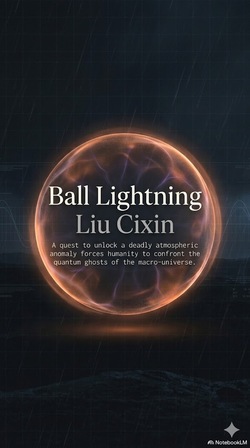
After a catastrophic ball lightning strike kills his parents, a young man dedicates his entire life to unraveling the mystery of this baffling natural phenomenon. He skips college social life to self-study physics, crosses paths with the fiercely driven military researcher Lin Yun, and teams up with the eccentric, Nobel-nominated physicist Ding Yi. Their journey spans dusty university libraries, top-secret military bases, abandoned Soviet research facilities, and high-stakes war zones. What begins as a personal quest for truth evolves into a race to weaponize ball lightning, uncovering mind-bending quantum secrets—like macro-electrons, invisible spatial bubbles, and the eerie reality of quantum-state beings. As war erupts and ethical lines blur, he grapples with the devastating cost of his obsession: lost innocence, shattered loyalties, and a world forever altered by the power he helped unleash.

Gaia: A New Look at Life on Earth summary and key insights by James Lovelock
Loading…

Gaia: A New Look at Life on Earth

James Lovelock

4.41105 learners

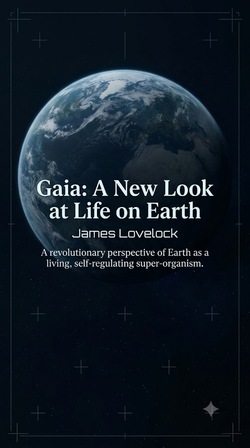
In *Gaia: A New Look at Life on Earth*, pioneering scientist James Lovelock introduces his revolutionary Gaia hypothesis—the radical idea that Earth functions as a single, self-regulating living superorganism. Drawing on his environmental science background and insights from space exploration, Lovelock argues that all living organisms and non-living planetary components (oceans, atmosphere, soil) interact in a complex, interconnected system to maintain stable, habitable conditions. He breaks down how processes like carbon cycling, oxygen production, and temperature regulation are controlled by the collective activity of Earth’s biosphere, not random chance. Though initially met with scientific skepticism, Lovelock’s framework has reshaped our understanding of ecology, climate science, and humanity’s role in the planet’s delicate balance. This book invites readers to rethink their relationship with Earth, offering a compelling lens to address modern environmental challenges and appreciate the planet’s remarkable resilience.