



This book made me realize that my phone keyboard is actually a triumph of Chinese cultural resilience against Western predictions of obsolescence.
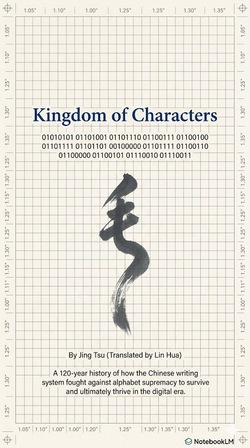
Your Review
This book made me realize that my phone keyboard is actually a triumph of Chinese cultural resilience against Western predictions of obsolescence.

Tsu brilliantly shows how Chinese characters survived a century of pressure to become obsolete by adapting rather than surrendering their unique structure. Wang Zhao, Zhou Houkun, and Wang Xuan fought tirelessly to keep the script alive against Western dominance, proving that linguistic sovereignty can coexist with modern technology without losing cultural identity or historical depth. Their innovations transformed characters from symbols of backwardness into the backbone of China's digital future, offering a powerful blueprint for other non-Western languages navigating similar struggles between preserving heritage and embracing global progress in an increasingly connected world.

It's fascinating how Chinese characters survived the century-long battle against Western replacement attempts in Jing Tsu's book.

Wang Zhao's story is truly inspiring.

The author details how Wang Xuan used math to compress data, proving that Chinese characters could thrive in computers without becoming pixelated dots, which was a huge victory for cultural identity. This story of the 1970s engineer in a cramped Beijing lab shows that innovation can come from humble places when people refuse to give up their heritage. His laser typesetting system not only revolutionized printing but also laid the groundwork for how we digitize characters today, turning a century of struggle into a global success that honors the unique structure of the script.

The book explains how Shi Wazi pioneered a Latinized alphabet long before the official pinyin system was adopted, yet he was erased from history because his work was co-opted by geopolitical storytelling. This unsung contribution reminds us that the digital Chinese we use today is the product of a century of fights over power and identity, not just individual genius.

This book shows that Chinese characters were not a dead end but a resilient tool that evolved through clever engineering and stubborn cultural pride to become a global digital success story.

The fight to adapt Chinese characters to modern technology wasn't won by a handful of celebrated innovators alone.

The story of Wang Zhao and Zhou Houkun really shows how hard they fought to keep Chinese characters alive.

Amazing history.

This book reveals the hidden battle behind every text you send and shows how Chinese characters survived digitalization without losing their soul.

I was shocked to learn Wang Zhao risked execution to unify China's dialects with his hidden phonetic alphabet system designed to stitch the fractured nation together without replacing characters, which proved that adapting a writing system to modern technology does not require abandoning cultural identity, making his sacrifice a powerful reminder that linguistic sovereignty is essential for a country to survive foreign domination and internal division while preserving its unique heritage for future generations of readers who will one day use these same tools.

Tsu brilliantly details how Wang Zhao, Zhou Houkun, and Wang Xuan fought to keep Chinese characters alive against Western pressure, proving that adapting tradition is not surrender but a powerful act of cultural sovereignty that finally made our language the backbone of modern digital life.

The story of Wang Zhao and Zhou Houkun shows incredible determination to keep Chinese characters alive despite Western pressure to replace them with Latin letters, proving that cultural identity can coexist with modern technology rather than requiring its abandonment. Their innovations, from phonetic alphabets to typewriters, were not just technical fixes but acts of resistance against the belief that China must erase its linguistic heritage to progress, making this book a compelling exploration of how a non-alphabetic script adapted to the machine age without losing its soul while uniting a fractured nation through unified language standards that laid the groundwork for today's digital communication.

The struggle for survival was real and the outcome was not guaranteed at all times.

Tsu brilliantly reveals how Chinese characters survived Western predictions of obsolescence through unsung innovators like Wang Zhao and Wang Xuan who adapted the script rather than replacing it.

Jing Tsu explains how innovators like Wang Xuan solved the memory problem by using math instead of dots, which saved the characters from being replaced by Western systems. This detailed history of the 1970s breakthrough helps me understand why Chinese characters are now so powerful in digital tools. It feels like a quiet rebellion against the idea that China had to abandon its identity to join the modern world, turning a symbol of backwardness into a cornerstone of the future. The book shows that survival wasn't about resisting change but adapting wisely while keeping the cultural soul alive against all odds.

The author shows how Chinese characters became the backbone of one of the world's most connected digital cultures.

This book brilliantly reveals how Chinese characters survived a century of pressure to become obsolete by adapting rather than surrendering to Western tech.

Jing Tsu brilliantly reveals how unsung heroes fought to keep Chinese characters alive against Western pressure, turning a century of struggle into a powerful story of cultural sovereignty and digital resilience that makes you rethink your phone keyboard.