


This book proved that optimism is a skill you can learn through practice, not just a personality trait you are born with.
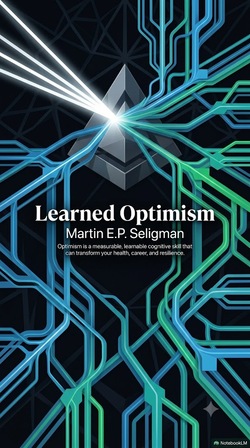
Your Review
This book proved that optimism is a skill you can learn through practice, not just a personality trait you are born with.

Seligman proves pessimism is a learned pattern, not a fixed trait. His research on the permanent, pervasive, and personal dimensions of explanatory style offers a clear framework for understanding why we spiral into helplessness after setbacks. Unlike empty motivational slogans, this book provides concrete tools like the ABCDE Model to rewire our brain's default response to failure. By learning to dispute automatic negative thoughts and gather evidence against them, we can shift from a mindset of despair to one of realistic resilience. This is especially crucial given rising depression rates, as the text links pessimistic thinking directly to poor mental and physical health outcomes. The example of Sophie, who recovered from deep depression using these strategies, demonstrates that lasting change is possible through consistent practice rather than blind optimism. Ultimately, the book empowers readers to take agency over their lives by choosing how they interpret challenges, transforming potential crises into opportunities for growth and building a foundation for long-term well-being in a chaotic world.

Finally, a book that explains why my automatic negative thoughts happen and gives me tools to change them for good.

Seligman explains how shifting from permanent to temporary thinking helps me handle work rejection without spiraling into depression.

This book changed how I see rejection, proving setbacks are temporary not permanent proof of my inadequacy.

Sophie's story showed me how to turn depression into lasting resilience using specific cognitive steps.

The dog experiment explained why I feel helpless when things go wrong.

The sales rep story showed me how to stay calm.

I learned that my rejection is just a temporary setback, not a permanent failure defining my whole career or life path.

The story of Steve versus Nami perfectly illustrates how our internal explanations drive our success or failure in daily life. I realized my own habit of viewing rejections as permanent proof of my inadequacy was actually a temporary, situational hurdle that I could overcome by changing my explanatory style. Instead of spiraling into self-doubt like Steve did, I can now learn to see setbacks as just part of the process, knowing that every no gets me closer to a yes. This book provides the science-backed tools to shift from a pessimistic mindset that fuels despair to a flexible, resilient outlook. The concept of learned helplessness explained through the dog experiments was eye-opening, showing me why I sometimes give up even when solutions are right in front of me. Most importantly, the ABCDE model gives me a practical framework to challenge automatic negative thoughts with logic and evidence rather than just trying to force positive thinking. By practicing disputation daily, I can rewire my brain to respond to setbacks with hope instead of feeling trapped in a cycle of negativity. This is not just a motivational book but a real guide to building lasting resilience against the rising rates of depression affecting so many people today.

This book proved optimism is a skill I can learn through cognitive therapy tools to handle rejection and build resilience.

Helpful tips for handling work stress.

The ABCDE model changed how I handle work rejection. Seligman explains that seeing setbacks as temporary and situational stops the spiral of self-doubt. Instead of thinking I am permanently unqualified, I now list evidence like past successes and alternative reasons for the failure. This cognitive shift reduced my anxiety and helped me land a new job faster by focusing on actionable steps rather than dwelling on the loss. It is a science-backed tool that makes resilience practical for daily life struggles.

I appreciate the data on optimism, but the advice feels too simple for deep personal issues like chronic depression.

Finally a book that explains why optimism is a skill, not just a personality trait, using solid science.

This book changed my life by teaching me to stop seeing failures as permanent proof of my inadequacy. Seligman's ABCDE model gave me a practical way to reframe setbacks like job rejections or relationship breakups, turning them into temporary, situational hurdles instead of personal failures. I now use the Disputation step daily to challenge my automatic negative thoughts with evidence, which has reduced my anxiety and helped me build real resilience against depression. It is not about toxic positivity but about realistically resilient thinking that actually works.

I now know how to use the ABCDE model to stop negative thoughts before they ruin my day.

Not just feel-good slogans, but real science that actually helps me rewire my brain to handle failure better.

This science-backed guide proved that optimism is a learnable skill rather than a personality trait, offering clear steps to build resilience against depression through cognitive therapy.

This book changed my view on setbacks, showing how permanent thoughts hurt more than temporary ones.