



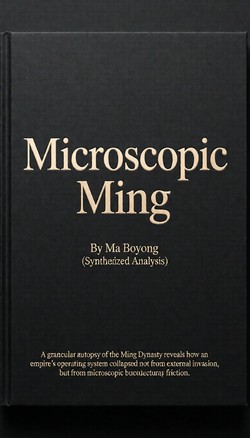
This book made me realize how small local conflicts can actually break down an entire empire. It's really eye-opening.
Your Review
This book made me realize how small local conflicts can actually break down an entire empire. It's really eye-opening.

The story of Shuai Jiamo felt real, showing how one person fighting unfair taxes exposed deep cracks in the empire.

Ma Boyong uses small stories to show how big empires fail when local systems break down.

This book shows how small tax errors ruined the Ming Dynasty through real stories about ordinary people fighting unfair systems.

The story of Shuai Jiamo finding a 200-year tax error in the archives really made me see how small mistakes can break an empire.

The story of Shuai Jiamo feeling crushed by a 200-year tax mistake really hit home for me, making me question how our own systems treat small businesses today.

The story of Shuai Jiamo finding the tax error really showed me how one small mistake can ruin a whole community.

The section on the Wuyuan dragon vein conflict was eye-opening as it demonstrated how local gentry weaponized cultural traditions like feng shui to ban lime-burning livelihoods for poor farmers, proving that elites can manipulate state power to protect their status even when it destroys the survival chances of ordinary people.

The book is too long and repetitive about how rigid systems fail.

The story of Shuai Jiamo finding the tax error felt very personal and frustrating, like my own small business fighting unfair rules.

Practical tips I can apply right away.

Ma Boyong uses small local stories to show how big systems fail. I felt really sad reading about ordinary people losing everything because of bad rules and corrupt officials who didn't care about them at all.

Smooth writing; easy to finish in short sessions.

The story of Shuai Jiamo discovering the tax injustice felt incredibly real and frustrating.

The story of Shuai Jiamo fighting a 200-year tax error feels incredibly relevant to modern small business owners struggling with unfair bureaucratic systems today.

Ma Boyong uses the story of the Yellow Register System to show how a rigid top-down attempt at total control backfired when local clerks and elites falsified records to hide assets and shift tax burdens, turning a well-intentioned system into a tool for exploitation where perverse incentives like rejection fees actually rewarded corruption and left the central government blind to the true state of the empire, leading to inevitable collapse.

The story of Shuai Jiamo really made me realize how hard it is to fight unfair tax systems.

Ma Boyong uses tiny stories like the silk tax fight to show how small local injustices slowly broke the Ming Dynasty, making big history feel real.

This story about Shuai Jiamo really hit home for me. It showed how a simple math mistake by officials could ruin an entire county for two centuries.
The story of Shuai Jiamo finding a 200-year tax error in Ming records feels incredibly real and frustrating.