
Loading…
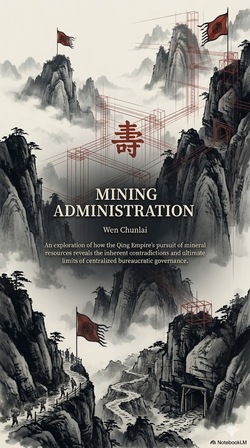
Mining Administration

This book offers a groundbreaking re-examination of the rise and fall of copper and lead mining in the Qing Dynasty, challenging long-held academic misconceptions by framing the state not as a monolithic entity but through the lens of official behavior and central-local power struggles. Starting with the copper shortage crisis triggered by Japan’s restricted copper exports in the early 18th century, it traces the Qing’s shift from mining prohibition to state-sponsored development, focusing on the pivotal Yunnan copper industry (once supplying 80% of China’s copper) and Guizhou’s lead sector. It unpacks key policies like 'fangben shou tong' (state-funded mining with mandatory copper sales), complex tax and profit systems, and massive infrastructure projects built to transport minerals. The book also delves into structural flaws that led to the industry’s collapse—skyrocketing extraction costs, mounting debts, rigid central control—while placing these developments within the broader context of 15th-18th century Chinese state transformation, highlighting how mining administration reflected the Qing’s governance strengths and inherent contradictions.
Understand the Book
Choose how you want to explore this book.




Explore with AI
 Ask about the book's ideas and how they relate to your life.