Misbehaving: Reader Reviews & Ratings

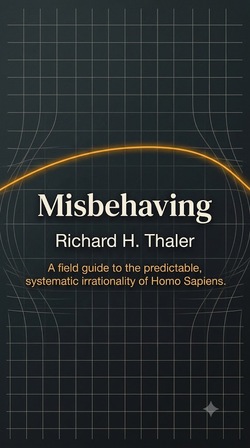
Misbehaving
Loading…

Misbehaving

Richard H. Thaler

Write a Review

Your Review

0/500

Other reviews

27 total
Humberto

Thaler's exam story perfectly shows how framing changes our feelings even when grades stay the same. This proves that real people aren't logical robots but instead react emotionally to numbers and perceived losses, making traditional economic models feel completely disconnected from how we actually behave in daily life.

Carole

The exam story shows why we misbehave.

Albert

Thaler's exam story perfectly shows how numbers feel different just because of the scale, making the irrational fear of losing real.

Tommy

Thaler shows how grading curves trick students into feeling unfair anger or joy over identical letter grades, proving that our emotions about numbers drive decisions far more than the actual outcomes do, which completely shatters the traditional economic myth of the perfectly rational actor who ignores framing and focuses only on final results.

Yoyo

The exam score story perfectly shows how framing changes our happiness without altering the actual grades we receive.

Jorge

Thaler proves that framing numbers changes how students feel about identical exam results, showing that our emotions and reference points drive decisions more than raw logic ever could, a realization that explains why we hold onto losing investments or refuse to sell winning assets even when the math says we should, fundamentally shifting how I view my own financial choices and daily habits based on this evidence of predictable irrationality.

Fay95

Thaler explains why we drive through snow for cheap tickets but skip saving money on TVs, proving that sunk costs and framing effects drive our silly daily choices.

Helene

The wine collector story perfectly shows why owning something makes us refuse to sell it even when it's worth much more, proving that loss feels twice as bad as gain feels good, which explains why students hated a 72 score but loved a 96 even though their final grades were identical because our brains focus on the number we see rather than the actual outcome, making traditional economic models that assume perfect logic completely useless for understanding real human behavior where biases like loss aversion and mental accounting drive every decision from investing to buying beer at different prices depending on where we think we are, showing that we need to design systems that work with our flawed nature instead of fighting against it.

Shawn

Interesting read, challenges old economic ideas.

Keenan

The wine collector refusing to sell his bottle for profit despite buying it cheap highlights how ownership bias distorts value, a flaw standard economic models completely miss.

Tonya

Understanding loss aversion helps explain why we hold onto losing investments too long, turning emotional pain into a systematic error that traditional finance never accounted for.

Lizbeth66

Thaler details how mental accounting tricks us into spending tax refunds on luxuries while keeping savings untouched, showing how our brains categorize money to justify bad habits.

Wyatt

The Asian disease experiment proves that framing choices as gains or losses flips our decisions entirely, destroying the idea that people calculate risk based on pure logic.

Vicky27

Thaler proves we aren't logical robots. Real people misbehave.

Fernando3

This book finally explains why I feel so angry over a bad test score even when the final grade stays the same, exposing the myth of the rational economic man.

Dana

Amazing how one simple change in numbers made students feel happy instead of angry about identical results.

Toby

Prospect theory gives a solid name to why we hate losses more than we love gains, making behavioral economics feel like a useful tool for understanding real human behavior.

Scarlett99

Thaler proves that real people aren't rational robots, which changes how I see every daily decision I make.

Nicolas

I feel like Thaler proved that the myth of rational economic man is just a dangerous fiction.

Cyrus

Thaler proves that our emotions and biases, not logic, truly drive every major economic decision we make daily.