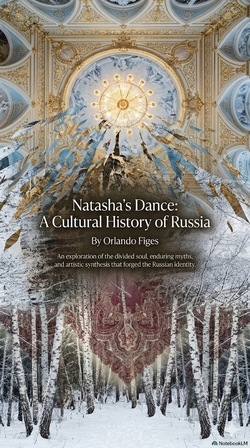
Natasha's Dance: Reader Reviews & Ratings

Natasha's Dance
Loading…

Natasha's Dance

Orlando Figes

Write a Review

Your Review

0/500

Other reviews

26 total
Sharon

Figes reveals how Peter the Great forced nobles to wear French suits while secretly keeping Russian traditions alive. The book explains that this split created a deep psychological conflict where elites craved European acceptance but feared losing their Russian soul. By focusing on specific details like the twisted street in St. Petersburg and the lives of serf artists like Ivan Argunov, the author shows how this contradiction defined the nation for centuries. It is not just about history but about the messy reality of identity that cannot be fully tamed by royal edicts or forced modernization.

Cara

Interesting but the book felt too dense for my taste.

Nico

Figes shows how Peter the Great forced nobles to wear French suits while their serf artists built the palaces they admired, revealing the deep hypocrisy that split Russian identity for centuries and explaining why the nation struggled to choose between European polish and Slavic roots even after the 1812 war proved the serfs were true patriots.

Nichole

Figes brilliantly shows how Peter the Great's forced Westernization created a deep cultural split between the Europeanized elite and the traditional serfs that defined Russia for centuries.

Mae

Figes brilliantly uses the Argunov family to show how serfs built European palaces while remaining enslaved, revealing the deep hypocrisy of the Russian elite who pretended to be civilized while ignoring the human cost of their own grandeur. This specific example perfectly illustrates the central theme of a nation living two contradictory lives simultaneously, where art flourished only because it was stolen from those who had no rights, forcing readers to confront the uncomfortable truth that Russia's cultural brilliance was built on a foundation of brutal oppression rather than pure talent or freedom. The story of Ivan Argunov painting portraits for the empress while sweeping floors reminds us that identity isn't just about what you wear or speak, but who you serve and whose hands actually create the world around you. Figes doesn't just list facts; he weaves these personal tragedies into the larger narrative of national identity, showing how the gap between the polished facade of St. Petersburg and the raw reality of serfdom created a cultural fracture that shaped everything from literature to politics for centuries. By focusing on these marginalized voices, he proves that the true soul of Russia wasn't found in the imported French manners of the nobility, but in the resilient, often silenced stories of the common people who kept the traditions alive even when the rulers tried to erase them. This approach makes the history feel alive and urgent rather than just a distant list of dates and names, allowing us to understand why the conflict between Europe and Asia remains so painful and unresolved for Russians today. The book succeeds because it refuses to simplify complex historical forces into easy binaries, instead showing how every major turning point, from Peter the Great's reforms to the 1812 war, was driven by this same struggle to reconcile two opposing worlds within a single nation. Ultimately, reading about the Argunovs helps us see that cultural identity is not something you choose or discard, but a messy, ongoing negotiation between what you are forced to become and what you secretly remain underneath the surface.

Daniela99

Figes explains how the 1812 war forced nobles to finally value the serfs they had ignored.

Adelaide

The Sheremetevs' lavish life was funded by the labor of the very serfs they despised.

Buck18

The analysis of how Moscow and St. Petersburg represent the heart and the head of Russia is brilliant and deeply insightful.

Brock

Sergei Volkonsky's transformation from a French-speaking noble to a peasant in Siberia is the most moving part of this history.

Dana

The book feels dry at times, yet the story of Praskovya Zhemchugova's tragic death still hits hard.

Brooke

Figes shows how the Argunov family's talent was wasted while they remained slaves.

Dominic

Figes reveals how St. Petersburg's straight lines failed to tame the wild Russian soul.

Cynthia

The story of Ivan Argunov shows how talent was trapped by serfdom despite painting the Empress. This tragic detail perfectly illustrates the deep, unbridgeable class divide that defined Russian society for centuries, where noble palaces were built by hands considered mere property rather than creators, creating a stark contradiction between the elite's European facade and the brutal reality of the masses whose labor and lives were sacrificed to build that very image of civilization.

Clint

A stunning look at how St. Petersburg's artificial European facade hid the wild, Slavic soul that could never be fully tamed by royal edicts.

Alejandra

A solid overview of Russian history.

Randall2

Figes brilliantly exposes the deep divide between St. Petersburg's forced European facade and Russia's wild Slavic roots, making the national identity tension feel incredibly real and complex.

Alexa

This book finally makes sense of Russia's confusing mix of European fashion and Slavic soul.

Penny27

A stunning look at how art bridges the gap between two worlds.

Donnie

A revelatory look at Russia's messy, beautiful contradiction between East and West that defines the nation.

Vicky99

This book makes Russia feel real by focusing on ordinary people instead of just famous emperors.