News of the Empire: Reader Reviews & Ratings

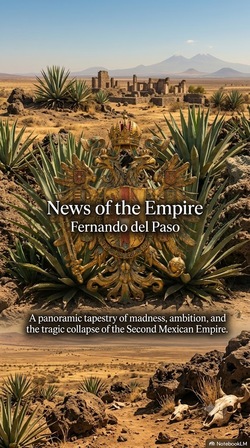
News of the Empire
Loading…

News of the Empire

Fernando del Paso

Write a Review

Your Review

0/500

Other reviews

25 total
Nathan

This book deeply explores how grief turned Carlota's loyalty into a sixty-year prison, making her refusal to accept Maximilian's death a radical political act against the powers that abandoned them, rather than simple madness, which highlights the brutal cost of chasing a dream that was never truly theirs to claim and how historical memory is shaped by power, perspective, and the desperate need to claim one's own story against attempts at erasure.

Trevor99

Carlota's sixty year vigil in that dusty castle feels hauntingly real and deeply tragic.

Augusta2

The way Carlota clings to the velvet box and that bullet fragment feels hauntingly real, showing how grief can twist into a prison of its own making.

Liliana

The story of Maximilian and Carlota feels like a tragic myth. Their dream of building a just, progressive empire in Mexico was crushed by Napoleon III's cold geopolitical ambitions. They arrived expecting glory and a chance to leave their mark on the world, but instead found themselves trapped as disposable pawns in a game they did not understand. The book shows how their idealism, combined with a refusal to see Mexico as a living nation with its own desires, led to their downfall. Carlota's descent into madness after his execution is not just personal tragedy but a political act of resistance. By refusing to accept his death and clinging to the velvet box containing his relics, she rejects the narrative that their dream was a failure. Her six-decade vigil in Bouchain Castle becomes a way to keep their story alive against those who tried to erase it. This interpretation reveals that their loyalty was a double-edged sword: it was the source of their deepest pain but also the only thing that gave them dignity in the face of total defeat. It reminds us that power cannot be imposed from above, and a crown that isn't rooted in the will of the people is destined to crumble into dust. The book does not shy away from the harsh realities of their failure, showing how their naivety and inability to bridge the gap between themselves and the Mexican people ensured that their reign was always doomed from the start. Yet, there is a profound respect for their courage in facing such an impossible situation.

Flora02

Carlota's grief turned into a powerful act of resistance against erasure.

Gayle

Carlota’s sixty year vigil feels hauntingly real, turning her grief into a fierce act of resistance against those who abandoned her dream.

Daniela

The book brilliantly unpacks how geopolitical betrayal turned Carlota's fierce loyalty into a lifelong prison, showing how grief can erase reality while her refusal to accept Maximilian's death becomes a radical act of resistance against the powers that used them as pawns, making the tragedy feel deeply personal yet universally relevant to anyone who has ever chased a dream that was never truly theirs to claim. It does not just tell their story but forces us to confront the quiet cruelties of power and the high price of disconnecting from the people we claim to rule, reminding us that history is often shaped by those who tell it rather than those who suffer its consequences. While Maximilian's idealism was noble, his inability to see Mexico as anything more than a canvas for European dreams doomed them both, and Carlota's madness was not weakness but a desperate way to keep their story alive against erasure, proving that even in defeat, dignity and memory can transcend the brutal realities of imperial ambition and geopolitical opportunism that ultimately destroyed them both. This narrative does not shy away from the harsh truths of their downfall, showing how their naivety and the unbridgeable gap between them and the Mexican people ensured their empire crumbled long before the first shot rang out, leaving behind a legacy that is both tragic and cautionary for anyone who has ever pursued power without truly respecting the people they aim to lead. The interpretation highlights how their story remains tangled in history, serving as a mirror to centuries of European overreach in Latin America and a reminder that loyalty tied to a dream that is never yours can curdle into something destructive, making it a powerful exploration of the human cost of imperial ambition and the resilience required to fight for one's own destiny even when the odds are stacked against you. It is a sweeping historical epic that does not just recount events but delves into the psychological and political complexities that drove two idealistic royals to their doom, showing how their failure was rooted in choices that feel eerily familiar even in the twenty first century, making it a story that resonates deeply with anyone who has ever had to face the consequences of their own naivety and the harsh realities of a world that often treats us as pawns in a larger game of power and ambition. The book does not offer easy answers but instead invites us to reflect on the fluidity of historical memory and the ways in which our own narratives shape our understanding of the past, making it a must read for anyone who wants to understand the human cost of imperial ambition and the resilience required to fight for one's own destiny even when the odds are stacked against you. This interpretation does not shy away from the harsh truths of their downfall, showing how their naivety and the unbridgeable gap between them and the Mexican people ensured their empire crumbled long before the first shot rang out, leaving behind a legacy that is both tragic and cautionary for anyone who has ever pursued power without truly respecting the people they aim to lead. The narrative highlights how their story remains tangled in history, serving as a mirror to centuries of European overreach in Latin America and a reminder that loyalty tied to a dream that is never yours can curdle into something destructive, making it a powerful exploration of the human cost of imperial ambition and the resilience required to fight for one's own destiny even when the odds are stacked against you. It is a sweeping historical epic that does not just recount events but delves into the psychological and political complexities that drove two idealistic royals to their doom, showing how their failure was rooted in choices that feel eerily familiar even in the twenty first century, making it a story that resonates deeply with anyone who has ever had to face the consequences of their own naivety and the harsh realities of a world that often treats us as pawns in a larger game of power and ambition. The book does not offer easy answers but instead invites us to reflect on the fluidity of historical memory and the ways in which our own narratives shape our understanding of the past, making it a powerful exploration of the human cost of imperial ambition and the resilience required to fight for one's own destiny even when the odds are stacked against you.

Gia

Fernando del Paso captures the tragic irony of Maximilian's death perfectly, illustrating how a dream built on foreign manipulation and misplaced loyalty ultimately collapsed under the weight of geopolitical betrayal and national resistance.

Curt23

Carlota's sixty year vigil in that castle felt like a heartbreaking act of resistance against the world that abandoned her.

Maisie9

Carlota's sixty-year refusal to accept Maximilian's death feels less like madness and more like a painful, stubborn act of resistance against the world that betrayed them.

Keith

The way the story shifts from a grand historical epic to Carlota's quiet, heartbreaking isolation in the castle is incredibly moving and well executed.

Angelo01

Sad story about a queen who refused to believe her husband died.

Vern

The story of Maximilian and Carlota serves as a powerful reminder that empires built on foreign ambition and naive idealism are destined to fail when they ignore the people they claim to rule.

Destiny

This story of Carlota and Maximilian feels like a heavy, tragic dream that never ends.

Bryce

The way the book explains how Carlota clung to the velvet box for sixty years makes me realize that her madness was actually a fierce refusal to let her husband's death erase their dream, showing how grief can become a prison when loyalty refuses to die.

Gabriela02

The interpretation explains how Carlota's loyalty became a prison, turning her refusal to accept Maximilian's death into a radical act of resistance against the European powers that abandoned them, showing how her 'madness' was actually a deliberate political choice to keep their story alive and reject the erasure of their legacy by those who viewed them as disposable pawns in a game of imperial expansion, making her six-decade vigil in Bouchain Castle not just a personal tragedy but a powerful mirror held up to centuries of European overreach in Latin America that reminds us how historical memory is shaped by power and the desperate need to claim one's own story against forces trying to silence it.

Zelda7

Carlota keeping a box of relics feels like a heartbreaking way to fight erasure.

Emil

Carlota's sixty-year refusal to accept her husband's death feels like a tragic, unbreakable wall against a world that moved on without them.

Giovanni

Carlota's sixty-year vigil in that Belgian castle feels like a heartbreaking testament to love that refused to die despite the world moving on.

Ramon

This book brilliantly unpacks the quiet cruelties of power, showing how Napoleon III used Maximilian as a pawn while Carlota's grief turned unwavering loyalty into a lifelong prison of delusion and memory.