
On Death and Dying: What the Dying Have to Teach Doctors, Nurses, Clergy and Their Own Families: Complete Chapter-by-Chapter Summary
Today, we’re diving into Elisabeth Kübler-Ross’s groundbreaking work, On Death and Dying. For too long, death has been a topic we tiptoe around—something we push to the back of our minds. But Kübler-Ross did the opposite: she sat with dying patients, listened to their fears, their hopes, their unspoken needs. This book isn’t just about death; it’s about life. It reveals what those facing the end teach us about the deepest parts of our human soul—needs for connection, dignity, and meaning that we all share, no matter where we are in our journey. Let’s explore these profound lessons together.
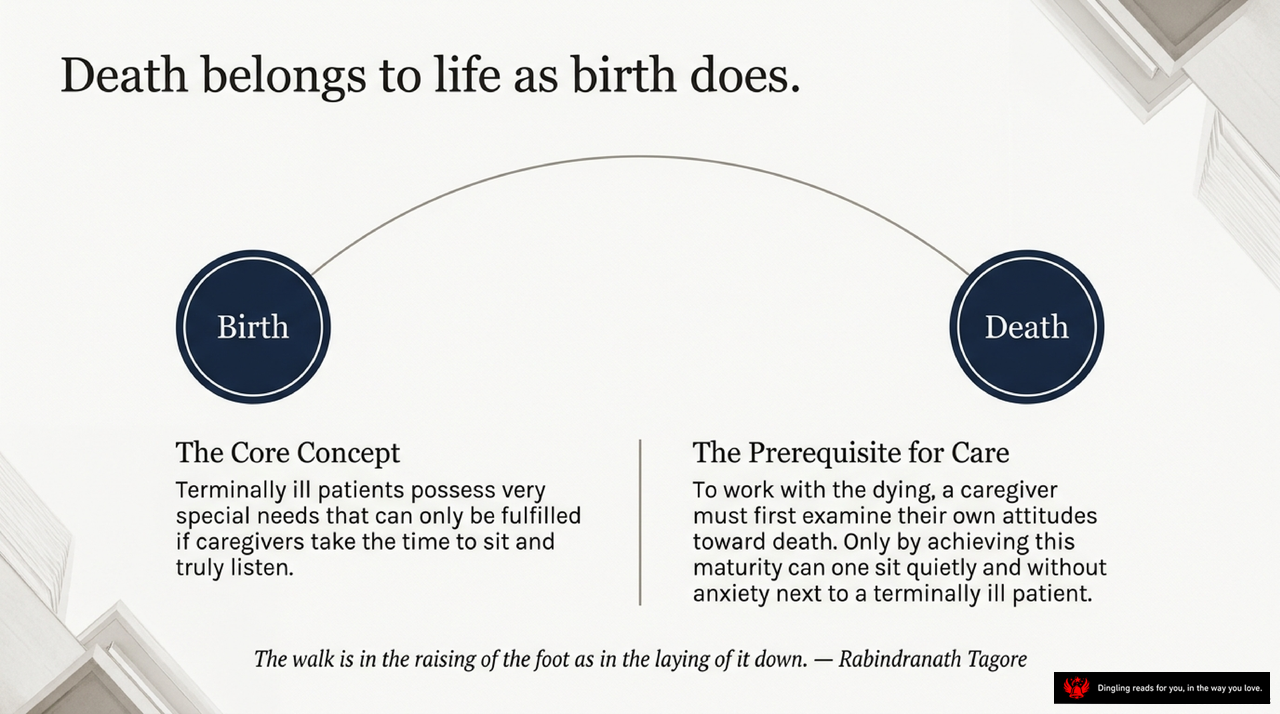
Let’s start with that big idea on the slide: "Death belongs to life as birth does." It’s easy to celebrate the start of life—baby showers, first breaths, all that joy—but when it comes to the end? We often freeze up. But death isn’t some alien thing; it’s as natural as birth. As Tagore put it, "The walk is in the raising of the foot as in the laying of it down." Every step forward has a step that follows, and both are part of the path.
Now, what does this mean for someone who’s terminally ill? The core concept here says it all: they have very special needs, and those needs aren’t just about pills or procedures. They need someone to sit with them, really listen—no interruptions, no trying to cheer them up, just be present. Because when you’re facing the end, feeling heard matters more than anything else.
But here’s the key prerequisite for care: before we can be there for a dying person, we have to look at our own feelings about death. If we’re scared of it—if we can’t even say the word—we can’t be calm next to someone who’s living it. We might change the subject, push for unnecessary treatments, or rush through visits because we’re uncomfortable. And that’s a disservice to both the patient and ourselves.
Think about how things used to be: in small towns or close-knit families, death was part of home life. People would gather around, share memories, and let their loved one go with dignity. Today, we often hide death in hospitals, behind white coats and machines. But this slide reminds us: we need to get back to basics. For the patient, for the caregiver, and for everyone—because death isn’t the end of the story. It’s a chapter in the book of life.
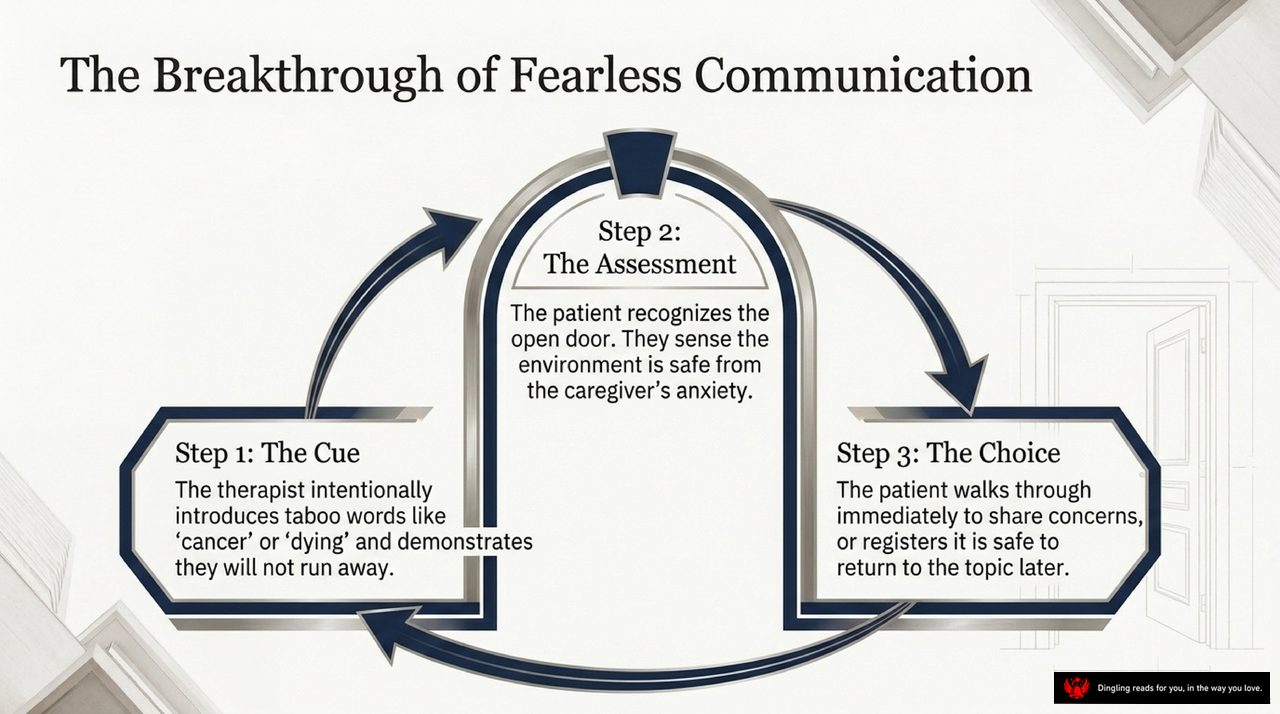
Let’s dive into The Breakthrough of Fearless Communication—because when dealing with hard topics like cancer or dying, the way we connect can change everything.
First, Step 1: The Cue. This is when a therapist (or even a doctor) intentionally uses those taboo words we usually tiptoe around—“cancer,” “dying”—and proves they won’t run away. Think about how many times in the book we saw doctors shy away from these conversations, leaving patients feeling isolated. But here, the person stays, sending a clear message: “I’m here, and we can face this together.”
Next, Step 2: The Assessment. The patient picks up on that open door—both the physical one and the emotional space. They feel safe because the caregiver isn’t anxious or panicking. Like in the book, when the young girl with the blood disorder felt comfortable opening up because her family and some doctors stayed calm, not overreacting. That sense of safety is the foundation for real connection.
Finally, Step 3: The Choice. Now it’s the patient’s turn to decide: do they walk through that door right now to share their worries, or do they note it’s safe to come back later? It’s all about giving them control. In the book, patients often wanted to talk on their own terms, not be pushed into conversations they weren’t ready for. This step respects that autonomy.
This isn’t about forcing someone to talk—it’s about building a space where they feel brave enough to, when they’re ready. And that’s the breakthrough: turning fear into trust, one honest moment at a time. When we stop avoiding the hard stuff and meet people where they are, we create the kind of connection that helps everyone feel seen and supported.
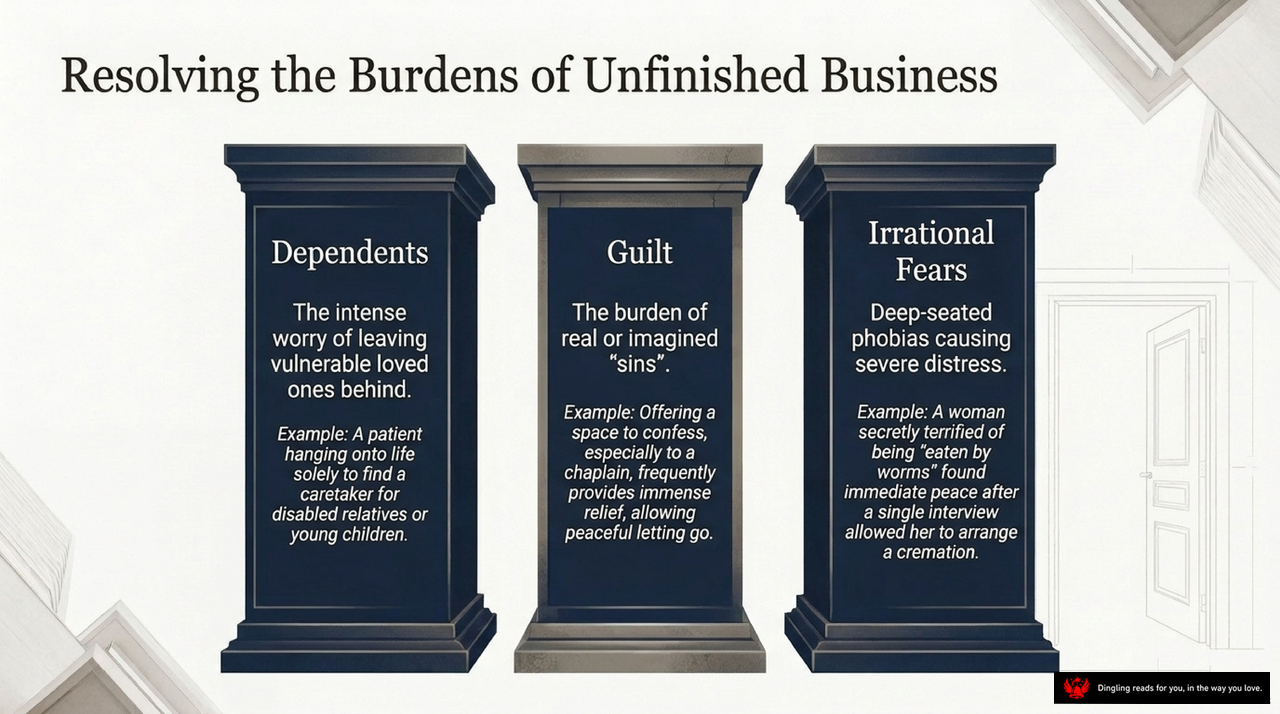
Have you ever carried a weight that feels like it’s stuck in your chest—something you can’t quite name but can’t shake either? Maybe it’s a worry about someone you love, a guilt you can’t let go of, or a fear that seems silly but still haunts you. These are the kinds of unfinished business we’re talking about today—burdens that hold us back from peace.
First, there’s the weight of dependents: the intense worry of leaving vulnerable loved ones behind. Think of the patient who clung to life not out of fear of death itself, but because they needed to find a caretaker for their disabled relatives or young kids. That’s a heavy load—one that can keep us from living fully in the present, as we’re always looking over our shoulder at what might happen to those we leave behind.
Then there’s guilt: the burden of real or imagined “sins.” Maybe it’s a mistake you made years ago, or a thought you had that you can’t forgive yourself for. The book tells us that offering someone space to confess—especially to a chaplain—often brings immediate relief. It’s not about being judged; it’s about letting go of that secret weight that’s been weighing on you for too long.
And let’s not forget irrational fears: those deep-seated phobias that cause real distress. Like the woman who was secretly terrified of being “eaten by worms” after she died. That fear kept her from making end-of-life plans until she finally talked about it. Once she faced that fear, she could arrange her cremation, finding peace in knowing she wouldn’t have to live with that anxiety anymore.
Resolving these burdens isn’t about fixing everything or erasing the past. It’s about acknowledging what’s holding you back, talking about it, and taking small steps to address it. When we do that, we free ourselves to live more fully—and that’s the gift of letting go of unfinished business.
(Word count: ~390)

Let’s talk about a case that perfectly illustrates how our emotions can manifest as physical pain—Mr. E, an 83-year-old man who showed up at the hospital looking terminally ill, but all his medical tests came back negative.
His symptoms were hard to miss: severe weight loss, he couldn’t keep food down, and his abdominal pain was so excruciating it left him doubled over. On top of that, he was furious at the nursing staff—snapping over small things like a delayed meal or a missed pill. But no scans or blood work could explain why his body was falling apart.
Digging deeper, we uncovered the real root: his estranged wife had died suddenly, and he’d buried a mountain of guilt and anger. Subconsciously, he was punishing himself with physical suffering—like his body was paying for the unresolved feelings he’d never let himself process.
So we tried a different approach. Instead of reaching for more meds, we sat with him and listened. We didn’t judge his anger or guilt; we validated those messy, mixed feelings. We told him it was okay to be mad, okay to feel guilty, and that he didn’t have to hide those emotions behind shame.
The change was almost immediate. That agonizing abdominal pain vanished entirely. He started eating again, his slumped posture straightened up like a weight had been lifted, and he was able to go home successfully.
This case is a powerful reminder: our bodies don’t just carry physical wounds—they hold emotional ones too. When we let people feel seen, heard, and allowed to process their pain without judgment, healing can happen in ways medicine alone can’t. Sometimes the best treatment isn’t a pill—it’s giving someone permission to be human.
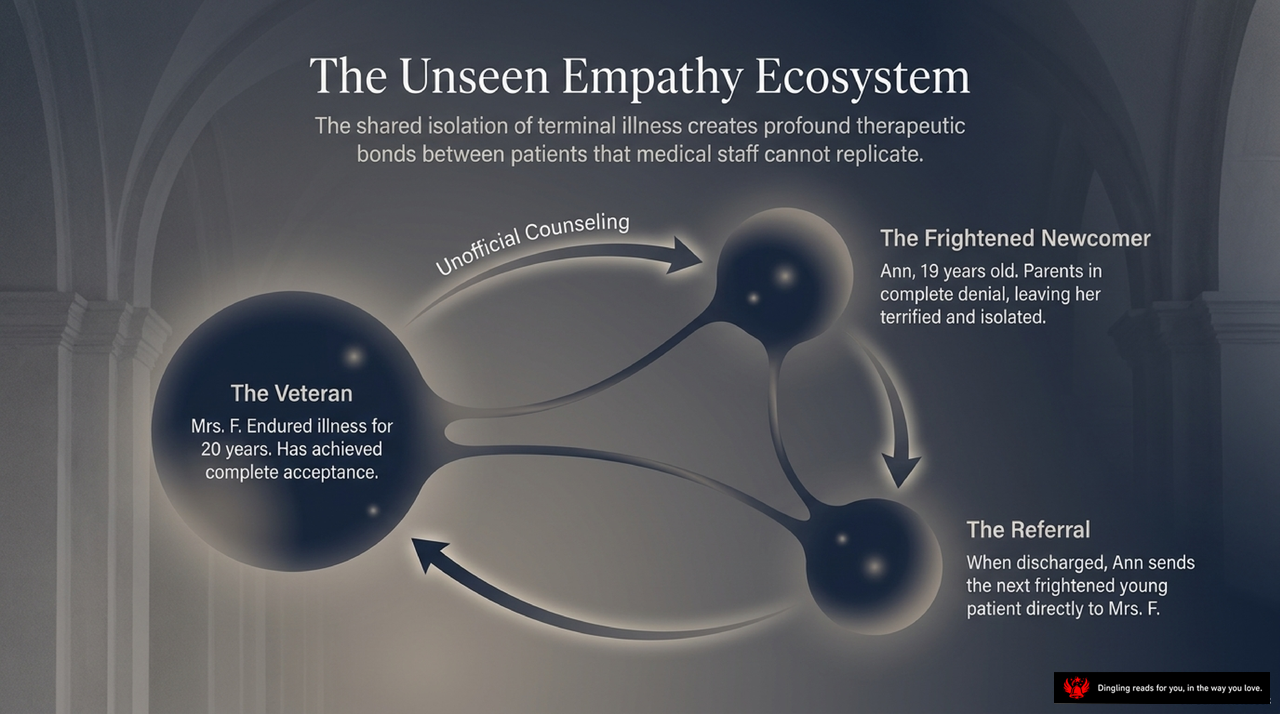
Have you ever thought about the quiet, unspoken connections that form between people facing the same terminal illness? That’s what we’re calling the Unseen Empathy Ecosystem today. The shared isolation of terminal illness creates these profound therapeutic bonds—bonds so deep that even the most caring medical staff can’t replicate them.
Let’s break it down with the people on this slide. There’s Ann, a 19-year-old who’s absolutely terrified. Her parents are in complete denial about her condition, so she feels totally alone—like no one around her truly gets what she’s going through. Then there’s Mrs. F, a veteran patient who’s lived with her illness for 20 years and finally found complete acceptance. When Ann meets Mrs. F, something shifts. Mrs. F doesn’t offer empty platitudes or medical jargon; she listens with a kind of understanding that only comes from having walked the same path. That’s the unofficial counseling that happens between patients—no formal setup, just two people sharing their truth.
And here’s the magic: once Ann finds her way through the fear, she pays it forward. When she’s discharged, she doesn’t just move on—she sends the next frightened young patient straight to Mrs. F. It’s a cycle of support that grows naturally, rooted in the one thing no doctor or nurse can fully grasp: the exact weight of what it feels like to be in their shoes.
These bonds aren’t just a nice addition to medical care—they’re lifelines. They remind patients they’re not alone in their fear, their anger, or their quiet moments of acceptance. In a world where medical treatment often focuses on scans, medications, and numbers, this unseen ecosystem is where the heart of healing really takes place. It’s a powerful reminder that sometimes the best support comes from someone who’s been there too. Maybe we should all take a page from their book and notice the quiet, life-giving connections happening right in front of us.

Let’s talk about what it means to cross the threshold of awareness as life nears its end. This isn’t some abstract idea—it’s the quiet, gradual shift many people experience in their final moments.
First, Phase 1: the cessation of pain. That constant, gnawing physical agony that’s been a daily burden? It starts to fade. Not because of a sudden cure, but because the body’s systems are winding down. The tension eases, and that relentless ache isn’t front and center anymore.
Next, Phase 2: the dropping of needs. Suddenly, the body doesn’t crave food or drink like it used to. Those basic sustenance requirements become minimal. It’s not stubbornness—it’s the body letting go of the things that kept it going for so long.
And finally, Phase 3: the fading environment. The room around them, the beeping monitors, the voices of loved ones—they start to blur. Conscious awareness of the world slips away into darkness, and the mind drifts into a dreamless state. It’s like stepping into a soft, quiet space where nothing demands attention.
For the person going through this, words lose their weight. What they need most is just someone to be there—quietly, without pressure to talk or respond. Holding a hand, sitting nearby—those small, silent acts mean more than any speech. And for loved ones watching, it’s okay to just be present. You don’t have to fix anything. Sometimes, the best gift you can give is to let them cross that threshold in peace.
This isn’t about giving up—it’s about letting go. It’s the body and mind preparing for the next step, and all we can do is honor that journey with our presence.
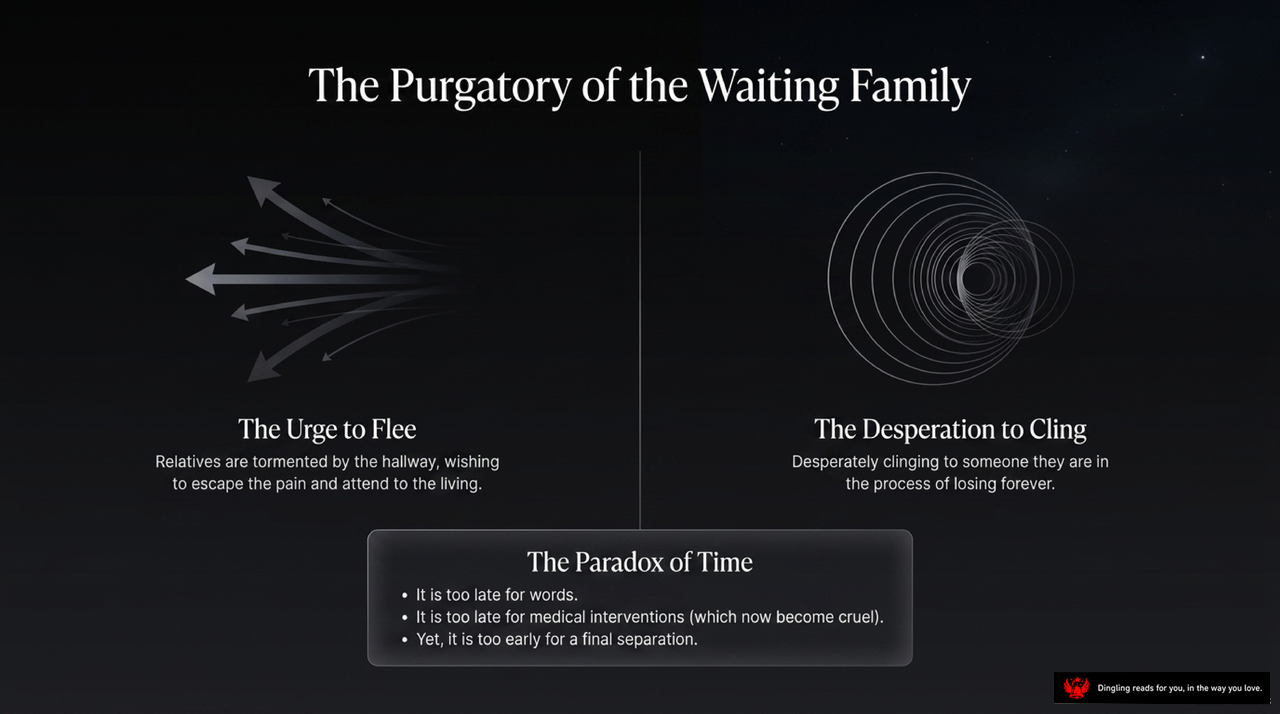
Let’s talk about the purgatory of the waiting family—this limbo that families find themselves in when a loved one is nearing the end. It’s a place of two warring urges: first, the urge to flee. Relatives pace hospital hallways, tormented by the pain of watching someone they love suffer. They want to escape that heartache, to go back to taking care of the living—kids who need to be picked up, groceries that need to be bought, the normalcy of life that feels so far away now.
Then there’s the desperation to cling: that fierce, gut-wrenching need to hold onto someone you’re losing forever. It’s the way you keep squeezing their hand even if they don’t squeeze back, the way you keep talking about old memories even if they can’t respond. Letting go feels impossible, like you’re giving up on them.
And in the middle of all this is the paradox of time. It’s too late for words—what do you say when you know this is the last chance? Too late for medical interventions, because those treatments that once offered hope now just cause more pain, even cruelty. But it’s still too early for that final separation. You’re stuck between “not yet” and “already over,” every minute stretching into forever.
This isn’t just a concept on a slide; it’s the raw, conflicting reality for so many families. They’re not just waiting for a loved one to pass—they’re waiting for the courage to let go, the strength to keep going, and the peace that comes with saying their final goodbyes. It’s a purgatory no one wants to be in, but it’s part of the journey when love meets loss.
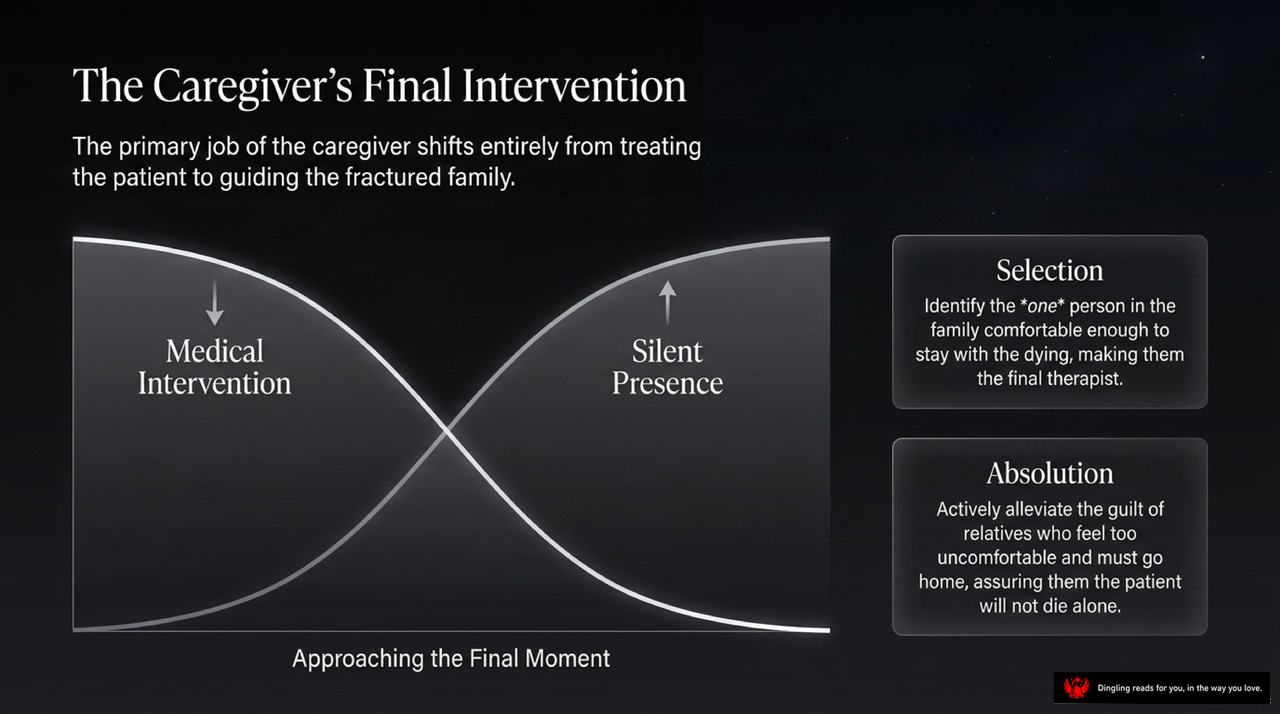
Today, we’re diving into “The Caregiver’s Final Intervention.” At this critical stage, your primary role shifts entirely—you’re no longer focused solely on treating the patient; you’re now guiding a family that’s likely fractured and struggling to cope.
Think about the transition we see here: moving from active medical intervention—all the treatments, medications, and procedures we’ve been doing—to something much more subtle: silent presence. Because when the end is near, sometimes the most meaningful care isn’t about fixing things anymore. It’s about being present.
So how do we execute this final intervention? There are two key components. First, Selection: we need to identify that one person in the family (or a close friend) who’s comfortable staying with the dying individual. This person becomes what we call the “final therapist”—their quiet presence can provide comfort that no medical treatment can match.
Second, Absolution: let’s face it—some family members can’t stay. Maybe they have other responsibilities, like kids at home or a job they can’t abandon, or they’re just too emotionally overwhelmed to be in that space. Our job here is to ease their guilt. We need to reassure them that the patient won’t die alone. That simple act of reassurance can take a huge burden off their hearts.
This isn’t about doing more—it’s about doing what’s essential. The family is going through an unimaginable storm, and we’re the ones helping them find their way through it. Silent presence, finding the right person to stay, and letting others know it’s okay to step away when they need to—these are the interventions that will leave a lasting, compassionate impact on the family long after the patient’s journey ends.
Let me tell you about the students who joined our death and dying seminar. At first, most were a mix of curious and scared—like they wanted to dip their toes in but weren’t ready to jump into the deep end. Some came because the topic felt unknown and intriguing, others to get a head start before facing real patients. But let’s be honest: very few were actually prepared to talk about death.
In the beginning, the one-way mirror sessions were supposed to ease them into it, but a lot left early because the fear was too raw. When patients asked to talk face-to-face, they’d freeze up. Some fixated on medical equipment or test results—anything to avoid thinking about the patient’s impending end. Others only wanted to discuss technical stuff, getting super uncomfortable when social workers brought up family pain.
Then came the turning point: someone asked, “What if this patient was your dad?” That question hit like a ton of bricks. Suddenly, they couldn’t hide behind textbooks anymore. They started seeing the patient as a person, not just a case.
Working with other professionals—social workers, pastors, nurses—changed everything. They learned to look beyond the disease: social workers talked about family struggles, pastors about spiritual needs, nurses about the tiny emotional cues others missed. It hit them that end-of-life care isn’t just a doctor’s job; it takes everyone.
The group support was huge too. The seminar became a safe space where they could admit their fears—like not knowing what to say, or feeling guilty when they couldn’t fix things. When one person opened up about unprocessed grief from a loved one’s death, others followed. It was like they were healing themselves while learning to help others.
By the end, they weren’t just students anymore. They’d gone from avoiding death to understanding it as part of life. And that’s the real lesson—caring for someone at the end isn’t about curing; it’s about seeing them, listening to them, and being there. That’s the kind of care that stays with you long after the seminar ends.
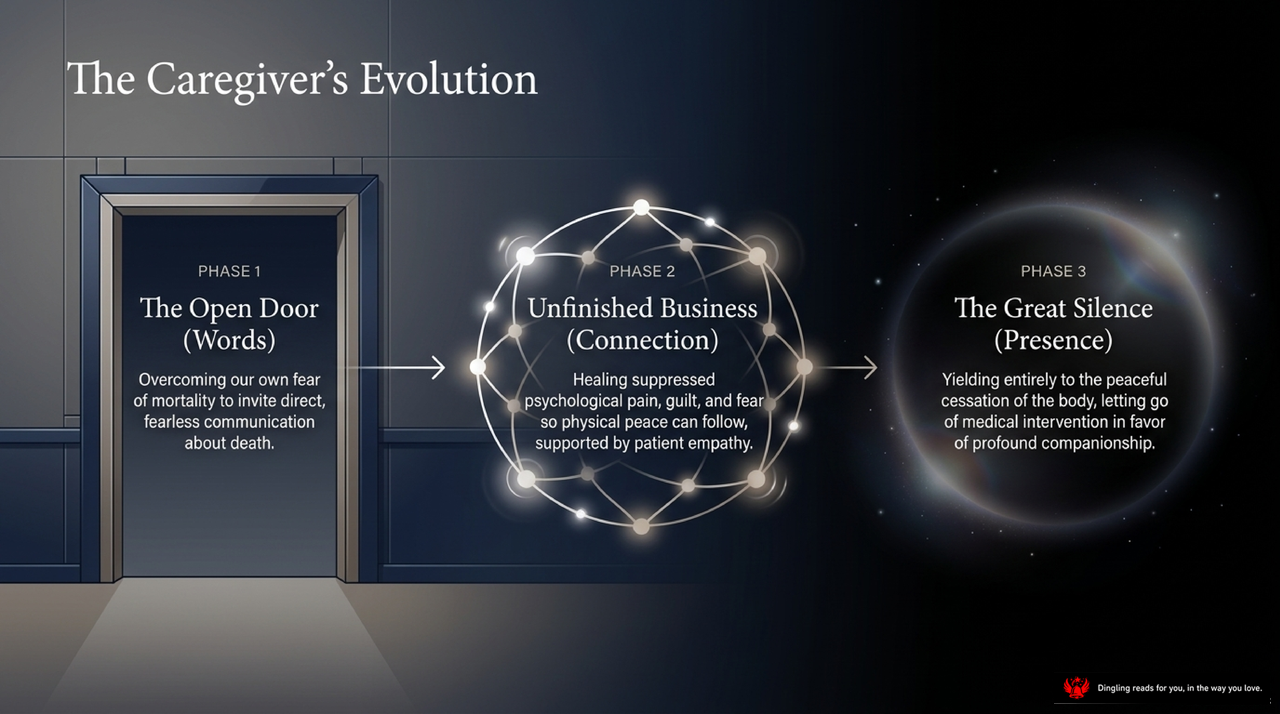
The Caregiver’s Evolution isn’t just a roadmap for those caring for someone at life’s end—it’s a journey of growth for anyone who’s ever stood beside a loved one in their final days. Let’s walk through these three phases, because they’re not just bullet points; they’re the quiet, messy, human moments that shape how we love and let go.
First, Phase 1: The Open Door. How many of us have frozen when trying to talk about death with someone we care about? We’re afraid of making them sad, or of facing our own fear of mortality. But this phase is about pushing past that. It’s about sitting down and saying, “I know this is hard, but let’s talk—about what you want, what matters most, what you’re scared of.” That direct, fearless communication isn’t just for them; it’s for us too, breaking the silence that so often makes grief heavier.
Next, Phase 2: Unfinished Business. We all carry things we haven’t said—guilt from a fight, regret over missed time, or even just unspoken love. This phase is about healing those wounds. Maybe it’s a child apologizing to a parent for a past argument, or a spouse sharing how much their partner’s laugh shaped their life. When we address that suppressed pain and guilt with empathy, it doesn’t just bring peace to the person we’re caring for—it lifts a weight from our own hearts. Physical comfort often follows when the heart is at rest.
Finally, Phase 3: The Great Silence. This is the hardest part for many. We want to fix things, to keep them here with every medical intervention possible. But sometimes, the kindest thing we can do is let go. It’s about being present—holding their hand, sitting quietly, not filling the space with empty words. It’s about choosing profound companionship over endless treatments, and letting the body’s peaceful end come on its own terms.
Each phase is a chance to be more human—to love deeply, to heal honestly, and to say goodbye with grace. And in the end, that’s what caregiving is all about: showing up, no matter what.
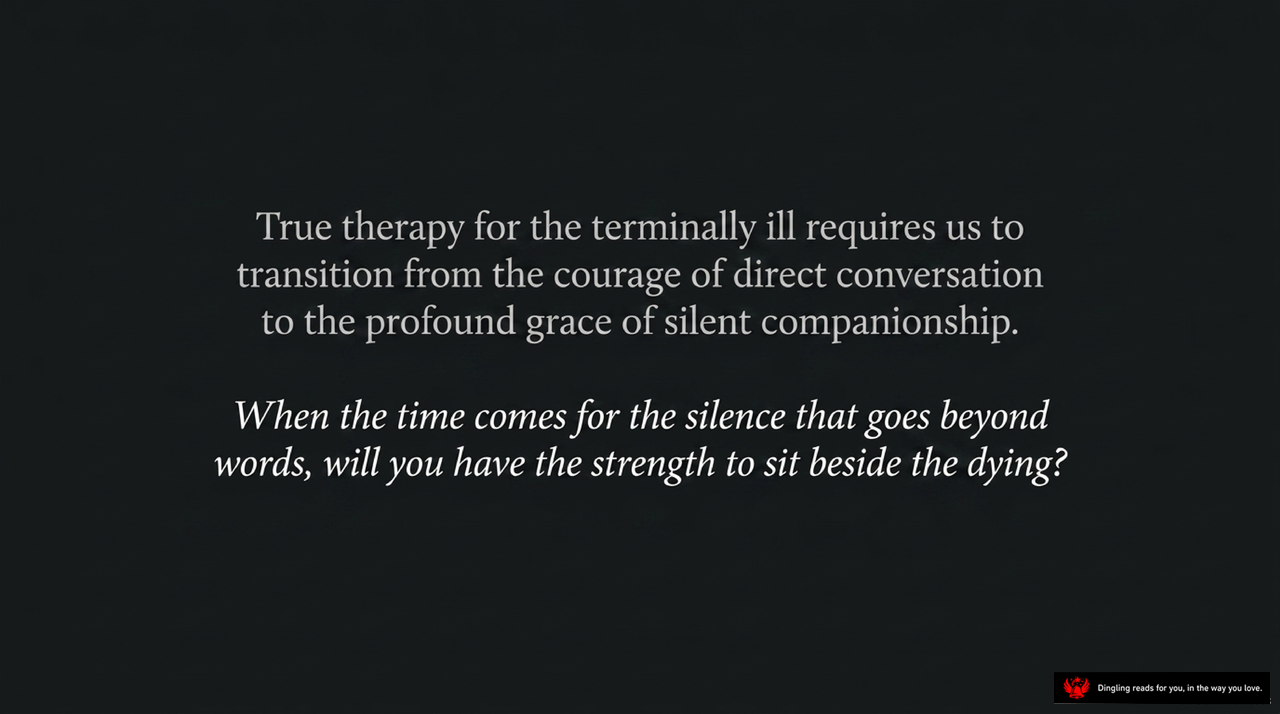
Let’s take a moment to reflect on what it means to care for someone at the end of their life. We often spend so much energy trying to find the perfect words—how to address their fears, validate their hopes, or ease their regrets. But as this slide points out: true therapy for the terminally ill requires us to transition from the courage of direct conversation to the profound grace of silent companionship.
There comes a point when words lose their weight. A terminally ill person might slip into a state where pain subsides, their mind wanders into a quiet, dreamless space, and they no longer need food or even meaningful eye contact. They don’t want to talk anymore; they just need to feel connected, to know they’re not alone.
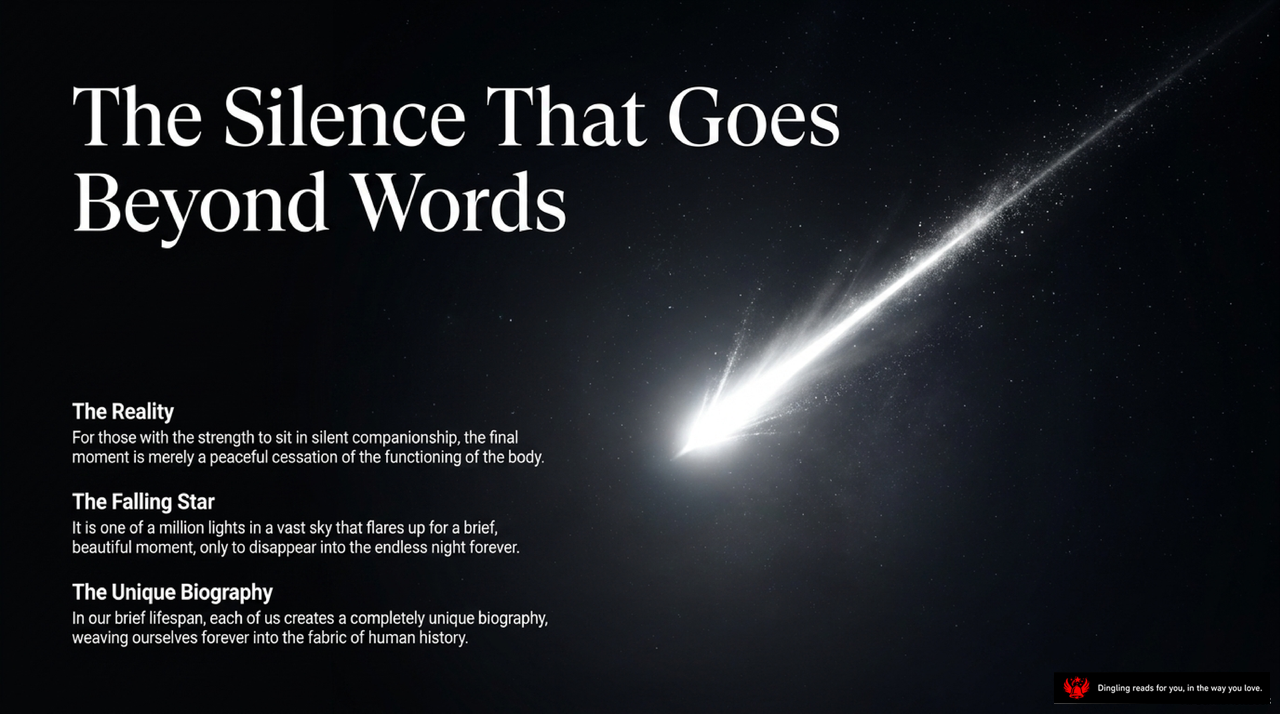
This is the silence that goes beyond words. And the question we all have to ask ourselves is: when that time arrives, will we have the strength to sit beside the dying?
For family members, this moment can be agonizing. They might pace the hallway, torn between staying with their loved one and handling other obligations, or between wanting the suffering to end and holding on to every last second. But here’s the thing: silent presence is a form of healing. You don’t need to fill the silence with small talk or empty comfort. Just sitting there, holding their hand, being present—that’s enough.
This quiet companionship helps them let go of their final defenses, allowing them to face the end with peace. It’s not about fixing the situation; it’s about honoring their dignity. And in that presence, we give them the greatest gift we can: the assurance that they are loved, even in the quietest moments.
So the next time you’re with someone at the end of life, remember: sometimes the most powerful act of care is saying nothing at all. Just be there.