
Organizational Capability: Complete Chapter-by-Chapter Summary
Welcome to today's session. We're diving into a strategic blueprint designed to transform soft human resources into a hard, measurable engine for corporate execution. This framework is known as "The Yang Triangle of Organizational Capability," developed by Arthur Yeung.
As you see on the screen, this triangle represents the core mechanism for turning people into power. The subtitle clarifies the mission: converting intangible assets like talent and culture into tangible results that drive corporate performance. In a rapidly changing global market, relying solely on hiring the right people isn't enough. You need a system that ensures those people think, act, and collaborate in ways that directly support your strategic goals. This triangle provides the structure to make that happen, ensuring that your organization doesn't just have skilled employees, but a cohesive, high-performing capability that can adapt and execute at scale.
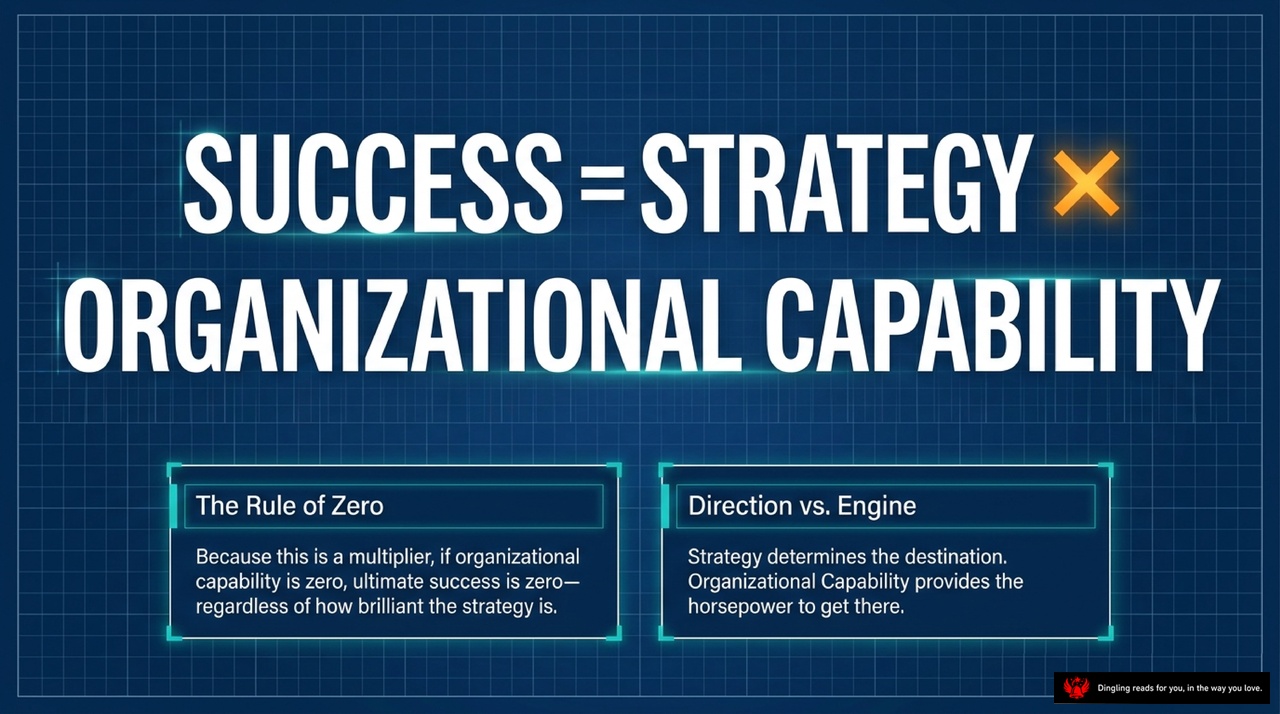
Success isn't just about having a brilliant plan; it's about having the power to execute it. Think of it this way: Success equals Strategy multiplied by Organizational Capability. That multiplication sign is the game-changer. If your organizational capability is zero, your ultimate success is zero, no matter how perfect your strategy is. It's like having the perfect map to a treasure, but arriving with no boat or no fuel—you simply can't get there.
Strategy determines your destination; it tells you where you want to go. But organizational capability provides the horsepower; it's the engine that actually moves the vehicle. Without that engine, the direction doesn't matter. We see this clearly in the real world. Take Midea, for instance. They didn't just dream of becoming a global leader; they built the capability through relentless R&D, creating 1,000 patents and a team of 1,700 researchers. That capability allowed them to outperform giants like General Electric in their own backyard. Or look at Haier. Their strategy wasn't just about selling appliances; it was about building a culture where every employee could solve customer problems instantly. That internal engine created a reputation that competitors couldn't copy.
The key takeaway? Don't just focus on the "what"—the strategy. You must invest in the "how"—your people, your mindset, and your structure. If you have a great team but the wrong direction, you're just running fast in the wrong place. If you have the right direction but a weak team, you'll never move. Great companies like Huawei and BYD succeed because they align their strategy with the specific capabilities they need to win. They treat organizational capability not as an HR project, but as the core of their business. So, before you celebrate a new strategy, ask yourself: Do we have the engine to get there? Because without it, your vision remains just that—a vision.
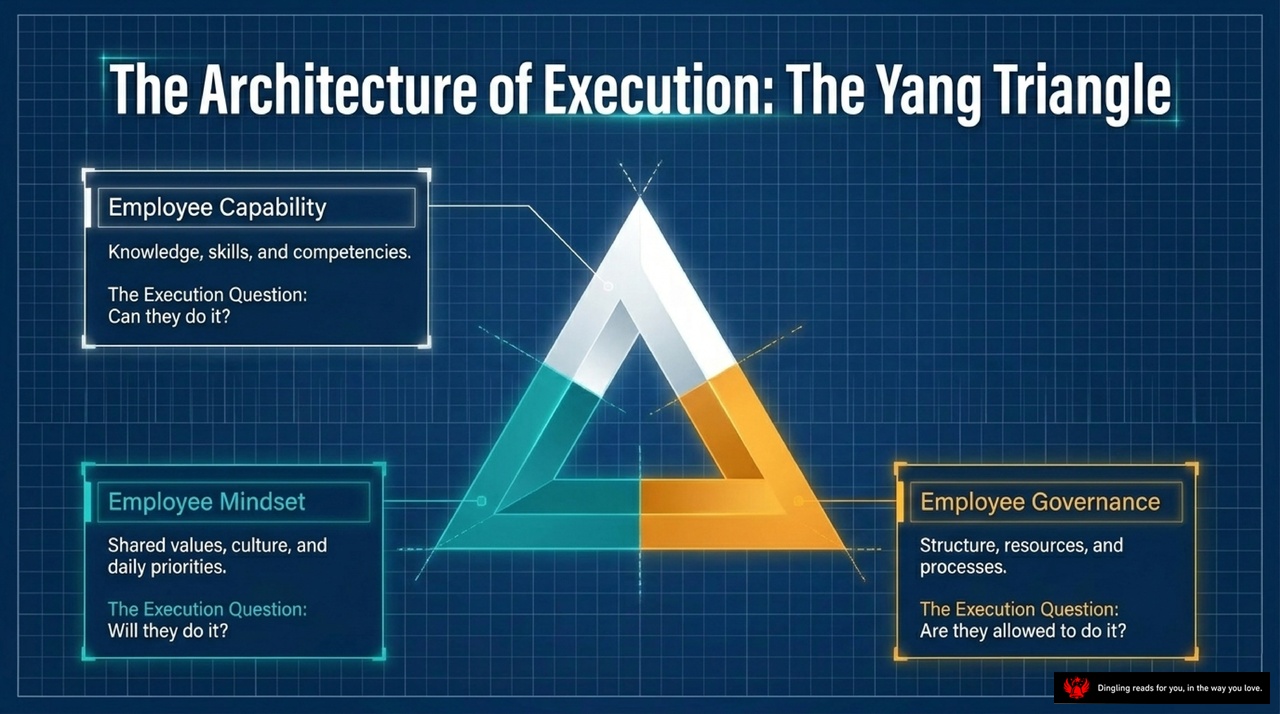
The Architecture of Execution: The Yang Triangle isn't just a pretty diagram; it's the blueprint for turning good ideas into real results. Look at the three pillars here: Capability, Mindset, and Governance.
First, Capability. This is the "Can they do it?" question. It's about the hard skills—the knowledge, the technical know-how, and the competencies your team needs to actually execute the strategy. Without this, you have a plan, but no engine to drive it.
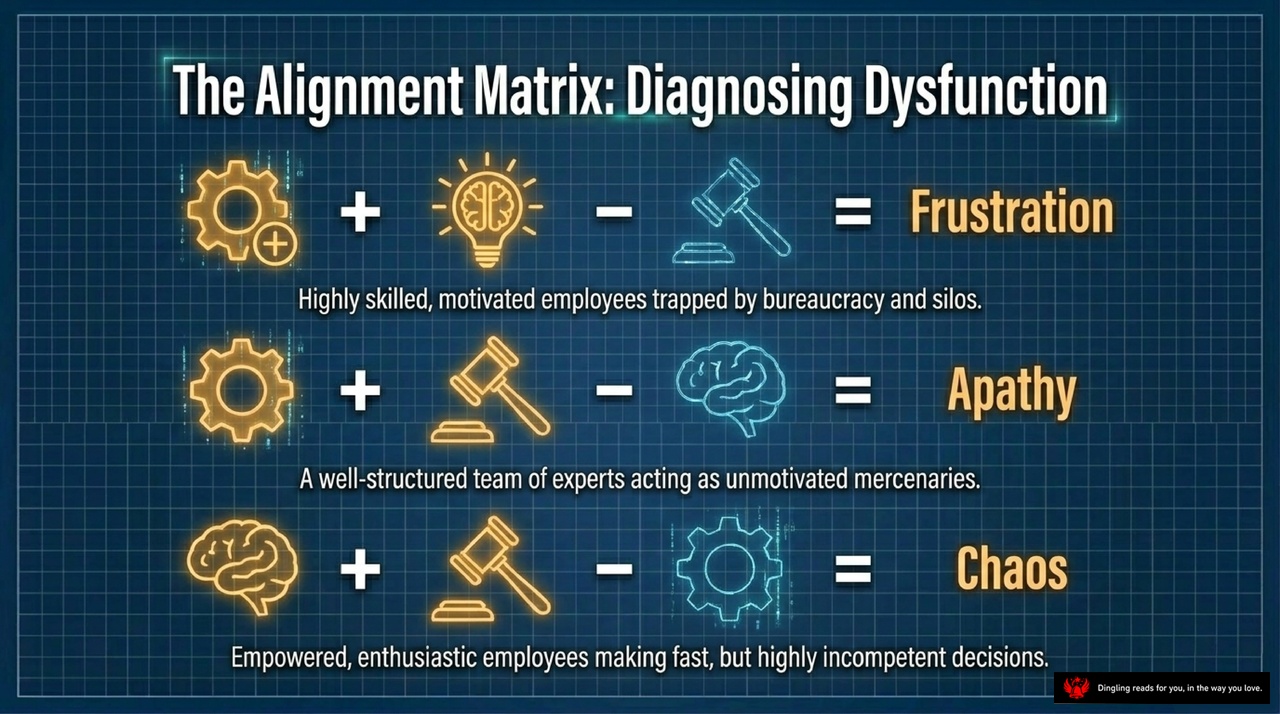
Second, Mindset. This is the "Will they do it?" question. It's about the culture, the shared values, and the daily priorities. Even if your team is highly skilled, if they aren't motivated or aligned with the company's vision, execution will stall. You need employees who are eager to contribute, not just those who can.
Finally, Governance. This is the "Are they allowed to do it?" question. It covers the structure, resources, and processes. Without clear authority, efficient workflows, and the right tools, even the most talented and willing team will hit walls.
Think of it this way: Capability gives you the power, Mindset gives you the direction, and Governance gives you the freedom to move. If any one of these is missing, your organization stalls. True execution happens only when all three are balanced and working together.
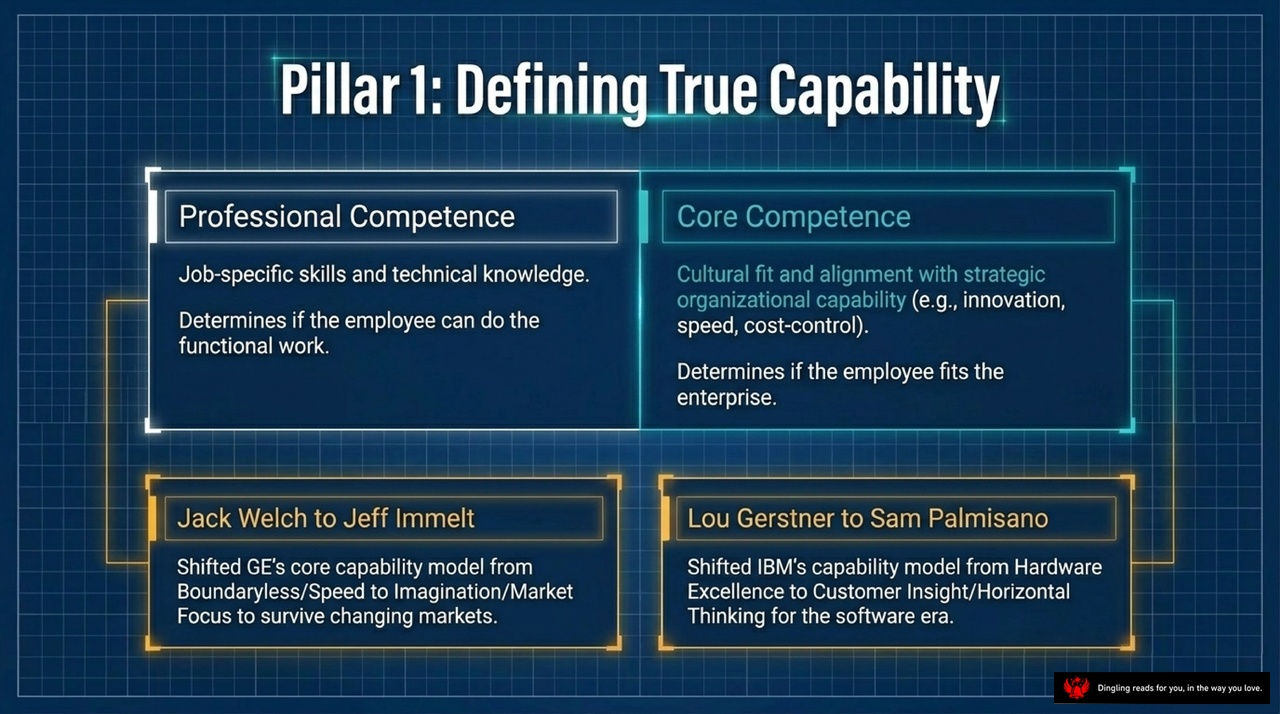
Welcome back. Today, we're diving into the third pillar of building true organizational capability: **Employee Governance**.
Think of it this way: You have a highly skilled team with the right mindset, but if they're stuck in a maze of unclear responsibilities, broken communication channels, and inefficient processes, they can't deliver results. That's the exact problem many companies face. It's not about a lack of talent or will; it's about a lack of the right management resources and systems to support them.
This slide highlights that **Employee Governance** is the critical third pillar. It focuses on three key areas: **Authority and Responsibility**, **Information**, and **Process**.
First, let's talk about **Authority and Responsibility**. This is about ensuring that roles match the tasks and that power is delegated appropriately. In mature organizations, roles are clear, and everyone knows their boundaries. In innovative companies, roles might be broader, and employees are given more autonomy to make decisions. If this balance is off, you get confusion and inefficiency.
Second, we need to look at **Information**. Employees need timely, relevant data to make smart decisions and take action. Whether it's through meetings, reports, or modern technology, information must flow freely. Without it, decisions are guesswork.
Finally, we have **Process**. This is the standardized way departments collaborate. Without clear processes, work relies on personal relationships rather than systems, which slows everything down and creates bottlenecks.
The core goal here is to design an organizational structure that matches your strategic capabilities. Think of the organizational structure as the company's skeleton. Once the skeleton is right, the communication systems and management processes can follow. The structure solves two main problems: how to divide work and how to integrate efforts so everyone is pulling in the same direction.
Different industries need different structures. For example, a company focused on cost leadership might need a centralized structure to maximize efficiency, while a company needing rapid local response might need a decentralized structure. There is no "one size fits all." The best structure is the one that aligns perfectly with your strategy and the capabilities you need to win.
In short, without this third pillar of governance, even the smartest people with the best ideas will struggle to execute. You must build the right systems to let your talent thrive.
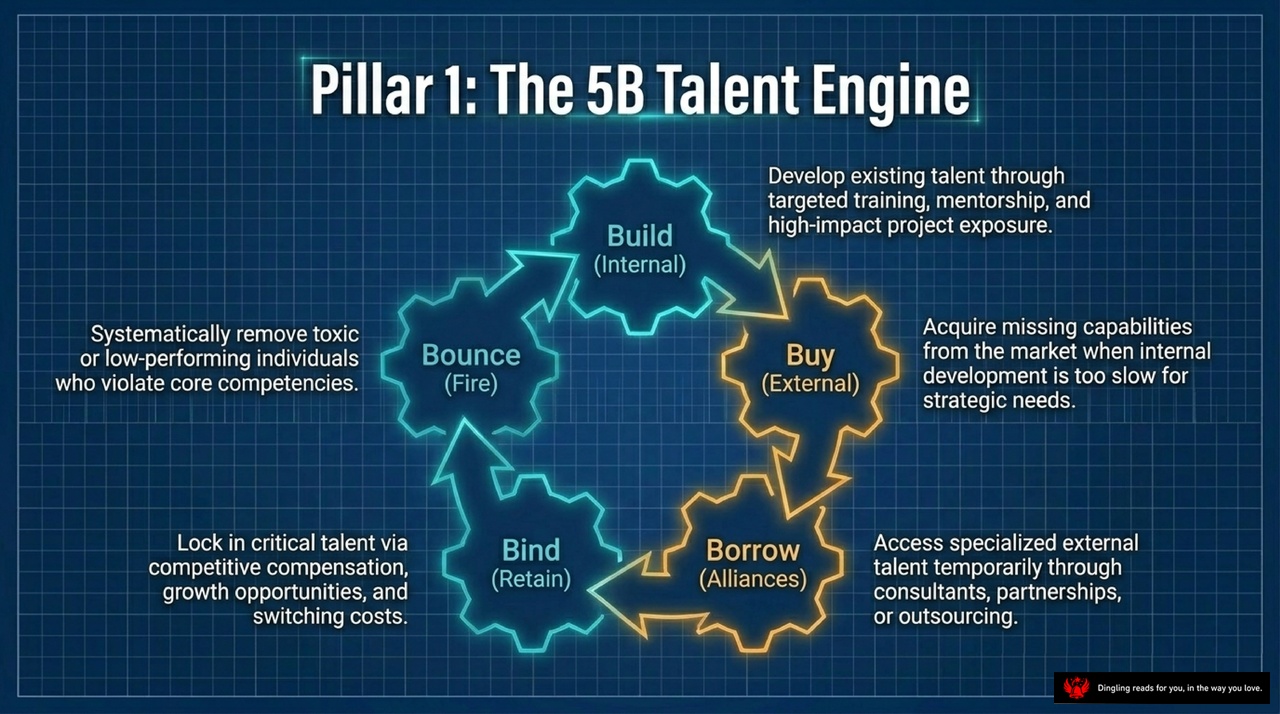
When internal talent just isn't enough to meet your growth needs, or waiting to train someone means missing a golden opportunity, it's time to go out and buy. Think of it like a startup sprint: you can't wait for a custom-built engine; you need a proven one installed immediately. There are three perfect moments to make this move. First, during a strategic shift—like entering a new market or launching a new product—your current team might simply lack the specific skills you need. Second, during hyper-growth. If your business is expanding at 30% or 50% a year, your internal pipeline will always lag behind the speed of your revenue. Third, during an economic downturn. That's your chance to find top-tier talent at a fraction of the usual cost, positioning you perfectly for the recovery.
But here's the catch: hiring is a high-stakes game. Getting it wrong can be disastrous; getting it right is like finding a co-pilot who flies exactly where you want to go. To win this talent war, you need a simple four-step framework, or the "4S" approach. First, S stands for Standards. You must be crystal clear about what you need. It's not just about technical skills; it's about cultural fit. A brilliant engineer who doesn't align with your company's values will eventually break the team. Second, S is for Sourcing. Stop waiting for resumes to land in your inbox. Be proactive. Go where the talent is—look at your competitors, tap into your network, and recruit from top universities before they even graduate. Third, S is for Screening. Don't rely on gut feeling. Use structured interviews and behavioral questions to dig deep into a candidate's past actions, not just their promises. Finally, the last S is for Solidifying. Once you find them, you have to keep them. Offer competitive compensation, but more importantly, create an environment where they feel trusted, respected, and essential. Show them a clear path for growth so they stay for the journey, not just the paycheck.
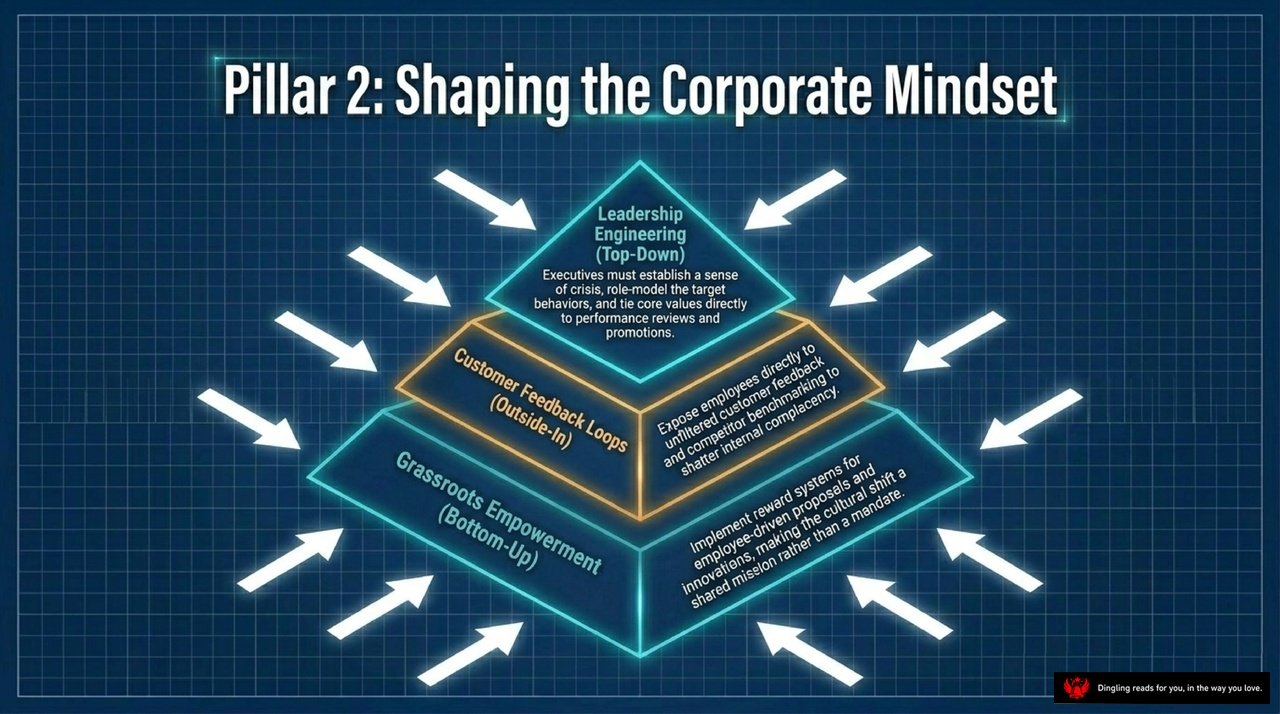
Think of your organization as a living organism where every employee has the skills and the willingness to perform. But here's the hard truth: having capable people who want to do a great job isn't enough. In reality, many companies hit a wall because the system itself is broken.
Look at traditional state-owned enterprises where complex structures leave employees reporting to multiple bosses, slowing everything down. Or consider traditional manufacturers where strategy fails to land simply because there's no direct line of communication between leadership and the front lines. Information gets distorted as it passes through layers, and the original vision is lost. Private enterprises often struggle to launch new products because departments operate in silos, each fighting for its own turf rather than collaborating on a shared goal.
In all these cases, the employees aren't the problem. They have the ability and the desire to succeed. The real bottleneck lies in how we govern them. This is the third pillar of organizational capability: Employee Governance. Without the right management resources and institutional support—specifically in authority, information, and process—employees cannot unleash their full potential, and strategy remains just a document on a shelf.
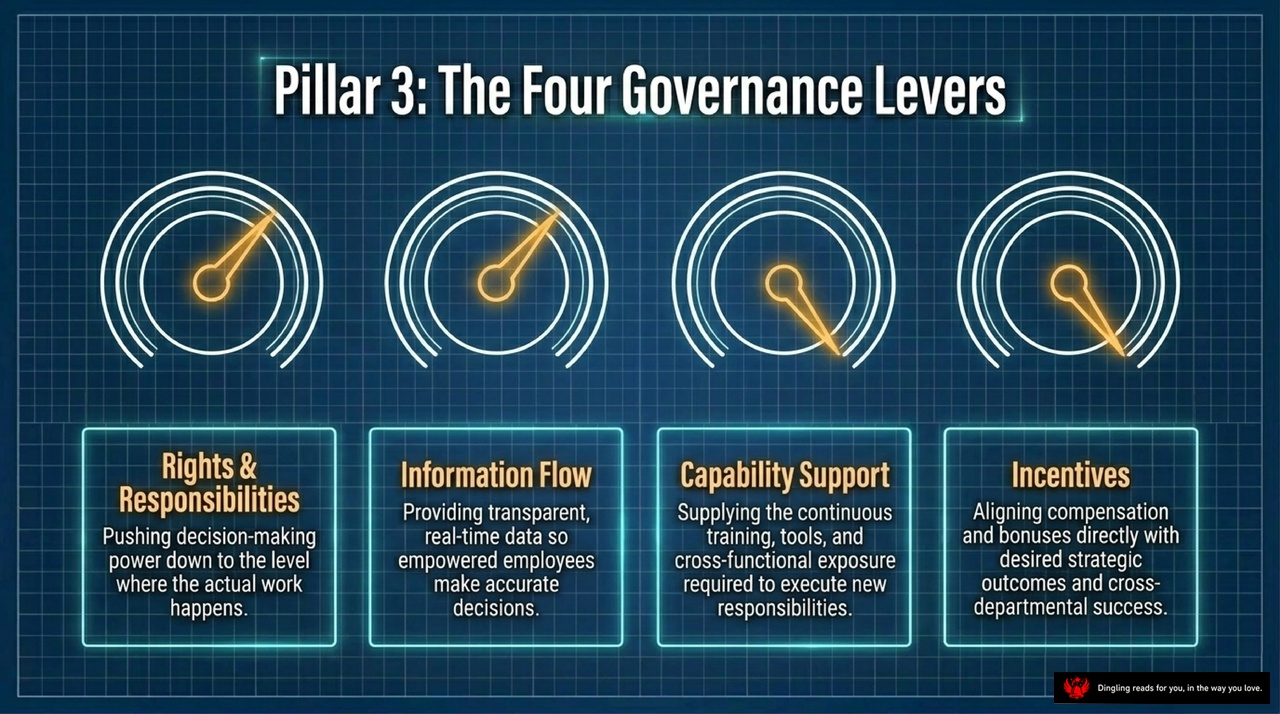
Employee governance is about empowering people through three key levers. First is Authority and Responsibility. It's about matching roles with the right level of power and ensuring that responsibility and authority are balanced. Second is Information. Employees need timely, useful data to make decisions and take action, whether through meetings, reports, or advanced IT systems. Third is Process. We need standardized cross-departmental workflows to lower communication costs. Without clear processes, work progress depends entirely on personal relationships, which is inefficient and unpredictable.
The core of this chapter focuses on designing an organizational structure that matches your strategic capabilities. Think of the organizational structure as the company's skeleton; the management system is the respiratory system, and the culture is the psychological support. Once the structure is right, the reporting lines and information flows can finally function effectively.
Designing this structure isn't about finding a "one-size-fits-all" best practice. It's about alignment. It must fit your strategy and your target organizational capabilities. Take Philips and Panasonic, for example. In the 1970s, Philips used a regional matrix structure that allowed local units to respond quickly, but it eventually led to a lack of global scale and slow new product launches. Conversely, Panasonic used a centralized global product structure that drove efficiency and speed, but it struggled to respond to local nuances. Both eventually had to adjust their structures as their strategies evolved.
So, how do you choose the right structure? Start by identifying your core capabilities—whether it's technical leadership, cost advantage, or local responsiveness. Then, define the role of each unit in your value chain: who decides, who supports, and who executes? Finally, assign clear responsibilities and reporting relationships, ensuring that performance metrics match the authority given.
Different structures serve different purposes. A functional structure works well for companies with a single product or high knowledge intensity, like a hotel or a cosmetics brand, but it can create silos. A product-based structure suits diversified businesses seeking speed and scale. A regional structure is ideal for industries with significant local variations, like finance or law, while a customer-based structure is best for consultancies serving different industries.
The story of TCL and Lenovo illustrates this perfectly. When TCL acquired Thomson in 2003, they initially created a structure with multiple profit centers that lacked coordination and control, leading to poor performance. By 2005, they restructured to centralize core functions like R&D and procurement, significantly improving efficiency. Similarly, Lenovo underwent four major structural adjustments after acquiring IBM's PC business in 2004. They moved from a dual-center setup to a functional model, then to a regional focus, and finally, in 2009, reorganized into mature and emerging market groups to address the financial crisis. Each change was a direct response to their evolving strategic needs.
In short, your structure is not static. It must be dynamic, evolving alongside your strategy to ensure that your people, your processes, and your goals are perfectly aligned.
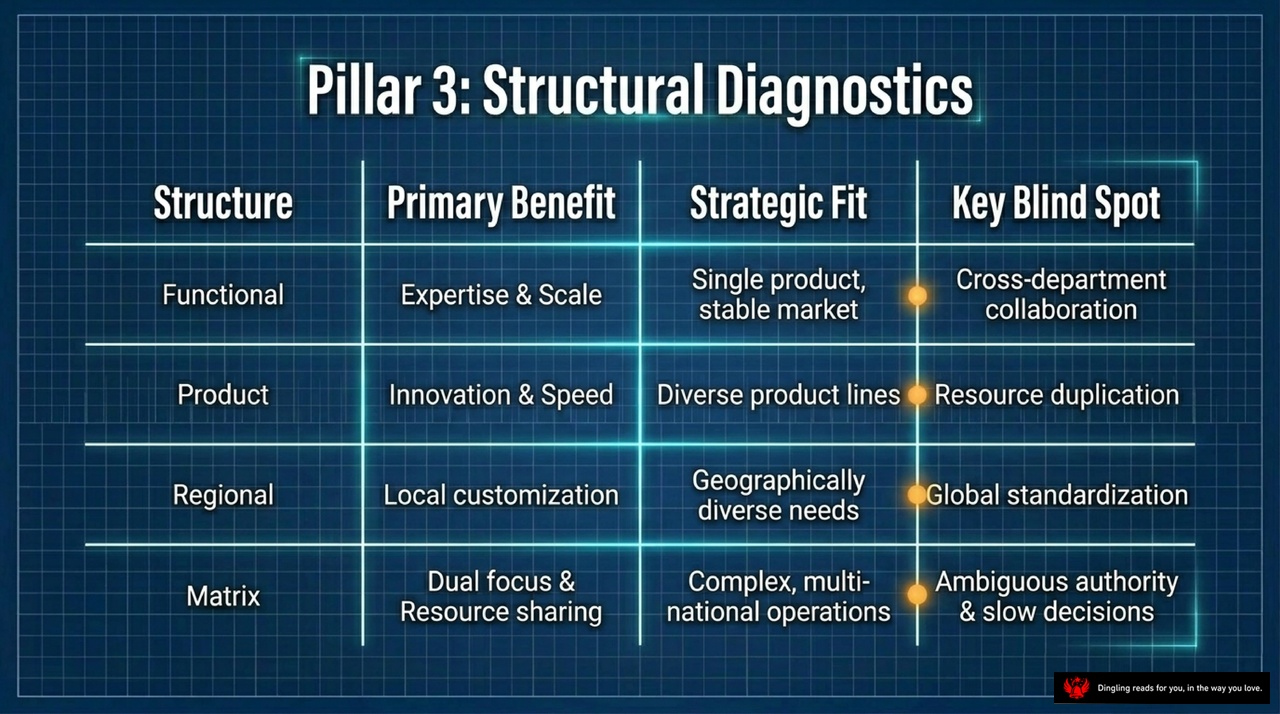
When you have the skills and the mindset, why isn't that enough to drive your strategy? The answer often lies in the invisible walls that separate your teams. As we see on this slide under "Pillar 3: Structural Diagnostics," the final piece of the puzzle is your governance structure. Even with capable people and aligned thinking, without the right organizational architecture, your strategy simply cannot land.
Think of your organization as a machine. If the gears are misaligned, no amount of talent or motivation will make it run smoothly. We need to look at three critical levers: authority, information, and process. Authority means ensuring that decision-making power matches responsibility. Information ensures that the right data flows to the right people at the right time. And process creates the standardized pathways for cross-functional collaboration, so we aren't relying on personal relationships to get things done.
This slide highlights four distinct structural models you can choose from, each with its own primary benefit and a specific blind spot. For instance, a **Functional** structure gives you expertise and scale, which is perfect for a single product in a stable market, but it often struggles with cross-department collaboration. A **Product** structure drives innovation and speed for diverse lines, yet it risks duplicating resources. A **Regional** setup allows for local customization in diverse markets, but it can hinder global standardization. Finally, a **Matrix** structure offers dual focus and resource sharing for complex multinational operations, but it frequently leads to ambiguous authority and slow decision-making.
The key takeaway here is that there is no single "best" structure. As the text emphasizes, the right architecture must be dynamically matched to your specific strategic needs and core organizational capabilities. Whether you are a tech giant or a regional leader, your structure must evolve as your strategy evolves. If you choose a structure that doesn't fit your current strategic fit, you will hit the "Key Blind Spot" and stall your progress. So, before you hire more people or launch new campaigns, ask yourself: Does our structure actually support the way we want to win?
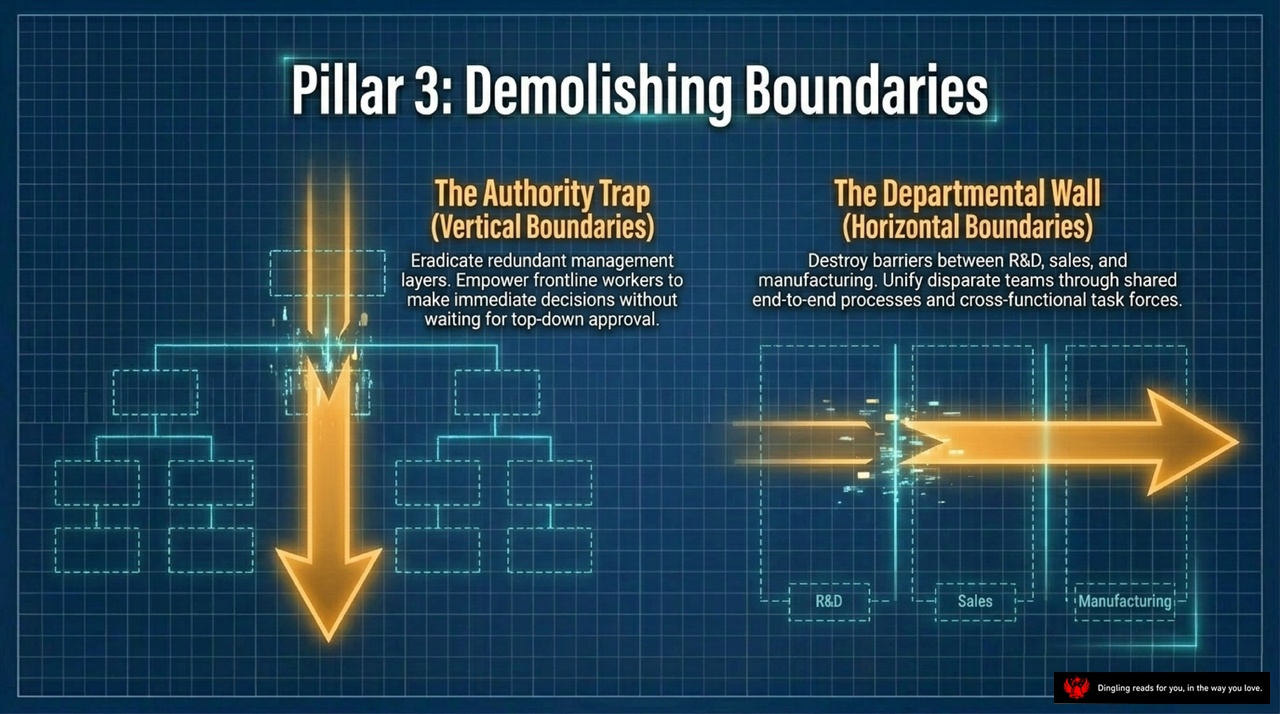
Pillar 3: Demolishing Boundaries. Look at this slide. We are tackling two specific traps that kill organizational efficiency: The Authority Trap and The Departmental Wall.
On the left, we see the vertical hierarchy. Too many management layers create an "Authority Trap." Frontline workers get stuck waiting for top-down approval for simple decisions. The solution? Eradicate redundant layers and empower your team to act immediately. Speed matters.
On the right, we see the horizontal barriers. This is "The Departmental Wall." When R&D, Sales, and Manufacturing operate in silos, innovation dies. The arrow shows the flow that should happen, but the walls stop it. You need to destroy these barriers by unifying your teams through shared end-to-end processes and cross-functional task forces.
The book emphasizes that strategy alone isn't enough; you need the right organizational capabilities to execute it. If your people can't move freely or decide quickly, your best strategy will fail. As we discussed earlier with GE and NUMMI, removing these boundaries—both the vertical layers and the horizontal silos—is the only way to turn your strategy into real results. Don't let invisible walls hold your company back.
So, we've covered the "what" and the "how" of building our people—hiring the right mix of skills and character, shaping their mindset to match our strategy, and giving them the tools they need. But here's the reality check: even with a super-talented, motivated team, things can still fall apart if the system around them is broken.
Think of it like this: you have a Ferrari engine, but if the chassis is twisted or the wheels are misaligned, you're not going anywhere fast. In the real world, we see this all the time. Old-school state-owned enterprises often get bogged down by bloated structures where no one knows who is actually in charge. New startups might have brilliant ideas, but without clear cross-department workflows, they stall because everyone is just working in a silo.
This brings us to our third and final pillar: Employee Governance. This is the infrastructure that makes everything else work. It's about three things: Authority, Information, and Process.
First, Authority. It's not just about giving someone a title; it's about balancing power with responsibility. If you give someone a heavy load of responsibility but no authority to make decisions, you're setting them up for failure.
Second, Information. Your employees can't make good decisions if they're flying blind. They need real-time, accurate data to do their jobs effectively.
Third, Process. This is the glue that holds it all together. Without standardized processes for how teams collaborate, everything becomes a game of "who knows who," which kills efficiency.
In our chapter, we dive deep into designing the right organizational structure. Think of your structure as the skeleton of your company. If the skeleton is weak or misaligned with your strategy, your whole body can't move. We look at real-world examples like Philips and Panasonic, who had to completely restructure to stay competitive, and Lenovo, which adjusted its architecture four times in just four years to survive the global market.
The goal? To remove the invisible walls—what we call "organizational boundaries"—that stop your team from collaborating. Whether it's vertical walls between managers and staff, horizontal walls between departments, or external walls with your clients, we need to break them down.
Remember, governance isn't a one-time fix. It's a continuous cycle of aligning your structure with your strategy. When you get this right, you stop micromanaging and start empowering your people to do their best work. That's how you turn a group of individuals into a true, unstoppable organization.
So, we've covered the "hardware" of our organization—getting the right people with the right skills and the right mindset. But here's the hard truth: having a talented, motivated team doesn't automatically mean the work gets done.
Look at the slide. We're talking about the third pillar: Employee Governance. This is the operating system that turns individual potential into collective power. Without it, even your best employees get stuck. Think about it: why do some companies feel like a maze where no one knows who does what? Why do ideas die in the middle of a department? The culprit is often a broken structure.
As the Harvard professor Bartlett put it, the organizational structure is the skeleton of your company. If the skeleton is misaligned, the whole body fails. Your structure solves two critical questions: How do we divide the work, and how do we bring it back together?
We've seen this play out in real life. Take that TCL merger with Thomson. Initially, they had a messy structure with too many profit centers and weak headquarters control. It was chaos. But when they restructured, pulling core functions like R&D and procurement into a unified global platform, suddenly the pieces clicked. They went from a collection of disconnected parts to a powerful, coordinated machine.
Or look at Lenovo. After acquiring IBM's PC business, they didn't just buy the company; they constantly rewired their structure. From stabilizing the transition to integrating global supply chains, then shifting focus to local markets. Every time they adjusted their "skeleton," they gained speed and efficiency.
The key takeaway? There is no "one-size-fits-all" structure. A functional structure works for a specialized firm like a hotel chain, but a product-based structure is better for a tech giant launching new devices every quarter. Your structure must match your strategy and your core capabilities.
So, how do we fix it? First, diagnose your current boundaries. Are there too many layers slowing you down? Are departments acting like fiefdoms, hoarding resources? You need to remove the unnecessary walls. Then, use the right levers—clear authority, open information flow, standardized processes, and shared incentives—to break down those barriers.
Remember, the goal isn't just to have a pretty chart. It's to create an environment where your capable, willing team can actually execute. When your structure supports your people, strategy stops being just a document on the wall and becomes reality. That's how you build a truly aligned organization.

Sustainable success isn't built on the brilliance of your strategy alone, but on the unyielding architecture of your organization. Think of it this way: a brilliant strategy without the right team, culture, and systems is just a plan on paper. It's like having a perfect map but no car to drive on it.
So, which pillar is silently fracturing inside your enterprise today? Is it your people's skills, their mindset, or the very structure that holds you together?
For Chinese companies aiming to become global leaders, the answer is clear. You can't just copy Western models; you need a unique "Chinese architecture" that blends global standards with local wisdom. This means building a team that's not just skilled, but aligned with your values. It means creating a culture where everyone moves in the same direction, from the CEO to the frontline. And it means designing a structure that's flexible enough to adapt to rapid changes, yet strong enough to execute with precision.
The future belongs to those who can master this balance. Don't wait for a crisis to rebuild. Start strengthening your organization today, because that's the real foundation of lasting success.