


The island story about neighbors becoming enemies instantly when the war news arrived truly shows how our mental pictures fail us.
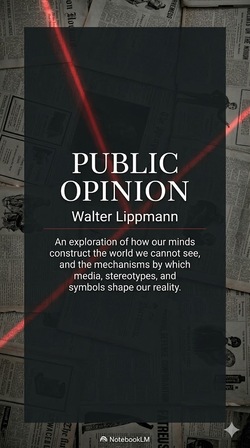
Your Review
The island story about neighbors becoming enemies instantly when the war news arrived truly shows how our mental pictures fail us.


I was shocked to learn that public opinion often ignores reality because we live in mental pictures shaped by media and stereotypes.

Lippmann's concept of the virtual environment explains why modern misinformation spreads so fast, showing how our mental shortcuts disconnect us from reality.
Lippmann explains how our mental pictures distort reality. A clear, short take on public opinion.

Lippmann explains how social media algorithms create personalized echo chambers that reinforce our existing biases, making it nearly impossible to see the objective truth about complex issues like climate change or public health, which explains why modern political debates often feel so disconnected from reality.

This book changed how I see the world by revealing that my opinions are built on distorted mental shortcuts.
This book completely changed how I view the news by showing that my opinions are based on a constructed reality rather than objective truth.

Lippmann's idea of virtual environments explains why I trusted false vaccine rumors until facts caught up with my mental picture.

Lippmann's idea of 'pictures in our heads' explains why I believed false vaccine myths during the pandemic. We live in a virtual world shaped by filters, not facts, making us vulnerable to misinformation that feels true but isn't.

The story about islanders missing the war start shocked me. Lippmann proves we live in a virtual reality built by old news and rumors instead of facts. His examples from WWI senators and modern social media show how these mental shortcuts create fake consensus. We trust symbols like vague slogans because they fit our stereotypes, not reality. This gap between our heads and the world causes dangerous mistakes in voting and policy. We need to check our biases before acting, or we will keep making decisions based on lies we tell ourselves. Lippmann gives clear steps to break free from these traps by seeking diverse sources and experts.

The island story perfectly shows how outdated mental pictures destroy real understanding instantly.

Lippmann shows how mental pictures distort our view of reality.

This book perfectly explains why I trusted false rumors about vaccines because they fit my existing fears rather than medical evidence.

Lippmann's idea of virtual environments perfectly explains how social media algorithms trap us in distorted realities today.

Lippmann details how censorship and social filters create a virtual environment where leaders and citizens act on false stories like the fake Marine landing incident showing how easily powerful groups manipulate public opinion to serve their interests.
The book reveals how our mental shortcuts create false realities that guide our actions away from objective truth.

The idea that our mental pictures of the world often disconnect from reality is a powerful reminder for how we process news today.
Vaccine myths fit Lippmann's virtual environment idea perfectly.

Lippmann explains how stereotypes act as mental shortcuts that filter information and make us ignore facts that contradict our preexisting beliefs about groups of people leading to distorted views.

Interesting idea about mental pictures.