



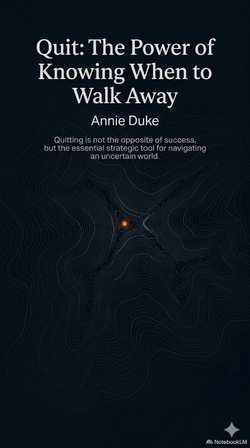
Reading about the California high-speed rail project made me realize how loss aversion traps us in spending billions on doomed engineering solutions.
Your Review
Reading about the California high-speed rail project made me realize how loss aversion traps us in spending billions on doomed engineering solutions.

Annie Duke uses the monkey and pedestal metaphor to explain why we waste time on easy tasks instead of solving the real hard problem that determines success or failure in any project, career, or relationship. This framework helps me realize that building a perfect foundation is useless if the core idea itself is flawed, so I now focus on testing my most critical assumptions early rather than getting distracted by visible progress on low-risk tasks that give me a false sense of accomplishment while the actual deal-breaker remains unsolved, saving me from sinking deeper into failing ventures just because I already invested time and money into the shiny but irrelevant parts that never matter if the central challenge cannot be overcome. The book also teaches me to set kill switches before starting, which removes the emotional guesswork of quitting later when loss aversion takes over and makes walking away feel like a personal failure instead of a smart strategic choice to protect my future potential and redirect my energy toward opportunities that actually have a chance of working out based on objective data rather than my stubborn attachment to an initial plan that the market or reality has already proven wrong. By separating decision-makers for starting and quitting projects, I can overcome the bias that makes me cling to things just because I built them, allowing me to make rational choices that align with my long-term goals instead of being trapped by short-term pride or the fear of admitting I was wrong about something I thought was important at the time.
Dukes taxi driver example about loss aversion perfectly explains why we chase sunk costs and waste time on failing projects.

The taxi driver study shows how loss aversion traps us in bad habits, making us work harder for less money because we fear ending the day short of a target. Duke explains that our brains process losses as twice as painful as gains are pleasurable, so drivers grind through twelve-hour shifts on slow days just to hit a fixed income number, leaving easy money on the table during peak times. This bias also fuels massive boondoggles like the California high-speed rail project, where policymakers keep pouring billions into a doomed endeavor because admitting the initial eighty billion was wasted feels unbearable. Instead of cutting losses to pursue viable opportunities, we cling to failing paths, sacrificing our time and potential just to avoid the pain of acknowledging we already lost something, which traps us in decisions that hurt us in the long run.
This book changed my perspective on quitting by framing it as a strategic move rather than a sign of weakness, helping me realize that sticking to failing paths is actually the real failure.

A few chapters really stood out. Enjoyed the pace.

Great read, totally changed how I see quitting.

Annie Duke uses the monkey and pedestal metaphor to show that we often focus on easy tasks like building a polished platform or refining a failing product's interface, which creates a false sense of progress while ignoring the real, risky problem that determines success. For example, in the high-speed rail project, engineers spent billions laying track in flat areas because it was easy, but they never tackled the impossible engineering challenges of drilling through the Tehachapi Mountains, which was the actual core issue. By prioritizing these low-risk pedestal tasks instead of solving the unproven monkey, they wasted trillions of dollars. The book teaches us that quitting isn't about giving up; it is about realizing early that the core problem cannot be solved, so we can stop investing time and money into the easy distractions that only delay our inevitable failure. This shift in perspective allows us to treat quitting as a strategic decision that saves resources for better opportunities, rather than a sign of weakness or admitting that we made a mistake in the past. Understanding this framework changes how I approach my own work, ensuring I confront the hardest questions first instead of hiding behind visible but useless progress.

Quit changes how I see walking away from bad choices.

Great book for anyone stuck in a failing project.

Duke explains how our fear of loss traps us in bad jobs, using taxi drivers who overwork on slow days just to hit daily targets. This insight about loss aversion makes total sense and helped me realize I stay in my current role not because it works, but because quitting feels like admitting I already lost months of effort. The book also introduces the monkey and pedestal concept, which is brilliant for spotting when we focus on easy tasks instead of the real problem. For example, I spent years building a perfect app interface before testing if anyone actually needed it, exactly like prioritizing the pedestal over the monkey. Setting kill switches with clear deadlines helped me see that quitting early saves money and energy, turning a scary decision into a smart strategy. I also learned to separate my identity from my job title, which stopped me from feeling like a failure when I considered leaving. Overall, this book gives practical tools like pre-set exit criteria and quit advocates to make walking away rational rather than emotional.

Thought-provoking with room for debate. Thumbs up.

I needed to hear that quitting is smart, not weak.

The taxi driver study about hitting daily income targets really changed how I view stubbornness.

The taxi driver study about chasing daily income targets instead of peak earnings hours perfectly illustrates how loss aversion traps us in inefficient habits.

The taxi driver study about hitting income targets perfectly explains why we waste time avoiding the pain of not meeting a goal.

Finally a book that tells me quitting is smart.

The book explains why we cling to bad decisions due to loss aversion and sunk costs, using clear examples like taxi drivers and business failures. It highlights how our brains trick us into prioritizing avoiding pain over chasing gains, which traps us in unproductive paths. Duke introduces the Monkey and Pedestal model to help us identify the core risky problem versus easy tasks that create false progress. By setting kill switches and separating decision-makers, we can make quitting a strategic choice rather than an emotional failure, freeing up time and energy for better opportunities that align with our long-term goals.

I needed to hear that quitting is a strategic choice, not a sign of weakness, especially when I'm stuck in a job that drains my energy and stops me from growing.

The Monkey and Pedestal model is a brilliant way to separate easy tasks from the real problems that determine if a project will actually succeed.