

Rainbows End: Reader Reviews & Ratings

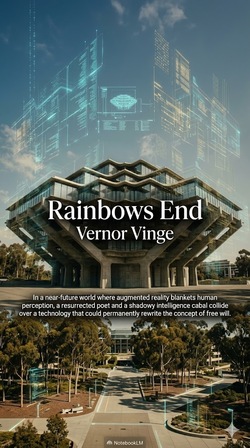
Rainbows End
Loading…

Rainbows End

Vernor Vinge

Write a Review

Your Review

0/500

Other reviews

40 total
Gregory

The story brilliantly dissects how unregulated cognitive tech and mass digitization threaten our autonomy, privacy, and the irreplaceable serendipity of physical books. Robert Gu's struggle to reclaim his poetic voice amidst a world of automated writing tools mirrors our own fear of losing human creativity to efficiency. The plot escalates from a library defense against book shredding to a global conspiracy involving a virus-triggered mind-control weapon, showing how data exploitation can erase free will. While the intergenerational clash between Robert and Milly highlights the pain of rapid cultural shifts, the ultimate hope lies in their collaboration, proving that balancing digital tools with preserved human heritage is the only path to protecting our identity from becoming mere data points for manipulation.

Aden

This novel perfectly captures the anxiety of a world where technology erodes human identity and creativity.

Damian

The honey nougat plot twist about cognitive control weapons feels terrifyingly relevant to today's targeted ad scandals.

Samantha

This book feels too much like a warning for our current tech world.

Wayne

The idea of cognitive control tech turning ads into mind weapons is terrifyingly relevant today.

Phyllis

Vinge predicts our digital privacy crisis with eerie accuracy. The scene where Robert Gu loses his poetic voice because the browsing paper auto-formats his handwritten lines into sterile, generic text hits hard. It shows how tech can erase the very human nuance that makes our art and memories unique, turning our creative struggles into data points that algorithms can easily manipulate or delete without a second thought. While the library defenders fight to save physical books, this subplot reminds us that the danger isn't just losing access to information, but losing the tactile, unquantifiable experience of creation itself, which makes the novel feel less like sci-fi and more like a warning letter for our current tech-driven identity crisis.

Magnus

A chilling warning about algorithms controlling our minds before we even realize it.

Blanca

The depiction of a world where algorithms manipulate thoughts feels chillingly accurate for our modern reality.

Jacob86

Brilliant warning about tech control.

Doyle99

Vinge predicts our tech future with terrifying accuracy.

Pink

The tension between Robert's lost poetic voice and his granddaughter Milly's digital fluency is heartbreaking. It perfectly captures the generational divide we face today, where tech offers convenience but erodes the tactile, serendipitous magic of real human connection and knowledge.

Hilda

Vinge perfectly captures the anxiety of losing human connection to screens. The plot about a poisoned candy ad triggering mass mind control feels less like fiction and more like a warning letter to 2024. Robert Gu's struggle to find his poetic voice while his granddaughter treats reality as a video game highlights the generational divide so painfully that it makes my own relationship with my aging parents feel personal and urgent. The book doesn't just warn us about bad tech; it forces us to confront how we are already being manipulated by algorithms we trust, turning us into data points rather than people. I was horrified by the scene where books are shredded into digital fragments, realizing that destroying physical objects feels like erasing history itself. The ending offers hope through collaboration between old and young, proving we can bridge the gap if we choose to listen instead of just scrolling. This novel is essential reading because it treats technology not as a magic solution but as a tool that requires ethical guardrails to prevent us from losing our free will. I found myself questioning my own habits with social media and wondering how much of my behavior is truly mine or shaped by hidden triggers. The story moves fast enough to keep you engaged while delivering a heavy message about preserving the serendipity of real life against the efficiency of digital systems. It is a must-read for anyone worried about where society is heading.

Palmer07

Vinge brilliantly predicts how digitization erodes the serendipity of physical libraries, making this 2006 novel feel terrifyingly relevant today.

Issac

Rainbows End feels less like a sci-fi novel and more like a terrifyingly accurate prophecy for 2024. Vinge's vision of cognitive control through viral triggers and the destruction of physical libraries hit too close to home. It's a chilling reminder that our autonomy is already under threat.

Uriah

I felt a deep sense of loss when reading about the destruction of physical books.

Buck18

This is a must-read for anyone worried about the future of privacy and culture. The idea that algorithms could manipulate our thoughts before we even realize it is terrifying, and Vinge's depiction of a world where books are shredded for data points is a stark warning against cultural vandalism.

Caden2

The novel brilliantly dissects the tension between digitization and the irreplaceable value of physical books, making the library defenders' fight against Hultas feel like a desperate, necessary cultural battle against a world that prioritizes efficiency and data over human experience, where the tactile weight of a volume and the smell of old paper are not just nostalgia but the very things that spark curiosity and creativity in ways algorithms can never replicate, ultimately forcing us to confront the chilling reality that when technology prioritizes power over autonomy, we risk losing the unquantifiable magic of our own humanity.

Elvis

The story about a poet losing his voice and fighting to save his library from a tech company that wants to shred all physical books for efficiency is a chilling reminder of how easily our culture could be erased if we prioritize data over the human experience of reading, making the conflict between the elderly defenders and the young digital natives feel incredibly relevant and urgent for anyone who has ever felt threatened by rapid technological change. While the plot involving the mind-control virus adds extra tension, the core message about preserving the serendipity of browsing real shelves and protecting our autonomy from algorithms that manipulate our thoughts is what makes this novel a powerful warning for our future. I found the character of Robert Gu heartbreaking as he struggles to adapt to a world where his poetic identity is being overwritten by sterile digital formats, and the way his granddaughter tries to bridge the gap between generations only to realize she doesn't fully understand his pain highlights the deep generational divide we are facing today. Ultimately, the book argues that we cannot simply replace physical knowledge with searchable databases because the magic of discovery and the tangible connection to history are lost when everything becomes just another data point, a lesson that feels more important now than when it was written.

Felix

Vinge perfectly captures the fear of losing our stories when everything becomes digital data points instead of real objects we can touch and feel in our hands every single day without any filters or algorithms trying to control what we think or how we choose to live our lives freely forever.

Prince

Milly's struggle to help her grandfather while navigating tech was incredibly touching.