



Good read but hard to keep focus sometimes.
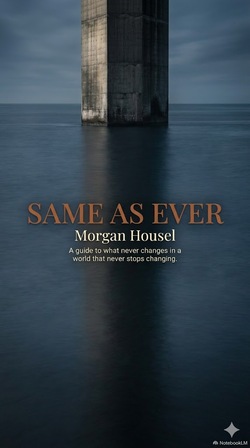
Your Review
Good read but hard to keep focus sometimes.

Housel explains that predicting the future fails because human nature stays the same, using stories about avalanches and historical events to show how tiny unexpected choices or luck can change everything, proving that focusing on unchanging human traits like greed, fear, and our need for certainty is far more useful than chasing impossible forecasts or trying to avoid every risk, which gives us a realistic framework for building resilience and making smarter decisions about money and life instead of wasting energy on futile predictions that no amount of data or expert opinion can ever make accurate.

Housel explains that stability breeds danger, showing how success often leads to complacency and eventual collapse, which explains why even dominant companies like Sears eventually lose their edge when they stop adapting to changing consumer needs and ignore competitors like Walmart, proving that no advantage is permanent without constant effort and humility.

Great reminder that predicting the future is impossible.

Housel's story about the ski trip where his friends died from an avalanche made me realize how one random, unplanned choice can change everything in life more than all our careful strategies.

Housel shows how history repeats itself through human nature, making his argument that greed, fear, and the need for certainty are timeless constants that drive everything from market crashes to personal decisions. He uses vivid stories like the Battle of Long Island, where a sudden wind shift saved Washington's army, and the death of astronaut Victor Prather, who drowned because he opened his helmet early against protocol, to prove that unforeseen events often matter more than our carefully planned strategies. The book also highlights how extreme talent, like Eliud Kipchoge's singular focus or Elon Musk's audacity, comes with flaws that make legends difficult to live with, while stories like the Triangle Shirtwaist Fire show how empathy can turn tragedy into lasting social change. By explaining that stability breeds complacency, as seen with Starbucks' overexpansion or Sears' failure to adapt, Housel gives us a framework to accept uncertainty instead of chasing impossible predictions, helping us build resilience through balanced optimism and realistic expectations rather than trying to control the unpredictable forces that truly shape our lives.

Housel explains why chasing predictions always fails in an uncertain world.

I love how he uses the ski story to prove that random chance often matters more than our careful plans.

This book changed how I see the world.

Housel explains why predicting the future fails, using stories like the ski avalanche to show how small random choices often matter more than our careful plans for success or safety, making me realize I should stop obsessing over control and instead build resilience by accepting that chaos is just a constant part of life that we cannot fix with better forecasts.

Housel proves that predicting chaos is impossible, so we must focus on timeless human patterns like greed and fear instead of chasing expert forecasts that always fail.

The section on trust destroying Lehman Brothers before the numbers showed any trouble was really eye-opening.

Reading this felt like someone finally explained why I always feel so anxious about the future.

While the concepts are solid, the length of the book makes it hard to finish without feeling dragged out.

Housel's story about the ski team friends who triggered an avalanche changed my view on luck versus planning in unexpected ways.

Housel explains why chasing certainty fails, using stories like the ski accident and Lehman Brothers to show how small, unquantifiable factors like trust and chance often decide outcomes instead of spreadsheets or data. He argues that human traits like fear, greed, and the need for comparison never change, so we should stop wasting energy on futile predictions and instead build resilience by managing expectations and accepting that stability itself breeds complacency. The book helps me understand that knowing these timeless patterns gives me a better compass for navigating chaos than any forecast could, even though it doesn't eliminate risk or guarantee success, it just makes me less surprised when things go wrong.
The idea that stories influence us more than data makes me rethink how I process news every single day.

Housel explains how stability breeds complacency, making us ignore risks until it is too late to fix things.

The book feels a bit repetitive when listing the same human traps over and over again without new examples.

Housel explains how our unchanging human nature, like greed and fear, drives market cycles, making prediction useless but resilience possible.