


Stephenson grounds this apocalyptic vision in hard sci-fi realism, making the Cloud Ark's engineering and the moral erosion of jettisoning dead crew members feel painfully authentic and terrifyingly plausible.
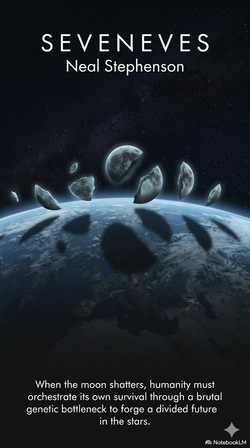
Your Review
Stephenson grounds this apocalyptic vision in hard sci-fi realism, making the Cloud Ark's engineering and the moral erosion of jettisoning dead crew members feel painfully authentic and terrifyingly plausible.


The book forces hard choices about saving everyone or sacrificing some, mirroring our current climate and pandemic fears where leaders must decide who gets resources first, showing how quickly unity fractures when survival is the only goal, making the eventual genetic editing by the last eight women feel like a logical yet heartbreaking conclusion to a story where humanity had no other option but to rewrite itself to avoid total extinction in the cold void of space.

The story of seven women rewriting humanity after the last man dies is both heartbreaking and essential.

The idea of the moon breaking apart feels too real and scary.

Stephenson grounds the hard sci-fi details in reality. Calculations for the Cloud Ark and orbital mechanics feel plausible rather than fantasy, making the characters' panic and tough choices about resource scarcity and genetic modification feel painfully authentic instead of melodramatic, forcing readers to confront the uncomfortable reality of what humanity might sacrifice for survival when facing an existential crisis that no amount of technology could have predicted beforehand.
Stephenson builds a believable crisis where humanity must choose traits to survive, forcing us to question what we truly value when extinction looms and showing how old moral codes crumble under pressure as we rewrite our own genetics to ensure the species endures despite the brutal cost of losing parts of our identity forever.
The book explores moral compromises like leaving people behind, but the long view of 5,000 years shows how those choices divide humanity.

Stephenson grounds the cosmic horror in real engineering details that make the survival choices feel terrifyingly plausible.

The realistic orbital mechanics and engineering details make the Cloud Ark survival plan feel terrifyingly plausible.

Stephenson masterfully blends hard sci-fi realism with deep ethical questions about survival, making the moon's destruction feel terrifyingly plausible and the moral choices heartbreaking.

Stephenson grounds this apocalyptic story in hard science, making the impossible feel terrifyingly real and plausible.

Seeing the crew fracture into factions over resources and trust is a raw reflection of human tribalism.

Fresh angles that made me rethink a few assumptions.

The slow erosion of moral values as survival becomes the only goal is a haunting and inevitable consequence.

The book forces us to ask what parts of ourselves we will choose to save when the world ends.

Moon vanishing with no explanation creates a sudden existential gut punch that changes everything instantly.

Stephenson brilliantly grounds the cosmic catastrophe in hard science, making the impossible feel plausible through detailed engineering and orbital mechanics that keep the story tense without drifting into fantasy, forcing readers to confront the brutal moral compromises required when extinction looms and resources vanish, showing how unity fractures under pressure as factions emerge over survival strategies while the slow erosion of old morals creates deep divides that echo our current polarized world, ultimately asking us what parts of humanity we truly value enough to sacrifice or preserve when the rules of normal life no longer apply. The narrative structure, jumping from immediate chaos to a future five thousand years later, highlights how today's desperate choices reshape our species permanently, making the genetic editing of the Seven Eves feel less like sci-fi spectacle and more like an inevitable, painful consequence of trying to save ourselves. Every character decision, from jettisoning the dead to choosing which traits to amplify, reflects the messy trade-offs we face now, proving that survival is never clean but always a series of heartbreaking losses that define who we become.

The moment the moon splits in two feels like a personal nightmare, making this story hit harder than any other apocalypse tale I've ever read.

The conflict between staying in orbit versus fleeing to Mars mirrors real debates about climate change and adaptation.

Stephenson grounds the story in hard science, making the characters' panic and tough choices feel painfully authentic.