
So Good They Can’t Ignore You: Complete Chapter-by-Chapter Summary

Welcome to the world of *So Good They Can't Ignore You*, by Cal Newport. This isn't just another book about finding your passion; it's a powerful manifesto on why skills actually trump passion in the race to build a career you love.
The image you see here captures the essence of the book perfectly: a quiet, dimly lit workshop filled with blueprints, compasses, and drafting tools. It represents the deliberate craft of building expertise. In a world obsessed with "following your dreams," Newport argues that true fulfillment comes from becoming so incredibly good at something that the world has no choice but to notice you.
The core message is simple yet revolutionary: skills come first. You don't find a job you love and then get good at it; you get good at something, and that excellence naturally attracts the opportunities and the people you want to work with. The subtitle on the slide, "Why skills trump passion," is the thesis that drives every chapter. Passion is fleeting and often a result of competence, not the cause of it.
Newport challenges the traditional advice to chase your inner calling. Instead, he suggests a path of "craftsmanship." You pick a field, you commit to the hard work of mastery, and you build a portfolio of skills. As you get better, the work becomes more interesting, the pay improves, and eventually, you develop a genuine passion for what you do. It's a feedback loop where skill begets interest, which begets more skill.
The workshop setting in the background reminds us that this is a trade, a craft. It requires focus, discipline, and the willingness to put in the hours. It's about the slow, steady accumulation of value. When you are truly good, your value becomes undeniable. You stop competing on price and start competing on excellence.
So, if you are feeling stuck or confused about your career path, take a deep breath. Look at those tools on the table. They aren't just objects; they represent the potential for mastery. The book will guide you through the mindset shifts and practical strategies needed to become one of those rare people who are so good, they simply cannot be ignored. Let's dive into how you can build that unshakeable skill set.

The Passion Hypothesis is a Dangerous Myth. We've all heard it before: "Find your passion first, then build a career around it." It sounds like a magic formula for instant happiness. But here's the hard truth: that idea is a lie.
Look at the compass in the center of this slide. It represents the myth of matching a pre-existing passion to a job. Steve Jobs, for example, didn't start Apple because he was born with a burning passion for technology. He started it as a low-risk scheme to make quick cash. Similarly, Thomas the Monk didn't achieve his dream of Zen practice until much later; by then, his chronic dissatisfaction had already taken root.
The reality, as shown on the right, is that passion is actually a side effect of mastery, not the starting point. You don't fall in love with something because it's already easy or fun; you fall in love with it because you've spent thousands of hours mastering it. You become passionate about the problem you're solving, not the job title you hold.
So, stop waiting for a spark of inspiration that might never come. Instead, focus on developing skills, solving real problems, and creating value. When you commit to mastery, the passion will follow naturally. That's the only way to build a career that lasts.
Most salespeople spend their entire careers wondering why they struggle, only to realize the answer lies within their own mindset. The data is shocking: a staggering 50% of all sales failures stem from personal attitude, while the rest is split among training, communication, and management issues. If you're constantly making excuses—telling yourself "no one answers my calls" or "there's no time"—you are essentially building a mental cage that guarantees negative results.
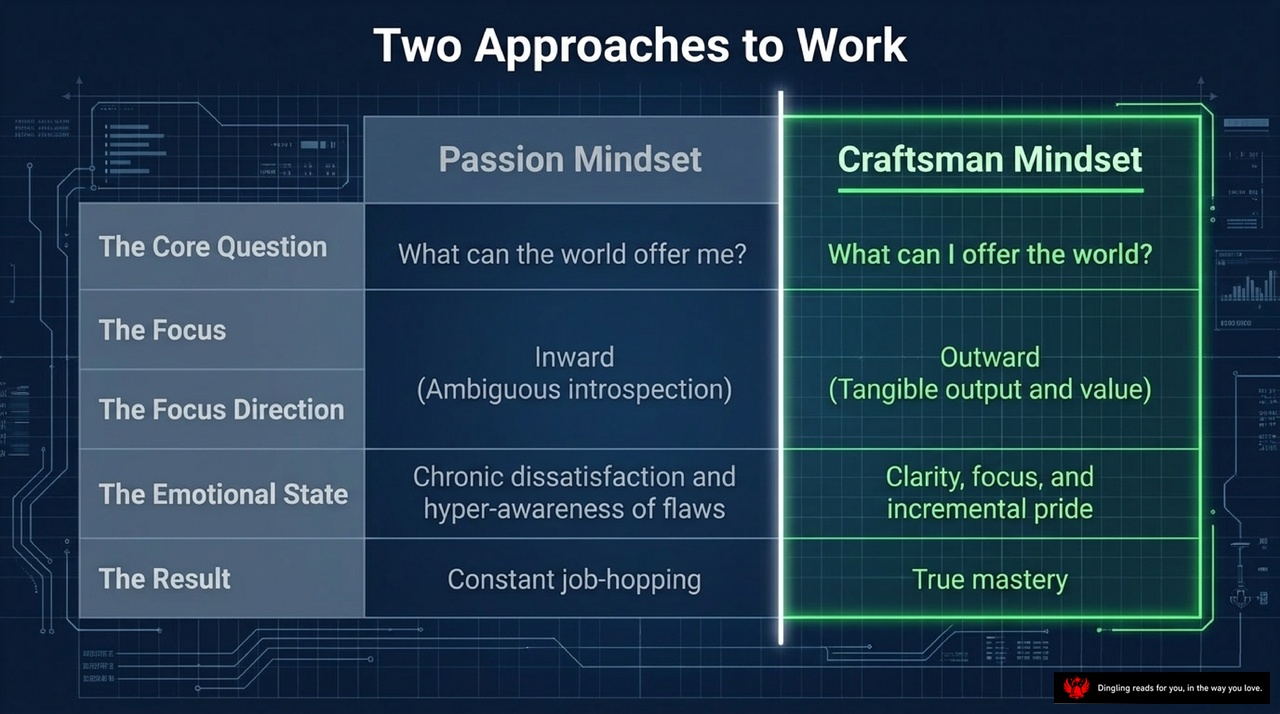
Let's look at the two distinct mindsets that define your career. On the left, we have the **Passion Mindset**, driven by the question, "What can the world offer me?" This inward focus leads to chronic dissatisfaction and constant job-hopping. On the right stands the **Craftsman Mindset**, which asks, "What can I offer the world?" This outward focus on tangible value creates clarity, incremental pride, and true mastery.
The difference is everything. While the Passion Mindset gets stuck in ambiguous introspection and blames the market for its failures, the Craftsman Mindset takes full responsibility. It understands that sales isn't about being right; it's about being helpful. By shifting from a "persuader" role to a "helper" role, you stop fighting against the customer and start working with them. Remember, in the same situation, people still do business with their friends. Trust and relationships always trump transactions. So, stop blaming the economy or the client, and start building the belief system that turns your daily efforts into lasting success.

So, here's the reality check: great work isn't something you stumble upon by luck. It's a transaction, and the currency you spend is rare skills.
Look at this scale in the middle of the slide. On the left, under **Demand**, we have what the market actually craves: dream jobs, creativity, impact, and autonomy. Basic economics tells us these traits are incredibly rare and valuable. But on the right, under **Supply**, lies your **Career Capital**. To get those rare and valuable traits, you must offer rare and valuable skills in return.
Think of it this way: if you want to land a high-impact role, you can't just ask for it. You have to buy it. You need to invest in yourself, building a portfolio of skills that few others possess. That is your capital.
The core takeaway at the bottom sums it all up perfectly: "Great work is not found; it is bought with the capital of rare skills." Stop waiting for the perfect opportunity to appear. Instead, focus on accumulating the rare skills that allow you to command the opportunities you truly want. That's how you build an unshakeable career.
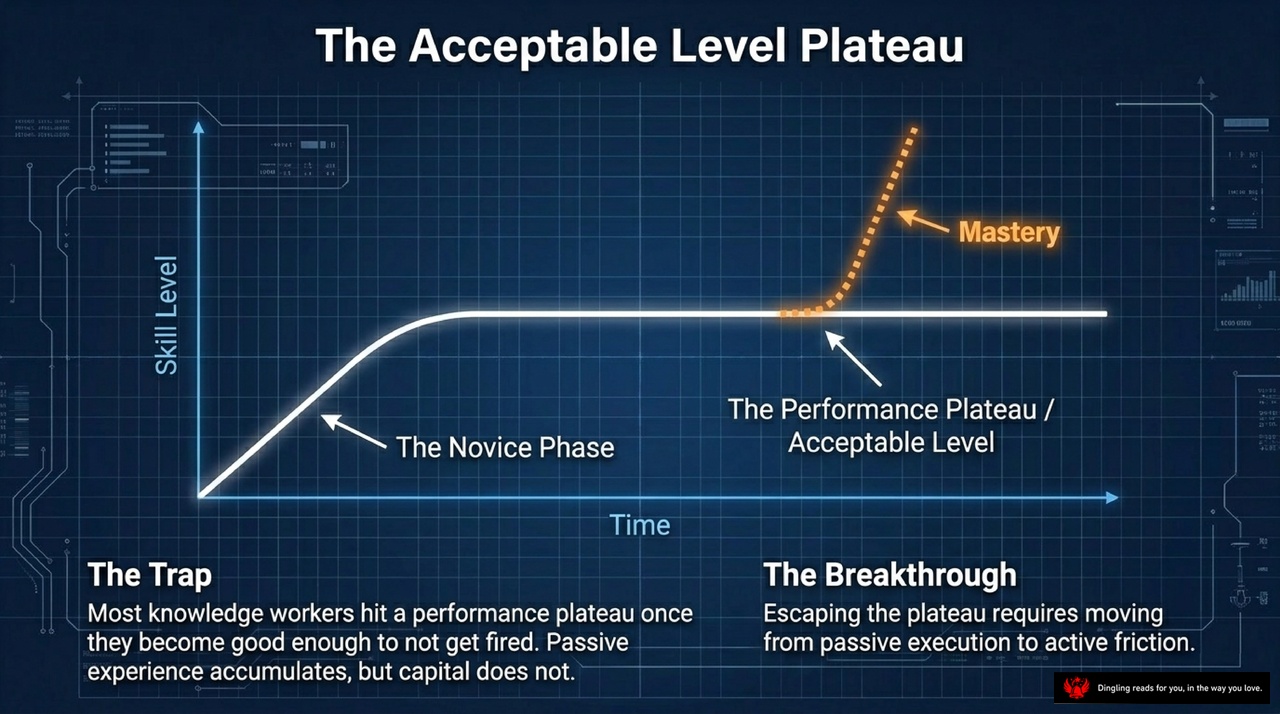
So, let's talk about the moment everything changes. Look at this graph. It shows a classic trap that almost every knowledge worker falls into: "The Acceptable Level Plateau."
You see, most people climb up quickly in the "Novice Phase," right? They get good enough. They become competent. And then, they hit this flat line—the "Performance Plateau." This is the dangerous zone. The text calls it "The Trap." Why? Because once you're good enough to not get fired, you stop trying. You settle for passive experience. You accumulate years of doing the same thing, but you aren't building real capital. You're just staying good.
But look at that dotted orange line shooting up. That's "Mastery." Escaping this plateau isn't about working harder at what you're already doing; it requires a shift. As the slide says, "Escaping the plateau requires moving from passive execution to active friction." You have to create that friction. You have to push yourself out of your comfort zone.
Think about it this way: if you're just coasting along the flat line, you're safe, but you're stagnant. Real growth, real mastery, only happens when you break through that barrier. So, don't just be satisfied with being "acceptable." Challenge yourself to create that friction. That's the only way to turn that flat line into a steep climb toward mastery.
So, let's talk about the moment everything changes. It's not when you finally close the deal, but right before, when the client starts asking questions about delivery dates, pricing, or specific features. These aren't just random inquiries; they are what we call "buying signals," and spotting them is the difference between leaving money on the table and walking away with a signed contract.
Think of these signals as the customer's way of whispering, "I'm ready." They might ask, "Do you have this in stock?" or "What's your warranty?" They might even mention their current supplier or complain about past frustrations. If you hear these, don't just answer with a simple "yes" or "no." That kills the momentum. Instead, pivot immediately. Answer their question, but then follow it up with a closing question like, "Since you're interested in this model, are you looking to ship next week?" You need to keep driving the conversation toward the finish line.
But here's the secret: you can't wait for them to say "yes" out loud. You have to create a sense of ownership before they even realize it themselves. This is what we call the "Pet Dog Strategy." Imagine you're letting a puppy run around your house for a few days. By the time you ask if they want to keep it, they've already decided. In sales, this means letting them try the product, test the service, or experience the value firsthand. Whether it's a demo, a trial period, or just letting them handle the equipment, the moment they feel like they own the solution, the resistance melts away.
Sometimes, you have to play the opposite game. This is the "Feint" technique. If a client is showing interest, don't push harder. Instead, pull back slightly. Create a little bit of scarcity or hesitation. Paradoxically, when you stop chasing, they start chasing you. It triggers that natural human desire to not lose something valuable.
Finally, remember that every interaction is an opportunity to reinforce your value. Use tools like handwritten notes, testimonials from happy clients, or even a brief video to remind them why you are the right choice. But above all, stay alert. The moment you notice these signals, you know it's time to close the deal.
Most salespeople are terrified of the word "no," treating it as a personal rejection rather than a stepping stone to a "yes." But the truth is, every sale begins with a refusal. The real skill isn't avoiding the "no"; it's mastering the art of turning it into a "yes."
First, you must diagnose the rejection. Is it a hard stop, or just an excuse? Phrases like "I need to think about it" or "the budget is gone" often hide unspoken doubts about trust or value. To crack this code, follow a six-step process: listen carefully to confirm their true concern, ask if that's the only blocker, and use hypothetical questions to test the waters. For instance, if budget is the issue, ask, "If we could offer a payment plan, would you make the decision today?" Then, arm yourself with solutions—case studies, competitor comparisons, or direct proof of value.
But the best strategy is prevention. You can't stop every objection, but you can eliminate many before they happen. List every possible reason a client might say no and prepare a specific counter-argument for each. Mention common concerns proactively during your presentation, like, "Many clients worry about the price initially, but they realize the cost is recovered in just six months." By addressing these fears head-on, you build enough trust to kill the objection before it takes root.
Finally, watch for the 19.5 early buying signals that tell you it's time to close. These aren't just words; they're actions. Does the client ask about delivery dates? Do they complain about your competitors? Do they ask questions about pricing or your company's history? When you spot these signals, don't just answer with a "yes" or "no." Instead, pivot the conversation back to closing. Ask, "You're interested in this model, so if we shipped next week, would that work for you?"
Remember, children are natural salespeople. At seven years old, I could persist through five rejections at the grocery store to get a lollipop. I didn't take "no" personally; I just asked, "What's stopping you?" and solved the problem. That same persistence, combined with professional preparation, is the key to crossing the finish line. Average sales require seven "no's" before one "yes." Don't quit at the first hurdle; keep asking, keep solving, and eventually, the "no" will transform into the biggest "yes" of your career.
So, what makes a salesperson truly stand out in a crowded room? It's not just about having the best product or the lowest price. It's about that one magical moment when a prospect stops you in your tracks and says, "Wow." This "WOW" factor is the ultimate differentiator between an average rep and a top performer. Without it, you're just another face in the crowd, easily forgotten.
But how do you actually create this impact? It starts with extreme preparation and creative execution. Think about my experience pitching the *Selling Bible* to a New York publisher. I didn't just show up; I arrived with a physical book, a detailed 15-page proposal, a registered title, and multimedia demos. I even anticipated their objections. I called eight times to get a five-minute meeting, used humor to break the ice, and within minutes, I had them captivated. By the end of that short session, we were talking for 45 minutes, and I had secured the biggest deal of my life.
To make this happen consistently, you need to master eight and a half "WOW" standards. Are you actively hunting for prospects? Do you know everything about your client before you meet them? Have you prepared for every possible obstacle? Are you early, professional, and ready to dive straight into value? Do you have a unique creative angle that sets you apart from the competition? And crucially, can you build relationships with confidence and a touch of humor?
If you can check these boxes, you stop chasing clients and start attracting them. You become the person they remember, the person they choose. Because in sales, being extraordinary isn't an accident—it's a result of deliberate preparation and the willingness to go the extra mile.

So, we've walked through the tactics, the scripts, and the mindset shifts. Now, let's talk about the future. Who is the salesperson of tomorrow? It's not the pushy closer from the 90s. The new generation has completely flipped the script. They've moved away from "persuading a purchase" and are now focused on "creating value." Their core logic is non-manipulative sales. Instead of using high-pressure tactics or fake urgency to force a decision, they stand in the customer's shoes. They objectively present how a product or service actually fits the client's needs. Think about a dental implant distributor who never rushes the sale. He listens to the doctor's clinical needs, offers multiple options, and even allows a 30-day trial. By removing the pressure, he builds genuine trust, which leads to incredibly low return rates and long-term referrals.
But it's not just about attitude; it's about expertise. These modern salespeople aren't just "talking heads" memorizing scripts. They are industry experts who can solve real problems. Imagine a salesperson with seven years of heavy equipment experience. When a client faces a breakdown, this person doesn't say, "Let me transfer you to tech support." They immediately diagnose the issue and provide a solution. That capability transforms the relationship from a simple transaction into a trusted partnership. Clients skip the middleman and go straight to them.
And here is the golden rule: Service comes before Sales. These pros are willing to go the extra mile. They remember personal preferences, handle issues with the authority of a decision-maker, and show up with thoughtful gestures, like custom thank-you gifts during the holidays. They don't just sell products; they act as consultants, offering training and strategic advice to help the client succeed. If you have the technical knowledge and the desire to help, you can become this new breed of salesperson. Because in the end, sales is a numbers game, but the numbers only grow when you stop selling and start serving.
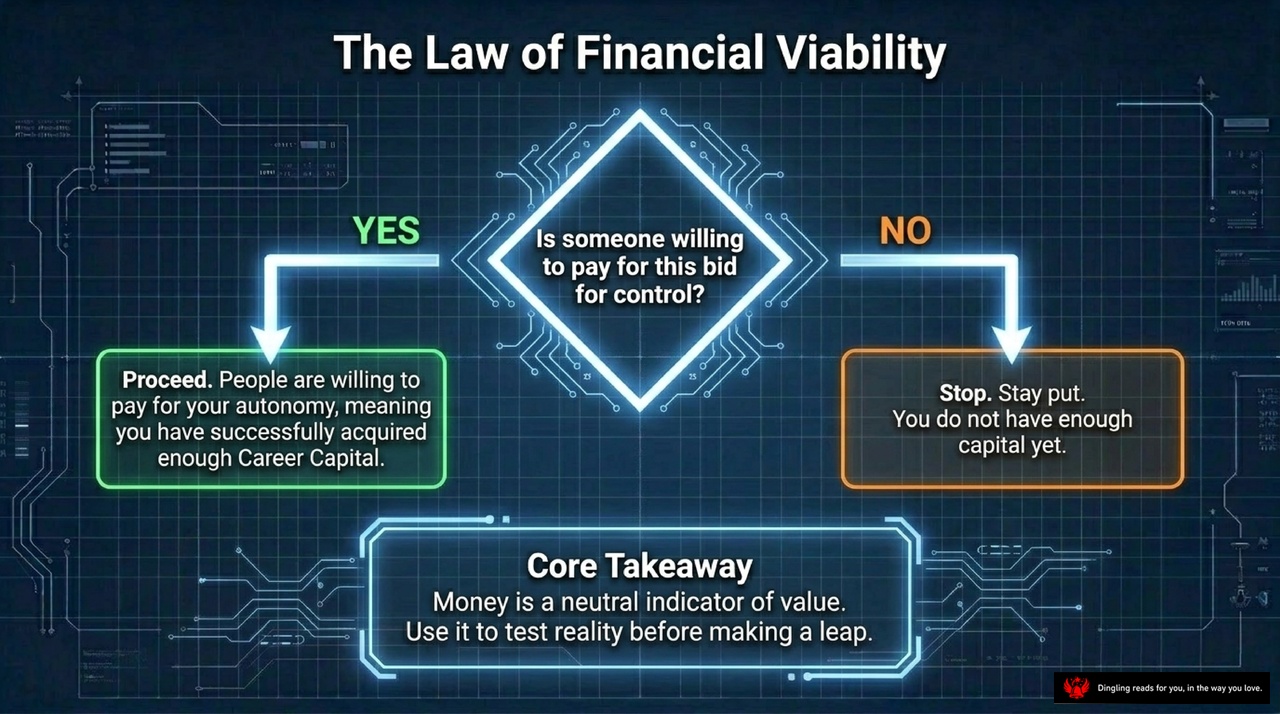
Let's talk about the moment you decide whether to push forward or hit the brakes. The slide you see right now outlines what I call "The Law of Financial Viability." It boils down to one critical question: Is someone willing to pay for this bid for control?
If the answer is yes, the path is clear. You proceed. Why? Because when people are willing to pay for your autonomy, it means you have successfully acquired enough Career Capital. Your value is being recognized in the marketplace, and you have the leverage to lead.
But if the answer is no, the advice is simple: Stop and stay put. You do not have enough capital yet. Trying to force a deal without that financial backing is a recipe for burnout and failure.
Here is the core takeaway from this entire framework: Money is a neutral indicator of value. Don't let ego cloud your judgment. Use the willingness to pay as a test of reality before making any big leaps. It's the difference between chasing a dream and building a viable business.

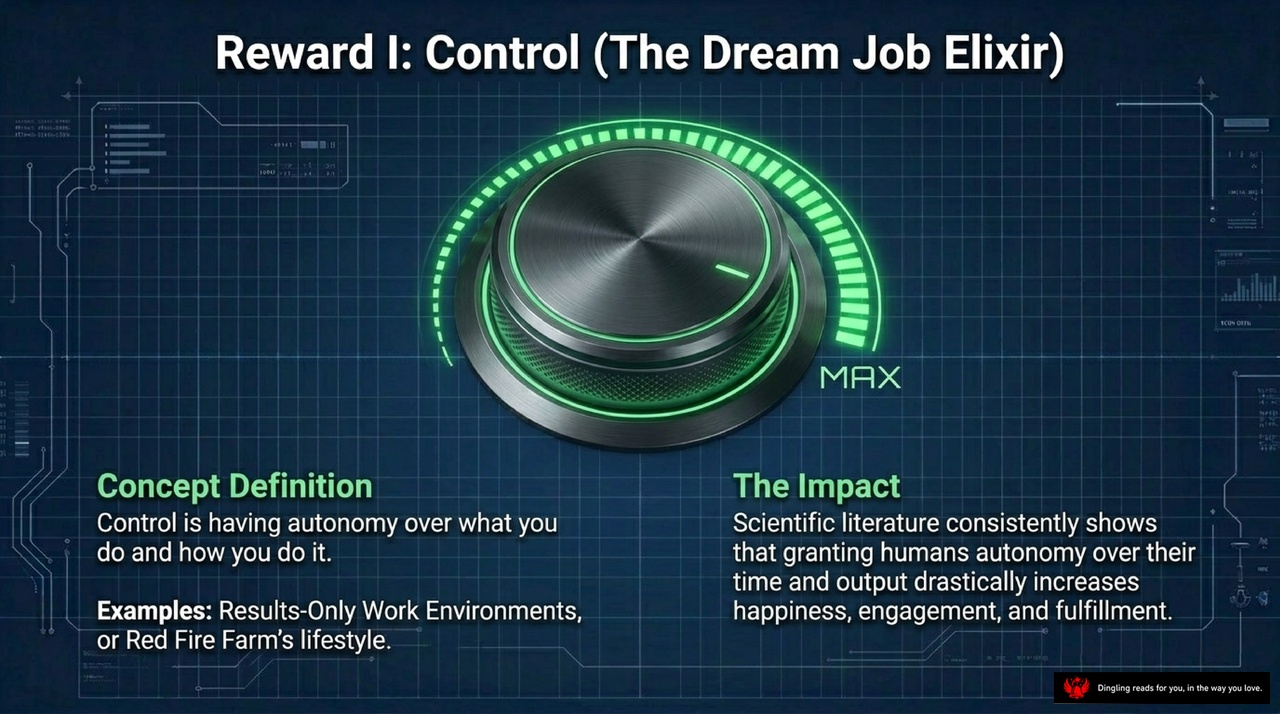
Think of a true mission not as a daydream hatched in a vacuum, but as a laser-focused beam cutting through the noise of your career. As our slide illustrates, a unifying mission acts as a guiding focus, injecting your work with deep meaning and impact. It's the difference between wandering in the dark and aiming a telescope directly at a distant star.
But here is the hard reality: this mission isn't something you just wish for. A true mission requires a massive foundation of "Career Capital" to unlock it. You can't just talk about fighting ancient diseases like Pardis Sabeti did with genetics without having the skills, resources, and grit to back it up. Your career capital is the fuel that turns a vague idea into a powerful, actionable reality. Without that foundation, your mission remains just a concept. Build your capital first, and then watch your career light up.

Let's talk about the secret to unlocking your next level of success. Look at this diagram: we call it "Reaching the Adjacent Possible." Think of your current knowledge as the center circle. The bright green ring surrounding it? That's the "Adjacent Possible"—the space just beyond your current boundaries where all real breakthroughs happen.
Here's the hard truth: you cannot skip straight to a grand mission or a massive innovation. The rule is simple: you must first spend years using deliberate practice to push yourself to the absolute cutting edge of your field. Only when you stand right on that edge will the next innovation reveal itself to you. Breakthroughs don't come from thin air; they exist exclusively in that green zone, the space just beyond what you know today. So, stop trying to leap over your own head. Instead, focus on mastering the cutting edge of your current skills. Once you've pushed yourself there, the magic of the adjacent possible will naturally unfold, leading you to your next great achievement.
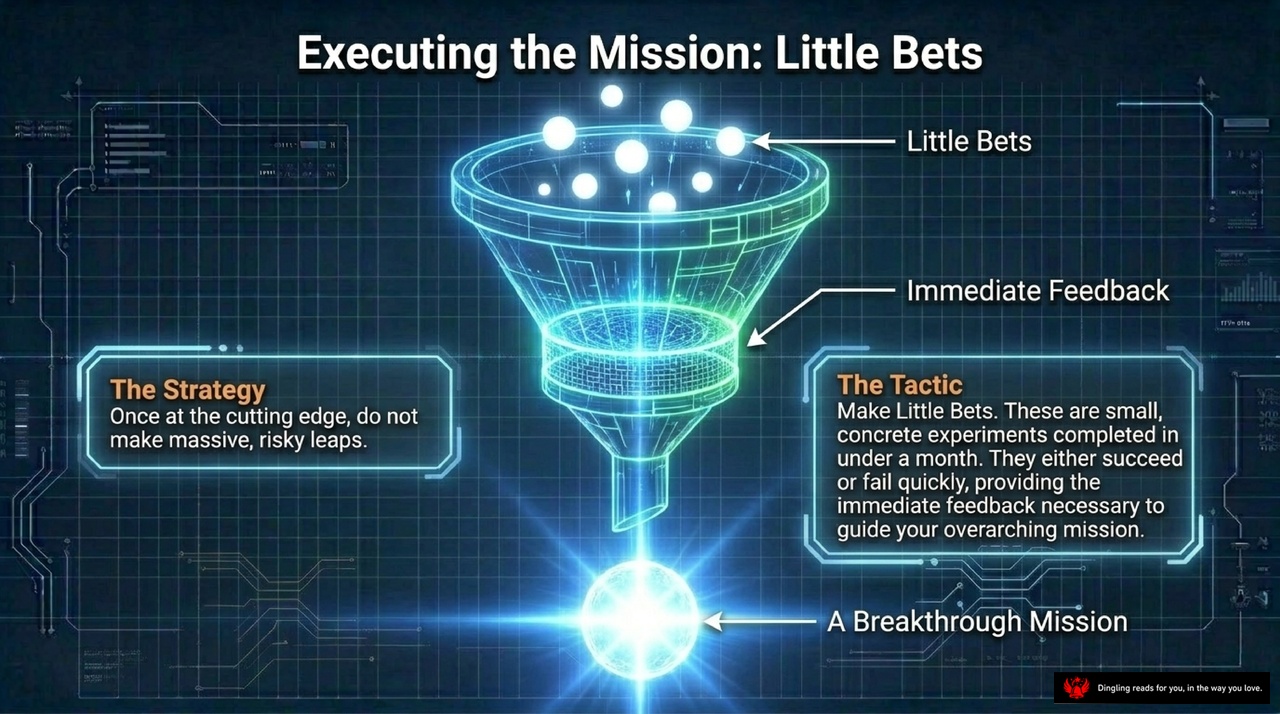
Imagine a funnel glowing with electric blue energy, representing the very engine of your sales mission. At the top, labeled "Little Bets," are small, bright spheres pouring in. This visual perfectly captures the core strategy: once you're at the cutting edge, stop making massive, risky leaps. Instead, make small, concrete experiments that can be completed in under a month. These are your "Little Bets."
As these bets flow through the funnel, they generate "Immediate Feedback." This is the tactical heartbeat of your operation. Every small experiment either succeeds or fails quickly, giving you the real-time data you need to guide your overarching mission. You aren't gambling blindly; you are testing hypotheses to find what works.
At the bottom of this funnel, all that feedback and learning converge into a single, brilliant point of light: "A Breakthrough Mission." By constantly making small bets and learning from the immediate results, you systematically eliminate the wrong paths until you land on the one that delivers your breakthrough. It's a scientific approach to sales that turns uncertainty into a clear, winning strategy.

Let's talk about the secret to unlocking real sales success. It all comes down to a powerful concept called "The Law of Remarkability," which is visualized right here on the screen.
Notice the two big circles intersecting in the middle? On the left, you have "The Purple Cow." This represents the core of your project. The text here makes it crystal clear: your product or idea must be inherently remarkable. It has to be so unique and compelling that when people see it, they literally stop and say, "Wow! I have to tell everyone about this!" Without this level of inherent excitement, you're just noise in a crowded room.
On the right side, we have "The Launch Venue." This is about where and how you introduce your idea. The text explains that no matter how amazing your product is, it needs to be launched in an ecosystem that actively supports the rapid spreading of remarkable ideas. You need to be in the right place, surrounded by people who are ready to amplify your message.
But here is the magic moment: the glowing green overlap in the center. This is where "Remarkable Success" lives. True success doesn't happen if you have a great product but a bad launch venue, or if you have a perfect launch venue for a boring product. You need both. You must combine a truly remarkable offering with a launch strategy that leverages that remarkability to spread fast.
Think about it: if your idea isn't worth talking about, no amount of marketing will save you. But if your idea is unforgettable and you place it in the right environment, the momentum takes over. That intersection is where the breakthrough happens.

Passion isn't something you wait for; it's the byproduct of mastery. As we wrap up our journey, remember that adopting a craftsman mindset—engaging in deliberate practice and systematically trading your hard-won career capital for autonomy and a compelling mission—doesn't just help you find a job you love. It empowers you to build one.
So, let's leave you with the most critical question of all: If no one owes you a great career, what rare and valuable skill are you building today to ensure they can't ignore you tomorrow? The tools are in your hands. Now, go build something that matters.