



Durand explains how startups became monopolies, showing that disruption now just means buying rivals to lock users in.
Your Review
Durand explains how startups became monopolies, showing that disruption now just means buying rivals to lock users in.

The idea that our morning routine feels like paying rent to digital lords hits hard, making me question every app I use daily.

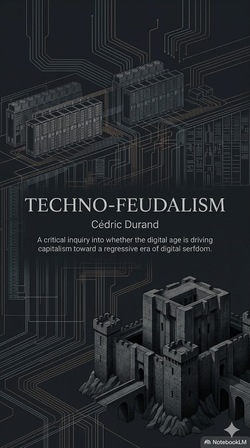
Durand explains how the Silicon Valley Consensus became tech-feudalism. He shows that five paradoxes—like startups turning into monopolies and the promise of autonomy masking algorithmic control—destroyed the idea of equal opportunity. The book details how digital giants now act as modern lords, controlling user data as digital land and extracting rent from workers and small businesses instead of creating real value. This shift from innovation to extraction traps millions in a system where switching platforms is nearly impossible due to high costs, effectively turning us into serfs dependent on invisible algorithms. The analysis of structural drivers, like zero marginal costs and network effects, reveals why competition is no longer the goal but rent extraction is, fundamentally reshaping our economy and daily lives without us even realizing we have surrendered our autonomy to a handful of tech billionaires.

Durand explains how tech giants act like feudal lords, controlling digital land through data and algorithms.

Durand explains how free startups became monopolies that lock us in, turning innovation into rent extraction.
The idea that convenience feels like a trap was a striking insight. I realized how easily I accept being locked into ecosystems without questioning it.
The idea that tech giants act like feudal lords controlling digital land really changed how I see my daily online habits.

Durand explains how startups became monopolies that buy competitors, which feels like a trap.

The book shows clearly how free apps actually cost us our privacy and control over our own lives without us noticing.

This book really made me question my morning routine with all those tech giants controlling my day.
Durand explains how tech giants act like lords by controlling data and algorithms. He uses the concept of internal transcendence to show how users unknowingly build the very systems that trap them, turning free services into a hidden form of rent extraction that locks us into ecosystems we cannot leave without losing our social or practical connections, effectively making us modern serfs who contribute the labor and data that generate the wealth for the few tech billionaires who own the digital land, a dynamic that explains why productivity stagnates while inequality soars because the value created by innovation is captured as rent rather than invested in new production, leaving us dependent on platforms that prioritize profit over our actual needs or the health of the broader economy. This shift from competition to rent extraction is the core of the problem, as it transforms what was once a promise of innovation into a system of domination where a handful of digital lords control the rules and extract value from billions without producing anything tangible themselves, a reality that demands we rethink our relationship with technology and the policies that allow this system to thrive unchecked.

Durand shows how tech giants act like feudal lords, extracting rent from users instead of creating real value through innovation.

The idea of digital feudalism really made me rethink my daily reliance on tech giants without realizing it. It feels surprisingly accurate.

Durand explains how tech giants act like feudal lords, controlling our digital land through data and algorithms in a way that feels both convenient and deeply restrictive.

The idea that tech giants act like feudal lords controlling digital land really made me rethink my daily reliance on apps like Amazon and Google.
The idea that tech giants act like feudal lords controlling digital land feels scary but makes sense when thinking about data.

This book makes me see my daily app usage as a trap instead of a convenient tool, changing how I view tech giants.

This book made me realize how my daily convenience is actually a trap that limits my real freedom.

The idea that tech giants act like feudal lords controlling digital land really changed how I see my daily app usage.

Durand explains how the Silicon Valley promise of freedom turned into a system where a few companies control everything we need to live online.