


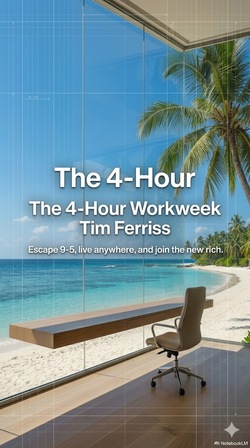
Ferriss proves that waiting for retirement to enjoy life is a trap, showing how to build freedom now through mindset shifts and smart outsourcing instead of grinding endlessly for a distant reward.
Your Review
Ferriss proves that waiting for retirement to enjoy life is a trap, showing how to build freedom now through mindset shifts and smart outsourcing instead of grinding endlessly for a distant reward.

This book changed how I view time, making me quit my high-stress job to start a small Etsy shop selling handmade pottery while traveling part time.


Sarah's story of deferring dreams until retirement really hit home for me. The idea that time is more valuable than money changed how I view my busy schedule today.

I found the idea of mini-retirements fascinating and inspiring for planning my future travels while still working.

The idea of 'mini-retirements' instead of waiting for age sixty-five really resonated with me personally. Sarah in the story felt so familiar as I often delay my own dreams like hiking trails or living abroad until some distant future that might never come. Ferriss argues that deferring joy is a trap we all fall into by chasing money first. By focusing on relative income rather than absolute wealth, we can prioritize free time over higher paychecks. The fear-setting exercise was especially powerful because it helped me realize my worst-case scenarios are manageable if I plan ahead properly. Instead of waiting for permission from my boss or society, I learned to ask forgiveness by proving my value remotely first. This mindset shift allows us to build automated income streams through Muse businesses that run themselves eventually. Even if you cannot quit your job today, these tactics like the eighty-twenty rule and outsourcing low-value tasks free up hours for what truly matters. The book doesn't promise easy riches but offers a practical blueprint to escape the deferred life trap and start living meaningfully right now instead of decades from now when we hope to retire.

Tim Ferriss explains how to escape the deferred life trap by prioritizing time over money, which helped me reframe my career goals and stop feeling guilty about wanting more free time instead of just chasing a higher salary.

The concept of mini-retirements changed my view on success, showing how prioritizing time over money creates real freedom instead of just deferring happiness until a distant future that might never come.

Life now.
Ferriss challenges the idea that we must wait until retirement to enjoy life. I now see how prioritizing time over money lets me build a Muse business that runs itself, giving me real freedom instead of just chasing a distant golden future.

I appreciate the focus on automating income streams, but I worry that building a Muse business requires more risk than I am comfortable with right now.

Sarah finally realizes she is trapped in a deferred life trap.

The book challenges the "deferred life" trap where people wait until retirement to enjoy life. Tim Ferriss explains how this cultural norm traps millions like Sarah, who works 60-hour weeks dreaming of Italy while ignoring that inflation and burnout might make "later" impossible. He argues we should reject retirement as a reward and prioritize time freedom over absolute income. Instead of asking permission for changes, we should seek forgiveness by proving value first, like the teacher who visited Japan without asking. By using tactics like the 80/20 Rule to cut busywork, outsourcing low-value tasks, and building automated "Muse" businesses, we can escape the grind. The core message is that true freedom comes from controlling your time now, not decades from now, allowing everyone from corporate employees to parents to reclaim their lives through small, intentional steps today.

The fear-setting exercise helped me realize my worst fears were manageable, so I stopped waiting for permission to try something new.
The fear-setting exercise helped me realize my worst-case scenarios were manageable, making it easier to negotiate remote work and finally take a mini-retirement without paralyzing anxiety.

Finally found a book that proves you don't need to wait until retirement to start living your best life.

Ferriss challenges the idea that we must wait until retirement to enjoy life. I realized I am a deferrer who delays hiking and travel until I hit 65, but the book argues that inflation and burnout make that future risky. Instead of chasing absolute income, we should prioritize relative income and time freedom now. The fear-setting exercise helped me see that quitting my job to start a small business is less scary than I thought, because I can plan contingencies for rent and healthcare. By focusing on the 20% of tasks that generate 80% of my results, I can cut busywork and reclaim hours for hobbies instead of just saving for a distant golden age that might never feel satisfying when I finally arrive.
Beginner-friendly without being shallow.

Finally a book that says life can start now instead of waiting for retirement, which is exactly what I needed to hear today.
I love the idea of mini-retirements and outsourcing low-value tasks, though I still struggle to fire clients who pay well but demand too much.

The book offers great tools for productivity, yet I feel skeptical about the idea that everyone can successfully negotiate remote work without losing their job security.