



Good read on exponential tech.
Your Review
Good read on exponential tech.

This book changed how I see the future. Truly amazing.

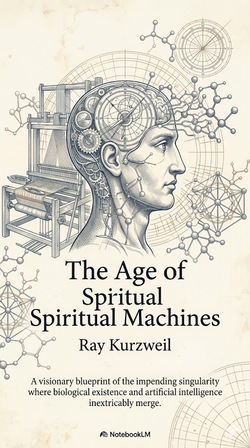
Kurzweil explains why linear thinking fails to predict the exponential pace of technological progress, showing how each breakthrough accelerates the next. He uses the iPhone's evolution from 2007 to 2024 as a clear example of this shift, contrasting our expectation of steady improvement with reality's rapid acceleration. The core insight lies in his three pillars of the Accelerating Returns Law: open systems drawing on chaos, self-reinforcing order, and compressing timeframes. Unlike the universe's decelerating path, life and technology harvest disorder to build complex structures, creating a feedback loop where every innovation fuels faster progress. For instance, computing power doubling every two years under Moore's Law has evolved into intervals shrinking from decades to mere years, proving exponential growth isn't a fluke but a universal pattern. This framework helps us stop reacting to change and start anticipating it, turning overwhelming speed into a predictable trajectory. While critics question if machines can truly be conscious or if mind uploading preserves our identity, Kurzweil pragmatically argues that functional equivalence matters more than philosophical debates. He acknowledges risks like AI job displacement or self-evolving viruses but counters that progress creates new opportunities and requires proactive safeguards like quantum encryption. Ultimately, the book urges us to adopt an exponential mindset, prioritizing adaptable skills over static knowledge, so we can steward this accelerating force toward shared benefit rather than fear it as an inevitable doom.

I was fascinated by how Kurzweil contrasts cosmic deceleration with biological and technological acceleration, showing why life and tech don't follow the universe's slowing trend but instead pull chaos from their environment to build increasing order. This shift from analog to digital, starting with DNA as nature's first hard drive, laid the groundwork for the next phase of evolution where technological progress became life's order-building process extended into tools and machines. The core insight that open systems draw on chaos while closed systems wind down helps explain why we are constantly caught off guard by breakthroughs like the iPhone or AI, because our brains expect steady, predictable improvement while reality accelerates exponentially. Understanding this framework changed my perspective on why predictions made in 2000 about computers or flying cars were so wrong, as the real revolution was pocket-sized devices putting supercomputer power in our hands, driven by the feedback loop where each innovation amplifies the next to speed up progress even faster over time.

Great read about exponential growth.

Kurzweil explains how linear thinking fails to predict tech, showing why progress feels sudden and overwhelming.

Kurzweil explains exponential growth clearly, making complex tech trends easy to understand for everyone today.

Reading this made me realize why my expectations for tech progress were always wrong because the real acceleration comes from each breakthrough enabling the next one to happen faster.

I found the section on consciousness too speculative since it relies on unproven theories about quantum effects and mind uploading rather than solid evidence we have now.

Kurzweil explains how linear thinking fails to predict tech growth, showing why each breakthrough accelerates the next and reshapes our understanding of intelligence and the future.

A bit too focused on future predictions rather than current practical applications for everyday readers.

Linear thinking fails to predict the accelerating pace of technological progress.

Kurzweil explains why our linear thinking fails to predict exponential tech growth, using the example of how computing power doubled every two years long before Moore's Law was even coined, proving that the trend started with mechanical calculators in the late 19th century and has been accelerating ever since, which makes sense of why we feel constantly surprised by modern breakthroughs instead of expecting them. His framework helps us understand that the universe itself is slowing down while life and technology create order from chaos, turning that disorder into self-reinforcing cycles where every new innovation builds the foundation for the next one to happen even faster, creating a feedback loop that drives progress at an ever-accelerating sprint rather than a steady crawl, ultimately shifting our mindset from reacting to change to anticipating it as we merge biological and digital systems to redefine what it means to be human in the cosmos. This perspective is essential for navigating a future where the gap between our intuitive expectations and reality grows wider every day unless we adapt our thinking to match the accelerating returns law that powers all exponential change.
This book changed my view on how fast tech really grows.

Kurzweil explains how the accelerating returns law drives tech from simple phones to superintelligent machines. He argues that intelligence is just finding order in chaos, whether in biology or silicon chips. This framework helps us understand why our linear brains fail to predict rapid breakthroughs like AI or gene editing. Instead of fearing the unknown, we should adopt an exponential mindset to anticipate change and act as stewards of this powerful force that reshapes our universe and defines what it means to be human in the future.

While the accelerating returns law explains tech growth well, I still struggle to accept the idea that mind uploading could truly preserve my personal identity without losing my subjective experience.

Kurzweil explains how exponential growth makes linear predictions fail, using the iPhone's evolution as proof that tech progress accelerates rather than stays steady.

Mind blown by the accelerating returns law explanation.

Kurzweil explains how linear thinking fails to predict exponential tech growth like AI and biotech advancements, making sense of rapid changes in our world and future possibilities beyond gadgets.

I found the section on mind uploading fascinating, though the ethical questions it raises about identity and continuity feel a bit too abstract for my current comfort level.