
The Ancestor's Tale: Complete Chapter-by-Chapter Summary

Welcome to *The Ancestor's Tale*, a journey written by Richard Dawkins and Yan Wong. Imagine a magnificent tree stretching across the cosmos, its branches weaving together every living creature on Earth—from the tiniest jellyfish in the deep ocean to the wisest humans gazing at the stars. This isn't just a tree of life; it's a backward pilgrimage through time, tracing the unifying story that connects us all.
As we look at this cover, notice how the roots dive deep into the swirling blue nebula of space, representing the very beginning of life, while the branches expand upward, hosting a vibrant tapestry of species. From ancient bacteria to modern elephants, whales, and birds, every life form finds its place on this grand evolutionary map. The subtitle tells us the essence of this adventure: a journey back through time to discover the single, shared story of all life on Earth.
In this book, we will leave the present behind and walk backwards along the branches of this tree. Instead of watching life diversify and split into countless species, we will meet at every "convergence point," gathering ancestors from different lineages until they all merge into one. Whether you are a human, a bacterium, or a fern, we all trace back to the same ultimate common ancestor at the base of the tree. This perspective helps us see that we are not the final goal of evolution, but simply one branch among many, all part of a magnificent, unified whole. Join me as we step back into the deep past and begin our exploration of how all life on Earth is connected.
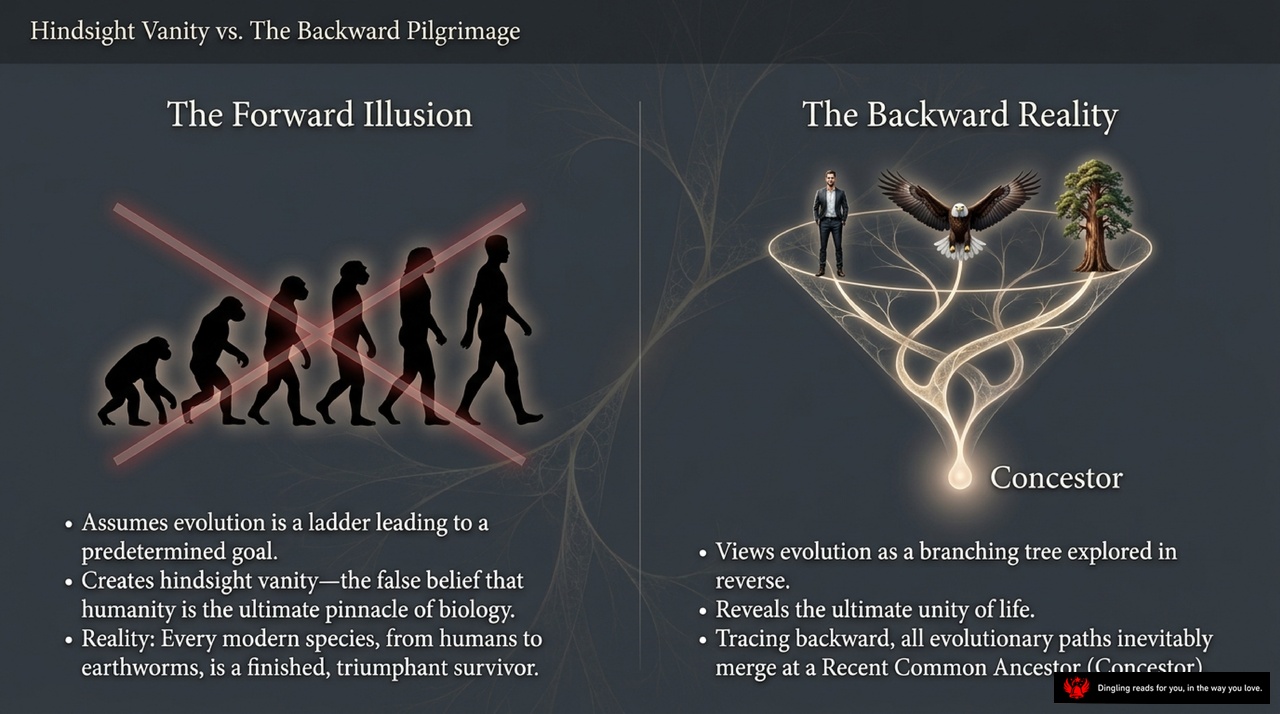
Hindsight Vanity versus The Backward Pilgrimage. On the left, we see "The Forward Illusion," that classic image of evolution as a ladder leading inevitably to humanity. This is a trap. It creates what we call hindsight vanity—the false belief that humans are the ultimate pinnacle of biology. It makes us think every species before us was just an unfinished draft, waiting to become us. But the reality is far more humble and equally triumphant: every modern species, from humans to earthworms, is a finished, successful survivor.
On the right, we flip the script to "The Backward Reality." Instead of looking forward to a destined goal, we trace our lineage backward. As we move down the tree, the paths of all life—whether you are a human, an eagle, or an ancient tree—inevitably merge. They all converge at a Recent Common Ancestor, labeled here as the "Concestor." This perspective reveals the ultimate unity of life. It shows that evolution isn't a ladder where we stand at the top; it's a branching tree explored in reverse, where we are just one branch among many, all equally connected to the same ancient root.

Welcome to the next stop on our evolutionary pilgrimage: the arrival of the rodents and lagomorphs. Around 75 million years ago, we meet the superorder containing everything from the humble house mouse to the massive capybara. This group represents one of the most successful branches in mammalian history, accounting for over 40% of all living mammal species.
Their success isn't accidental. It's built on a "specialized chewing machine" design with ever-growing incisors that can grind through tough plant matter, paired with an incredible reproductive strategy. Think of the house mouse: they reach sexual maturity in just three months and can have up to eight litters a year. This "quantity over quality" approach allows them to rapidly fill new ecological niches and survive even high mortality rates.
Beyond their numbers, rodents are scientific powerhouses. The mouse is the second mammal after humans to have its genome fully sequenced, revealing a staggering 98% similarity in gene count and structure. This makes them the ultimate model for human disease research; by editing mouse genes, scientists can simulate human conditions like cancer to test cures.
We also touch on epigenetics here—the idea that gene expression can change without altering the DNA sequence itself. While DNA mutations drive long-term evolution, epigenetic mechanisms allow for rapid, short-term adaptations to environmental shifts. In humans, culture acts as a form of non-genetic epigenetics, letting us pass down knowledge and adapt faster than our genes alone could ever allow.
This stop highlights how a simple evolutionary strategy—efficient eating and rapid reproduction—can lead to global dominance, while also reminding us that evolution isn't just about changing DNA, but also about how we use and express what we have.
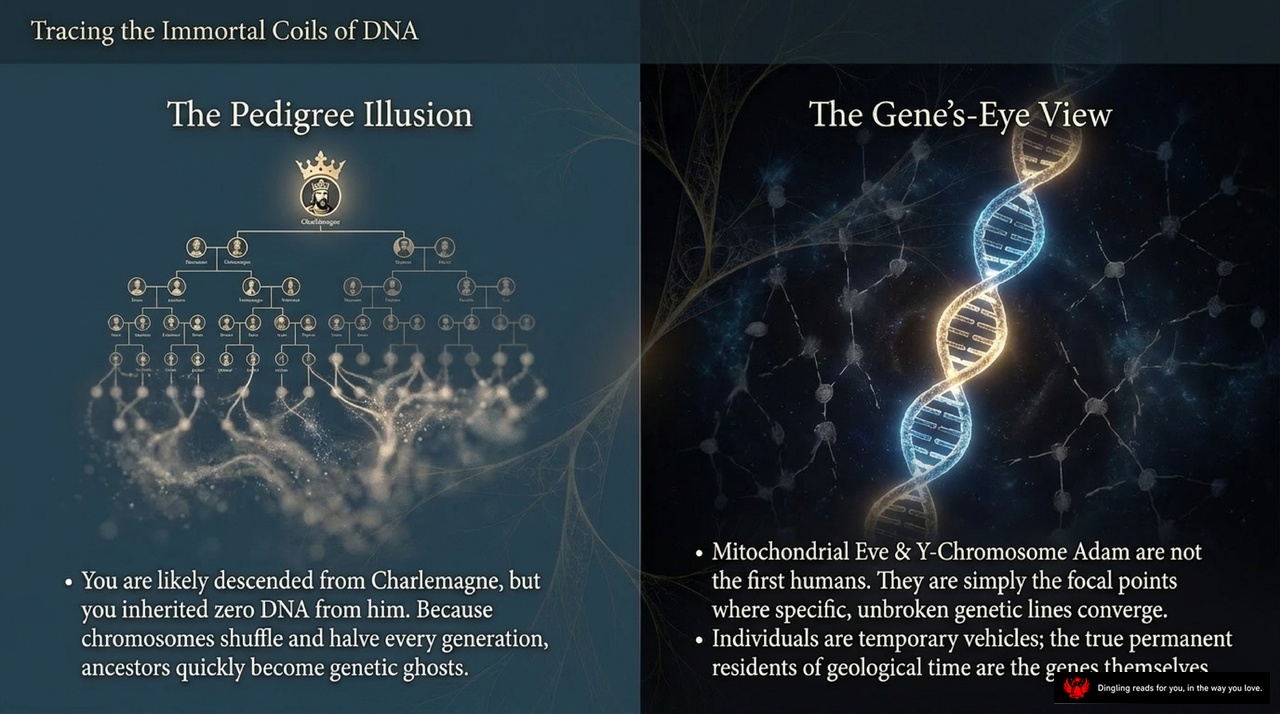
On this slide, we shift from the romantic idea of family trees to the cold, hard reality of genetics. The left side shows "The Pedigree Illusion"—that classic chart tracing you back to Charlemagne. While it's true you likely descend from him, the reality is stark: you inherited zero DNA from him. Because chromosomes shuffle and halve every generation, ancient ancestors quickly fade into genetic ghosts.
Now, look at the right side: "The Gene's-Eye View." This is the crucial shift in perspective. Mitochondrial Eve and Y-Chromosome Adam aren't the first humans; they are simply focal points where unbroken genetic lines converge. Think of individuals as temporary vehicles. We are just the drivers passing by. The true permanent residents of geological time are the genes themselves.
This "gene's-eye view" allows us to trace the immortal coils of DNA, bypassing the illusion of the family tree to see the actual history of life.
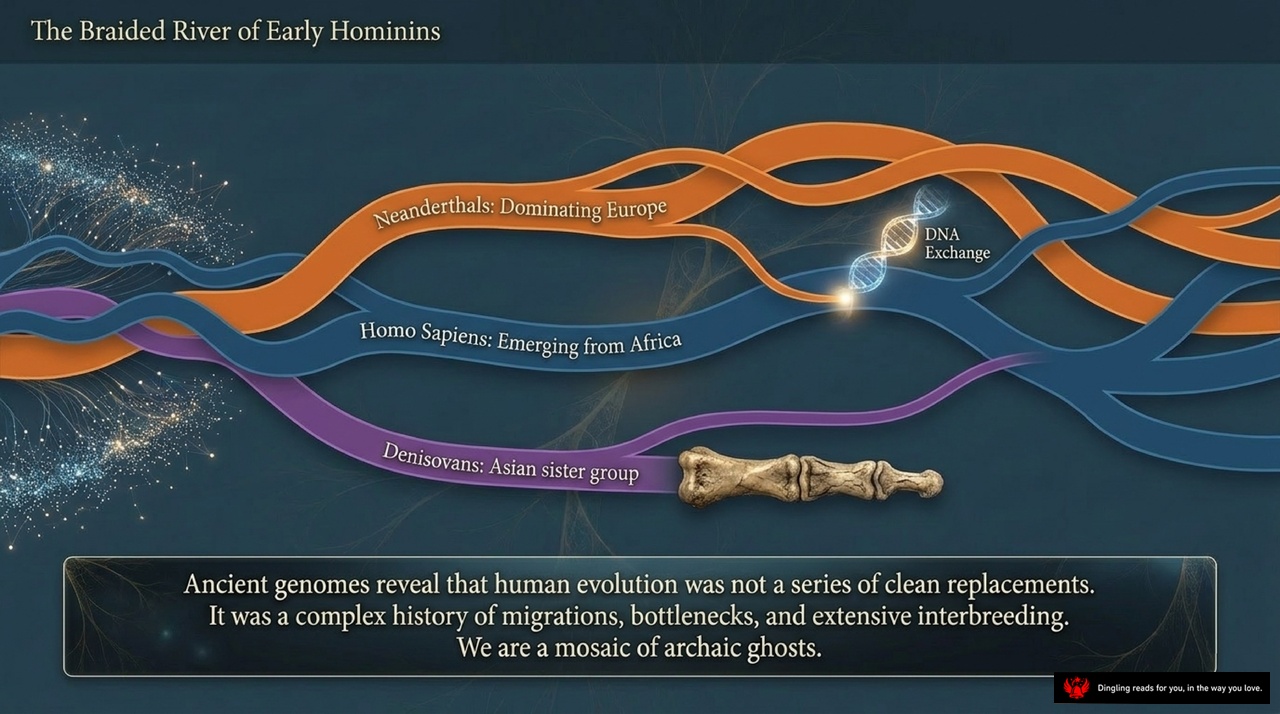
Imagine a world where evolution isn't a straight line leading to us, but a braided river of ancient life. As we travel backward in time to our 13th meeting point, we encounter two distinct and fascinating branches: the Xenarthrans and the Afrotheria.
The Xenarthrans, known for their "strange joints," are the ancient inhabitants of South America. Think of the armadillos, sloths, and anteaters we know today. Their ancestors were once giants—ground sloths the size of cars and giant anteaters that rivaled elephants. The anteater is the ultimate specialist, having lost all teeth and evolving a long, sticky tongue to slurp up ants, even using their prey's own formic acid to help digest.
Meanwhile, the Afrotheria tells a different story from the African continent. This group includes a wild mix of creatures: aardvarks, elephants, hyraxes, golden moles, and even the manatees and dugongs that look like mythical mermaids. Surprisingly, the elephant's closest living relatives aren't other elephants, but the elephant shrew, the manatee, and the hyrax.
These two groups' distribution across the globe is a direct map of Earth's geological history. Around 100 million years ago, the supercontinent Gondwana began to split. South America and Africa drifted apart, isolating these mammal lineages and allowing them to evolve in unique directions. The Xenarthrans stayed in the Americas, while the Afrotheria thrived in Africa. This separation proves that plate tectonics didn't just shape our landscape; it fundamentally dictated the evolutionary paths of life itself.
Moving further back, we reach the 14th meeting point to meet the Marsupials. These are the animals famous for their pouches. In Australia, isolated from other continents, they evolved to fill roles usually occupied by placental mammals elsewhere. You have the thylacine, a marsupial that looked and acted just like a wolf, and the marsupial anteater, which independently evolved the same long-tongued feeding strategy as its placental cousin. This is a perfect example of convergent evolution—nature finding the same solution to the same problem, even on different continents.
Finally, we hit the 15th meeting point, home to the monotremes. These are the only mammals that still lay eggs. They possess a cloaca, a single opening for waste and reproduction, a trait shared with reptiles. The platypus is perhaps the most iconic of them all. Its duck-like bill isn't just for show; it's a sophisticated electroreception system. Underwater, where vision fails, the platypus uses 40,000 sensors in its bill to detect the tiny electrical fields generated by struggling prey, effectively hunting by "seeing" electricity. This ancient reproductive strategy reminds us that mammals didn't always give birth to live young; they evolved from reptilian ancestors, carrying the legacy of egg-laying into our modern world.
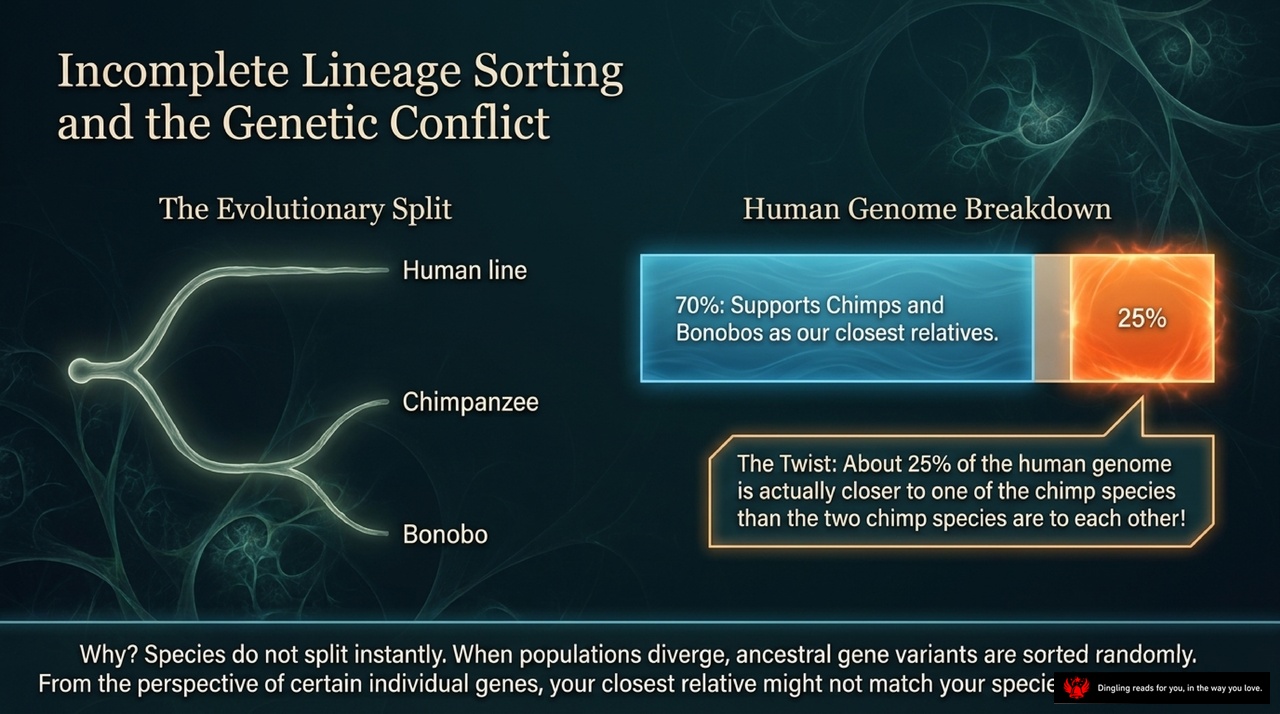
Welcome to the next stop on our journey back in time, where we dive into the deep, dark history of our vertebrate ancestors. On this slide, you'll see a visual breakdown of the evolutionary split between humans, chimpanzees, and bonobos, along with a surprising twist in our genetic makeup.
Let's start with the evolutionary split. As we trace our lineage backward, we encounter our closest living relatives: the chimpanzee and the bonobo. While 70% of our human genome supports them as our closest relatives, the orange section on the right reveals a fascinating contradiction. About 25% of our DNA is actually closer to one specific chimp species than the two chimp species are to each other! This isn't a mistake; it's a phenomenon called incomplete lineage sorting.
Think of it this way: when species split, they don't do it all at once. Ancestral gene variants get sorted randomly among the new populations. So, for certain individual genes, your closest relative might not match your species at all. This genetic conflict reminds us that our family tree is far more complex and tangled than a simple branching diagram suggests. It's a crucial insight that helps us understand the messy, dynamic reality of evolution.

Welcome back to our journey through the Book of Life. Today, we're stepping back into deep time to meet the fish that changed everything: the lobe-finned fish.
In the Devonian period, about 415 million years ago, the lineage of lungfish joined our pilgrimage. These remarkable creatures possess a dual respiratory system, capable of breathing both through gills and lungs. This unique adaptation allowed them to survive in drying ponds by burrowing into mud and entering a dormant state, effectively bridging the gap between aquatic and terrestrial life.
Shortly after, we encounter the coelacanth at our 19th meeting point. For decades, scientists believed these fish were extinct until a living specimen was discovered in 1938. Known as a "living fossil," the coelacanth retains ancient skeletal structures, including fleshy fins homologous to our own limbs. Together, lungfish and coelacanths provide the crucial evidence that tetrapods—four-limbed vertebrates—evolved from fish ancestors.
But evolution doesn't stop at the surface. Deep in the caves of the world, blind fish offer a powerful lesson in adaptation. Stripped of sight and color in dark environments, they have repurposed their eyes and skin, enhancing their lateral line system to detect water currents and refining their sense of smell. Nature didn't just remove their eyes; it rewrote their biology to thrive in the dark.
Finally, we meet the sharks at our 21st meeting point. These cartilaginous predators have survived for over 400 million years. Their flexible skeletons, sharp teeth, and specialized skin allow them to dominate the oceans with an efficiency that bone-heavy competitors often can't match. From the ancient jawless fish of the Cambrian period to the agile sharks of today, these ancient lineages remind us that the most successful strategies are often the simplest ones.
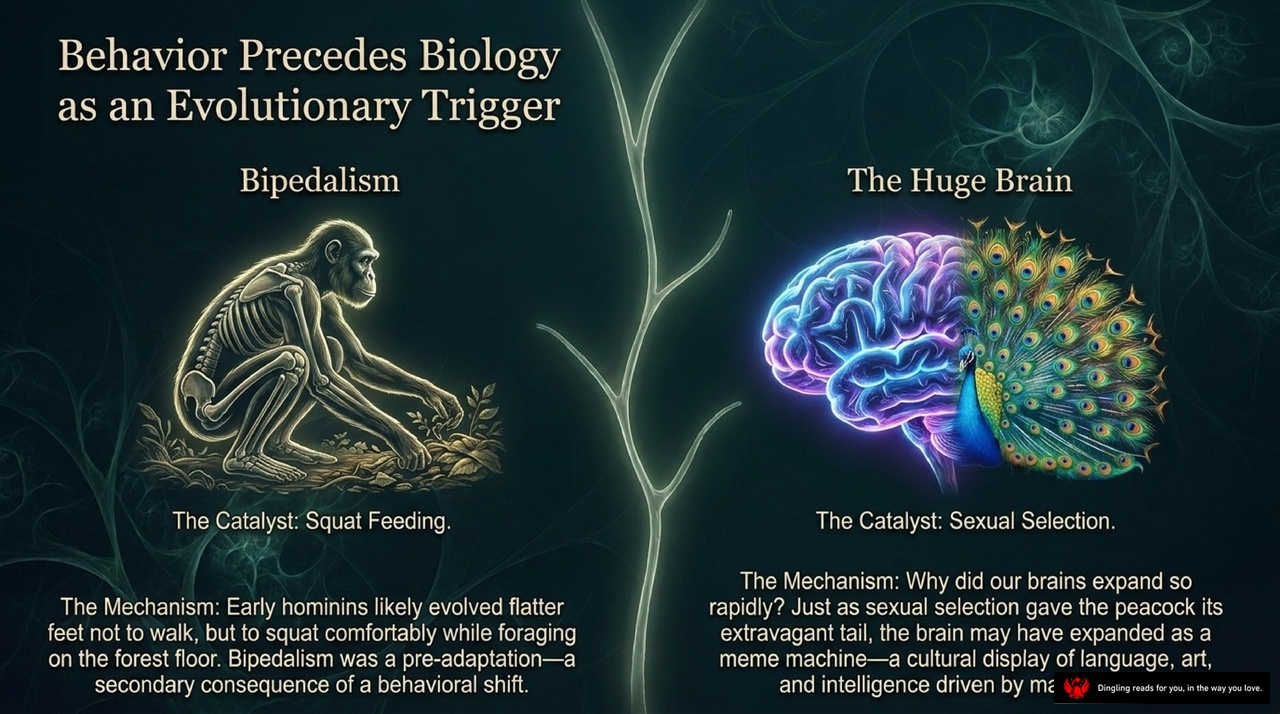
Behavior Precedes Biology as an Evolutionary Trigger. This slide challenges a core assumption we often hold: that our biology drives our behavior. In reality, the reverse is often true—specific behaviors act as the catalysts that force our biology to adapt.
Look at the left side. We see the transition to bipedalism. The text highlights a specific, often overlooked behavior: "squat feeding." Early hominins didn't evolve flat feet primarily to walk upright; they evolved them to squat comfortably while foraging on the forest floor. Bipedalism was a secondary consequence, a biological pre-adaptation that followed this behavioral shift.
Now, look at the right side. We see the explosion of "The Huge Brain." What drove this? The slide points to "Sexual Selection." Just as natural selection shaped survival, sexual selection shaped our cognitive architecture. The text suggests our brains expanded rapidly because they functioned as a "meme machine"—a cultural display for language, art, and intelligence. Much like a peacock's extravagant tail signals genetic fitness to a mate, our complex brains and cultural outputs likely signaled cognitive superiority, driving further expansion.
The key takeaway here is the direction of causality. We didn't just grow brains to become smarter; we engaged in complex social and cultural behaviors that demanded and selected for larger brains. We didn't just start walking upright to travel further; we adopted a specific feeding posture that reshaped our skeletal structure. Behavior comes first, acting as the evolutionary trigger that pulls our biology into new forms.

Look at this graph. It's a stunning visual proof of a hidden order in nature. From a tiny mouse to a massive blue whale, every living thing follows the same mathematical rule. This is Kleiber's Law. It tells us that metabolic rate scales to body mass at a precise 3/4 ratio. And here's the kicker: brain size relative to body weight follows that exact same slope. It's as if the universe has a single formula for how life runs, regardless of size.
But now, look at the bottom of the slide. We hit a major plot twist known as the C-Value Paradox. You might expect that bigger animals or more complex ones have more DNA. But check this out: a simple lungfish or even a head of cauliflower can have vastly more DNA than humans. Why? The insight is clear: most of our genome is actually "junk" DNA or viral parasites. A gene's only job is to survive. As long as it doesn't kill the host, it will relentlessly copy itself. So, having more DNA doesn't necessarily mean being more complex. Sometimes, it just means you've got a lot of genetic baggage that's stubbornly refusing to disappear.
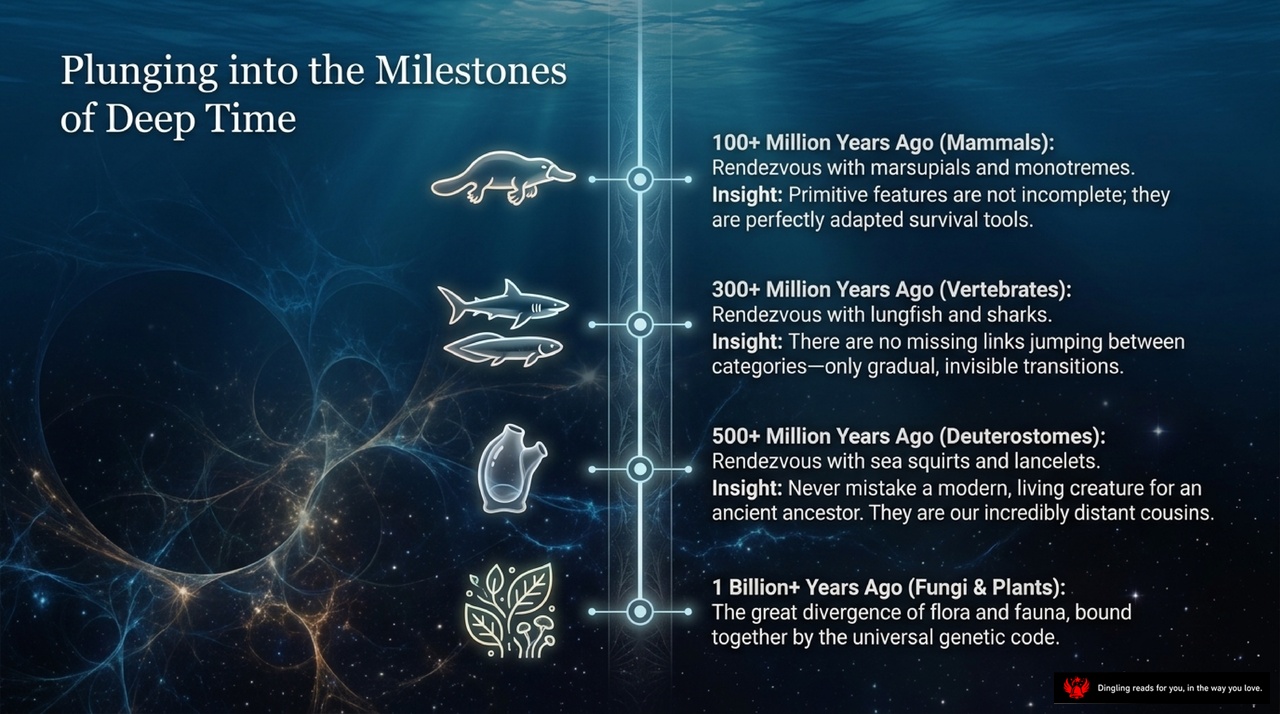
Welcome to the deep time, where we finally plunge into the very origins of life itself. As our evolutionary journey reaches its ultimate destination, we arrive at the "Canterbury"—not a physical place, but the abstract birth point of all genetic mechanisms. While Darwin once imagined life starting in a warm little pond, we now know the true spark wasn't a complex organism, but a simple, self-replicating system. The "RNA World" theory suggests that before DNA and proteins took over, RNA was the pioneer, acting as both the genetic blueprint and the catalyst for life's first chemical reactions.
From this singular moment, the great divergence begins. We first meet the Archaea, those incredible extremophiles that thrive in boiling hot springs and deep-sea vents, proving that life can withstand the harshest conditions. Then, we encounter the true giants of the microbial world: the Bacteria. From the nitrogen-fixing roots of our crops to the heat-resistant enzymes that power the PCR technology used in every DNA test today, bacteria are the ultimate engineers of our planet.
But the story takes a monumental turn at the final convergence. This is the event that created *you*: the birth of the eukaryotic cell. Through a process known as endosymbiosis, a host cell swallowed a bacterium, which became the mitochondria—the power plant of every living thing—and later, another bacterium became the chloroplast, allowing plants to harness the sun. This fusion of distinct life forms didn't just create a new cell; it built the foundation for all complex, multicellular life. So, as we look back from the present to this ancient moment, we realize that every breath we take, every thought we have, is the direct result of this ancient, collaborative merger of bacteria billions of years ago.
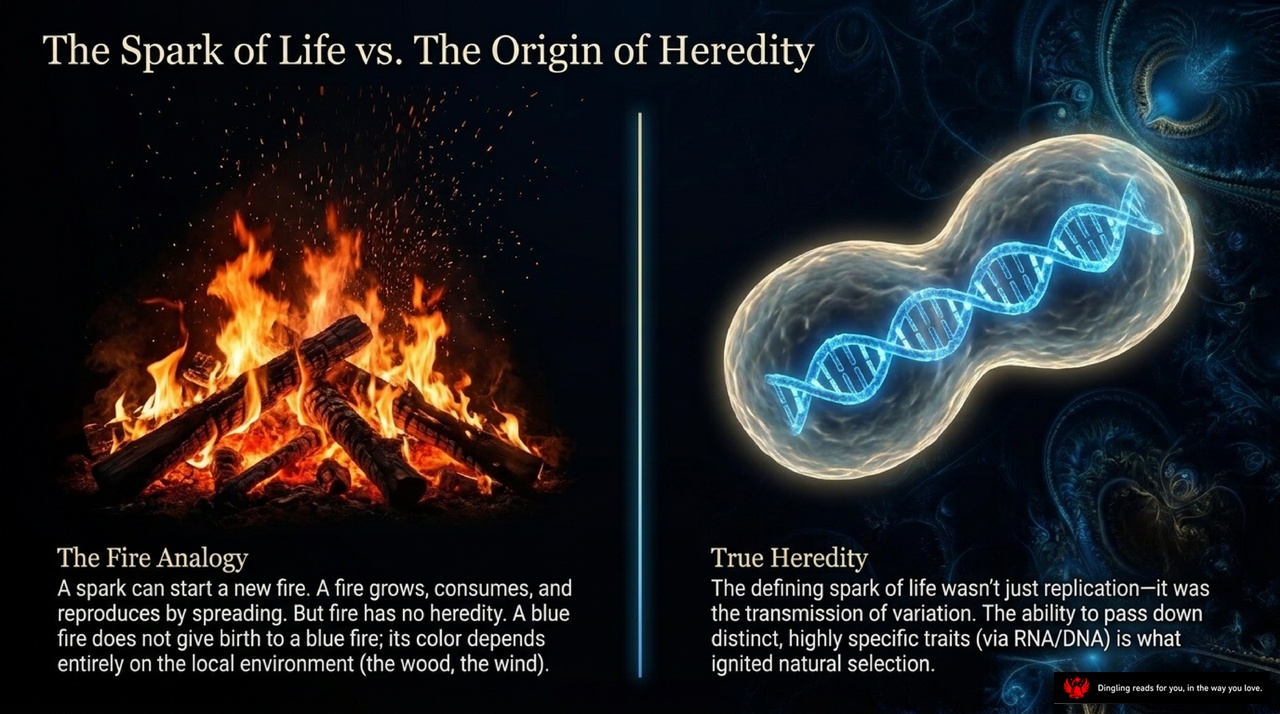
Imagine the spark of a campfire. It roars, consumes wood, and spreads to new logs, yet a blue flame never begets a blue flame; its color is entirely dictated by the wood and the wind. This is the fire analogy for life without heredity—reproduction without inheritance. But true life requires something far more specific: the ability to pass down distinct, highly specific traits via RNA and DNA. This transmission of variation is the defining spark that ignited natural selection. Without this genetic memory, evolution as we know it would simply burn out like a fleeting fire, unable to build upon the past. This is the crucial distinction between mere replication and the origin of hereditary life.
Welcome to the final destination of our evolutionary journey: Canterbury. This isn't a physical place you can visit on a map, but rather the abstract starting point where life itself ignited. While Darwin once imagined life beginning in a warm little pond, he understood the true secret wasn't just a soup of chemicals, but the birth of a heritable system. Before DNA, the stage was set by RNA. This "RNA World" theory suggests that life's first replicators were RNA molecules, which uniquely acted as both the blueprint for genetic information and the catalyst for chemical reactions, much like the ribosome's core today.
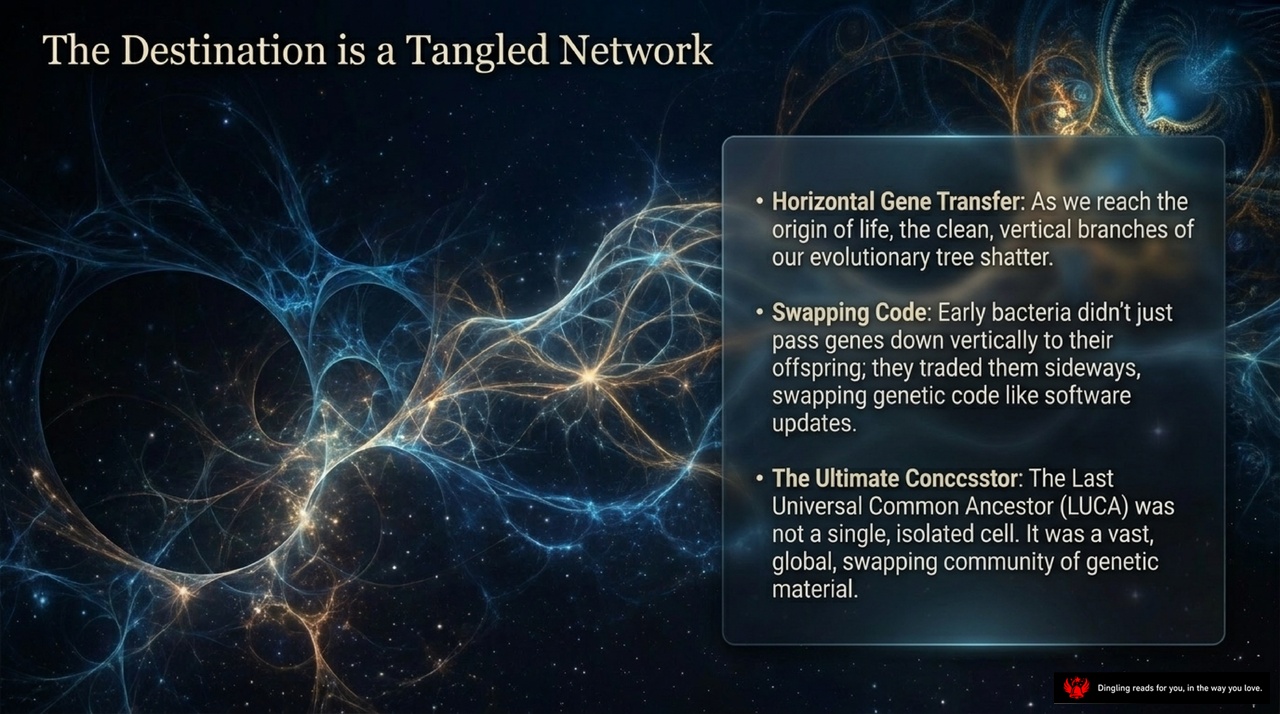
But here is where the story gets truly tangled. As we reach the origin of life, the clean, vertical branches of our evolutionary tree shatter. Early life didn't follow a simple family tree where genes pass only from parent to child. Instead, early bacteria traded genetic code sideways, swapping software updates like peers sharing files. This phenomenon, known as horizontal gene transfer, means the Last Universal Common Ancestor, or LUCA, wasn't a single, isolated cell. It was a vast, global community of genetic material constantly exchanging information. So, when we look back at the very beginning, we aren't looking at a straight line, but a complex, interconnected web of life that shaped everything we see today.

Welcome to the final stop of our 4-billion-year journey: Canterbury. Think of this not as a physical place, but as the abstract starting point where the very mechanism of life—the ability to copy and pass on information—first emerged. While Darwin famously imagined life beginning in a warm little pond, he understood that the true spark wasn't just chemistry; it was a replicable system. Before DNA took the lead, the stage belonged to RNA. This "RNA World" theory suggests that early life relied on molecules that could both store genetic instructions and catalyze chemical reactions, essentially acting as both the blueprint and the builder. Imagine a self-sustaining cycle where molecules helped each other replicate, creating a stable foundation for evolution to take over.
But what drives this endless engine of change? Evolution isn't a straight line toward perfection; it's often a high-stakes arms race. Picture a predator and prey locked in a constant struggle: as rabbits run faster, foxes must become smarter hunters; as plants develop toxic defenses, insects evolve new ways to digest them. This relentless back-and-forth pushes life toward incredible complexity, giving us eyes, wings, and echolocation. Yet, this progress isn't always linear. Sometimes, a mass extinction event resets the board, allowing new groups, like mammals after the dinosaurs, to pick up the evolutionary baton and run their own race.
Crucially, evolution also relies on "bottlenecks"—moments where a population shrinks back to a single cell, like a fertilized egg. This reset allows new variations to spread instantly to the whole organism, fueling the shift from single cells to complex, multi-celled beings with specialized organs. Even the rules of evolution itself are evolving. Traits like segmentation, modularity, and sexual reproduction didn't just help organisms survive; they supercharged our ability to evolve further, creating a feedback loop of increasing diversity.
Finally, let's look at the visual map we've built together. Our fractal tree of life is based on the latest "Open Tree of Life" data, calibrated with both molecular clocks and fossil evidence. Each meeting point represents a calculated common ancestor, from our split with chimpanzees 6 million years ago to the divergence of reptiles and mammals. These reconstructions, drawn by Malcolm Goudwin, blend hard scientific data with logical inferences about soft tissues, bringing these ancient ancestors to life. Whether you are a biologist or just curious about your place in the cosmos, remember this: we are all part of this single, interconnected, and ever-changing story.

We are but one tiny leaf on an ancient, sprawling tree of life. As we trace our path backward through deep time, a profound truth emerges: the tree of life is not a ladder of progress leading inevitably to us, but a vast, interconnected tapestry. Every living creature today, from the smallest bacterium to the largest mammal, is a triumphant survivor carrying a molecular chronicle of the deep past. We are entirely unified by a single, unbroken chain of heredity, linked by surprisingly recent shared ancestors and the genetic ghosts embedded in our DNA.
If evolution has no ultimate destination and was never aiming for us, what will the next great branch look like? The end of this pilgrimage isn't an arrival at a goal, but a realization of our place within an endless, dynamic web of life.