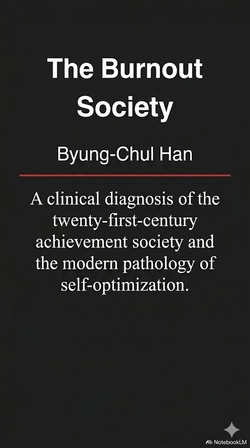



Han argues that modern burnout stems from internal pressure rather than external rules or clear enemies, suggesting that the shift from an "immunological society" to a meritocracy where we are our own taskmasters is the root cause of our exhaustion. This insight challenges the common belief that burnout is simply a personal failure or a lack of discipline, instead framing it as a systemic symptom of a culture driven by excessive positivity and the endless demand to achieve. The book effectively contrasts the old model of "viral violence," where society defended against outside threats, with the current reality of "neural violence," where we inflict harm on ourselves by constantly pushing for more, more, and more. Han's discussion of how we have replaced deep attention with hyper-attention, filling every quiet moment with productivity tasks, highlights how we have lost the capacity for creativity and rest. By reinterpreting Freud's and Arendt's theories, Han shows that our current struggles cannot be solved by simply fixing individuals, but require a fundamental rethinking of how we define success and value in a world that equates self-worth with constant output. Ultimately, the book offers a path forward by urging us to reclaim the power of negation and embrace deep boredom as essential acts of resistance against the relentless cycle of self-exploitation.