
The Emperor of All Maladies: Complete Chapter-by-Chapter Summary

Welcome to a journey through the history of cancer, a 4,000-year-old battle that is far more complex than we ever imagined. Today, we begin with Siddhartha Mukherjee's masterpiece, *The Emperor of All Maladies*. Look at the image behind us: these are not foreign invaders, but a distorted, hyper-proliferative version of our own normal selves. This is the core truth of cancer.
For centuries, medicine fought this "monster" with brute force. In the late 1800s, Dr. William Halsted at Johns Hopkins introduced radical surgery, believing cancer spread outward like ripples. To stop it, he argued, you had to cut everything in its path—breasts, muscles, even lymph nodes. It was a desperate, terrifying era where doctors sacrificed patients' bodies to save their lives. But while surgery could remove a lump, it couldn't touch the invisible cells already traveling through the bloodstream.
Simultaneously, a new weapon emerged: radiation. Discovered by X-ray pioneer Wilhelm Röntgen, this technology could kill rapidly dividing cells. Yet, it was a double-edged sword. While it shrank tumors, it also caused blindness, burns, and even created new cancers, as tragically seen in the radium dial painters who unknowingly painted their own demise.
Then came the second major turning point: chemotherapy. Born from a horrific accident during World War II when mustard gas was used as a weapon, scientists realized this chemical could destroy cancer cells. But early drugs were blunt instruments, poisoning healthy cells along with the malignant ones.
The real revolution began in the 1940s and 50s, led by Dr. Sidney Farber. He dared to challenge the belief that cancer was untreatable. By targeting the specific nutrients leukemia cells needed to grow, he proved that cancer could be managed with drugs. This sparked a global movement, turning cancer research from a lonely scientific struggle into a national priority.
As the story unfolds, you will see how these early, often painful experiments laid the groundwork for everything we know today. From the era of "cutting it all out" to the dawn of targeted therapies that fight the disease without destroying the patient, the history of cancer is a testament to human resilience and the relentless pursuit of a cure. Let's dive in.

The defining paradox of cancer is this: it isn't an alien invader, but a distorted version of ourselves. As Susan Sontag famously said, every human being holds dual citizenship—in the kingdom of the well and in the kingdom of the sick. Look at the contrast here: on the left, a healthy cell dividing with perfect order; on the right, cancer cells spiraling out of control, mutating and adapting. The takeaway is profound—the very mechanisms that allow humanity to survive and adapt are the exact same ones cancer hijacks to thrive. Cancer is simply a more perfect, ruthless version of us. It teaches us that life itself is an act of adaptation, and when that process goes awry, it becomes the defining challenge of our biology.
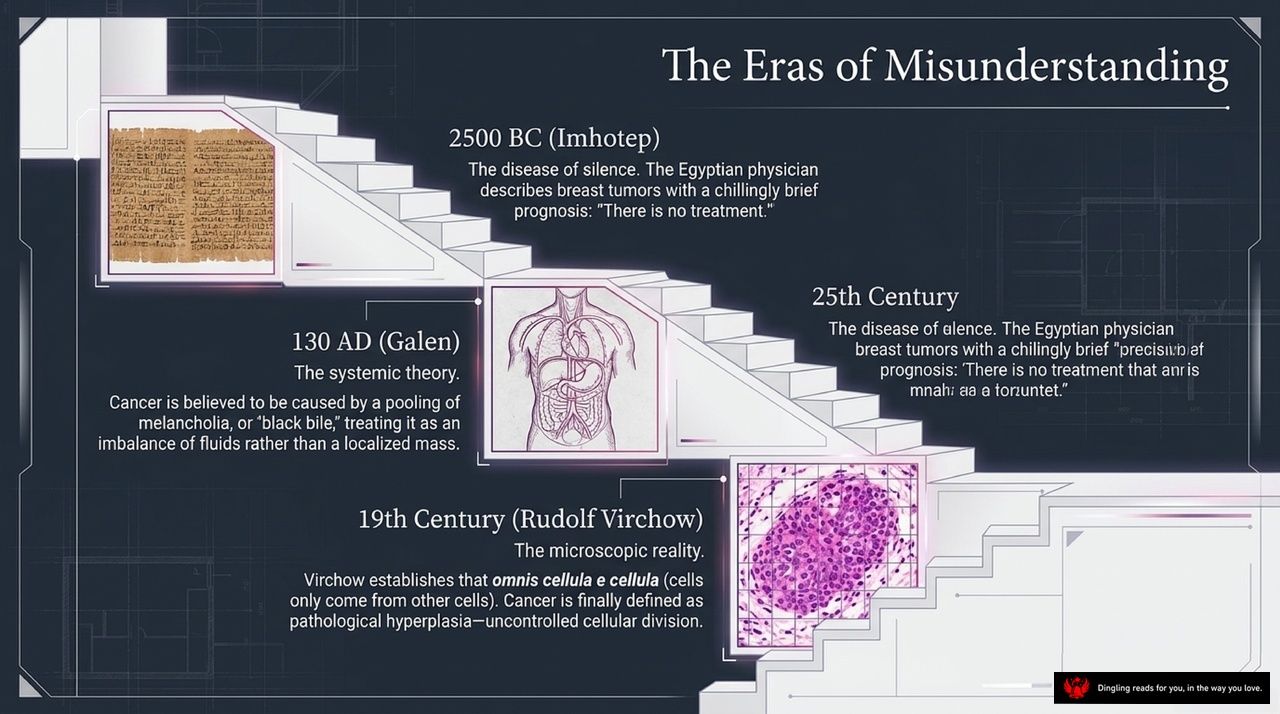
Welcome back. Today, we're stepping back in time to look at the "Eras of Misunderstanding"—a timeline that reveals how our view of cancer has shifted from silence to science.
Imagine standing at the bottom of a staircase. The first step takes us back to 2500 BC with Imhotep. Here, breast tumors were met with chilling silence. The diagnosis was simple and final: "There is no treatment." It was a disease of quiet despair.
Fast forward to 130 AD. Galen introduces the systemic theory. Instead of seeing cancer as a localized mass, he believed it was an imbalance of fluids, specifically a pooling of "black bile." He treated the whole body's chemistry, not the tumor itself.
Now, climb to the 19th Century. This is where Rudolf Virchow changes everything. He establishes the microscopic reality with the phrase "omnis cellula e cellula"—cells only come from other cells. Suddenly, cancer is no longer a fluid imbalance; it is defined as pathological hyperplasia: uncontrolled cellular division.
Finally, look up to the 25th Century. We see the disease of silence again, but this time, the text is a futuristic placeholder, hinting at a precision prognosis that we are currently striving toward.
This journey from silence to the understanding of cellular division is the foundation of everything we've learned so far. It reminds us that every major medical breakthrough starts by correcting a fundamental misunderstanding.

The slide highlights a pivotal shift in how we think about cancer: moving away from brute force toward precision. On the left, you see Radical Surgery, pioneered by William Halsted in the 1890s. His philosophy was simple but extreme: "eradicate by cutting." He believed cancer spread centrifugally from the original site, so the only way to cure it was to remove the tumor along with all surrounding healthy tissue—even muscles and lymph nodes. This approach, while effective for some, often left patients with severe physical trauma and a diminished quality of life, sacrificing their bodies just to try and save them.
On the right, we see Cytotoxic Chemotherapy, introduced by Sidney Farber in the 1940s. This era shared a similar desperate philosophy: "eradicate by poisoning." Instead of cutting organs, doctors targeted rapidly dividing cells. The method involved using antifolates like Aminopterin to induce systemic toxicity, hoping to kill leukemia cells before the patient did. While this was a massive breakthrough for blood cancers, it came with a heavy price, attacking both cancer and healthy cells alike.
The conclusion at the bottom of the slide is crucial. Both these early eras operated under the same grim belief: that extreme collateral damage was not just acceptable, but necessary to save the patient. Whether it was cutting away healthy tissue or poisoning the whole body, the logic was the same—do whatever it takes to eliminate the threat, regardless of the cost to the patient's life or well-being. This mindset defined early cancer treatment for decades, setting the stage for the profound challenges and eventual shifts we would see in later decades.
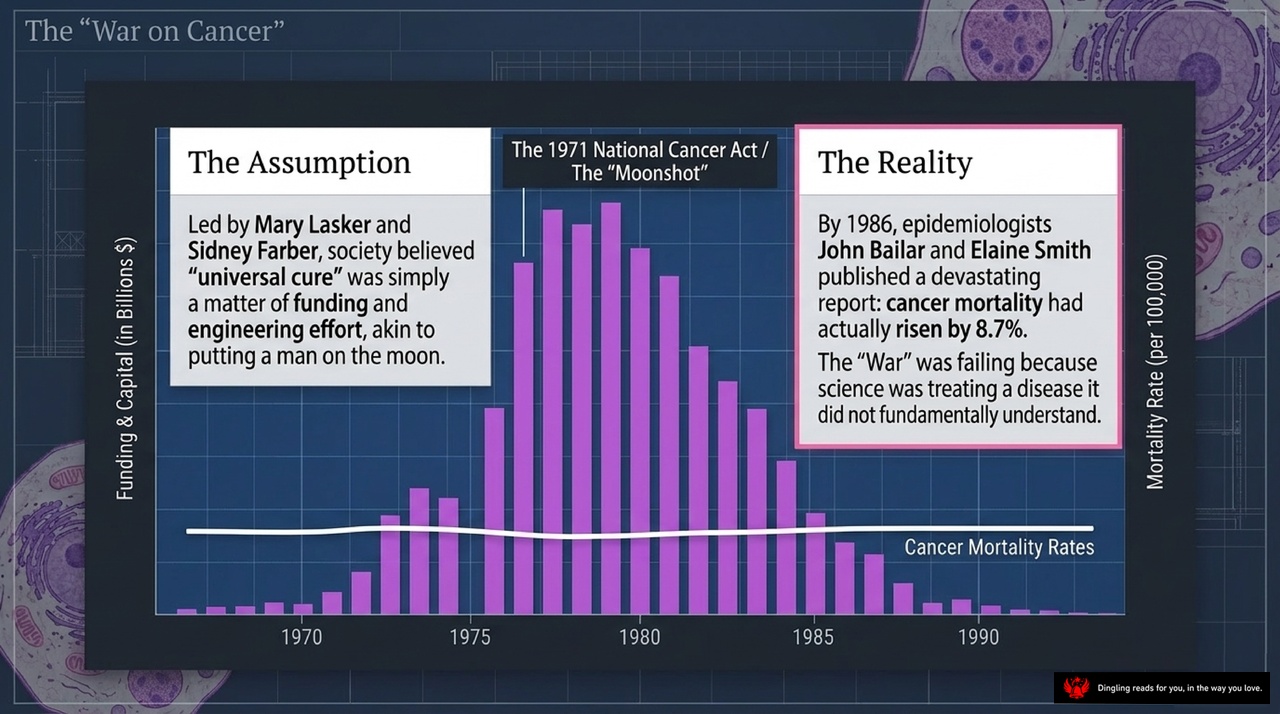
The slide reveals a stark contrast between what we assumed about the "War on Cancer" and the harsh reality. We thought curing cancer was simply a matter of throwing enough money and engineering effort at the problem, like the moonshot. But by 1986, a devastating report showed that cancer mortality had actually risen by 8.7%. The war was failing because science was treating a disease it didn't fundamentally understand.
This failure forced a complete rethink. Instead of just attacking tumors with surgery or radiation, scientists began digging into the molecular roots of cancer. They discovered that cancer isn't just a physical mass; it's a collection of specific genetic errors. We found "oncogenes" that act like stuck gas pedals, pushing cells to divide uncontrollably, and "tumor suppressor genes" that act as broken brakes, failing to stop cell growth.
This breakthrough led to the era of targeted therapy. For the first time, we could stop the cancer engine without destroying the whole car. Take Acute Promyelocytic Leukemia: a rare blood cancer where cells refuse to mature. Doctors used a simple vitamin derivative, all-trans retinoic acid, to trick these rogue cells into maturing and dying naturally. It was a cure with almost no side effects.
Then came Herceptin for breast cancer. Instead of poisoning the whole body with chemotherapy, this drug specifically targeted the HER2 protein on the surface of aggressive cancer cells. It blocked the growth signal, allowing the immune system to do its job. Similarly, Gleevec revolutionized Chronic Myeloid Leukemia by disabling the specific Bcr-abl fusion gene that drives the disease. These weren't just treatments; they were precision strikes against the cancer's unique genetic fingerprint.
The lesson is clear: to win this war, we must move from blunt force to precision engineering. By understanding the specific mutations driving each patient's cancer, we can design therapies that are far more effective and far less toxic. The future of oncology isn't about fighting a generic enemy; it's about solving a unique puzzle for every individual.
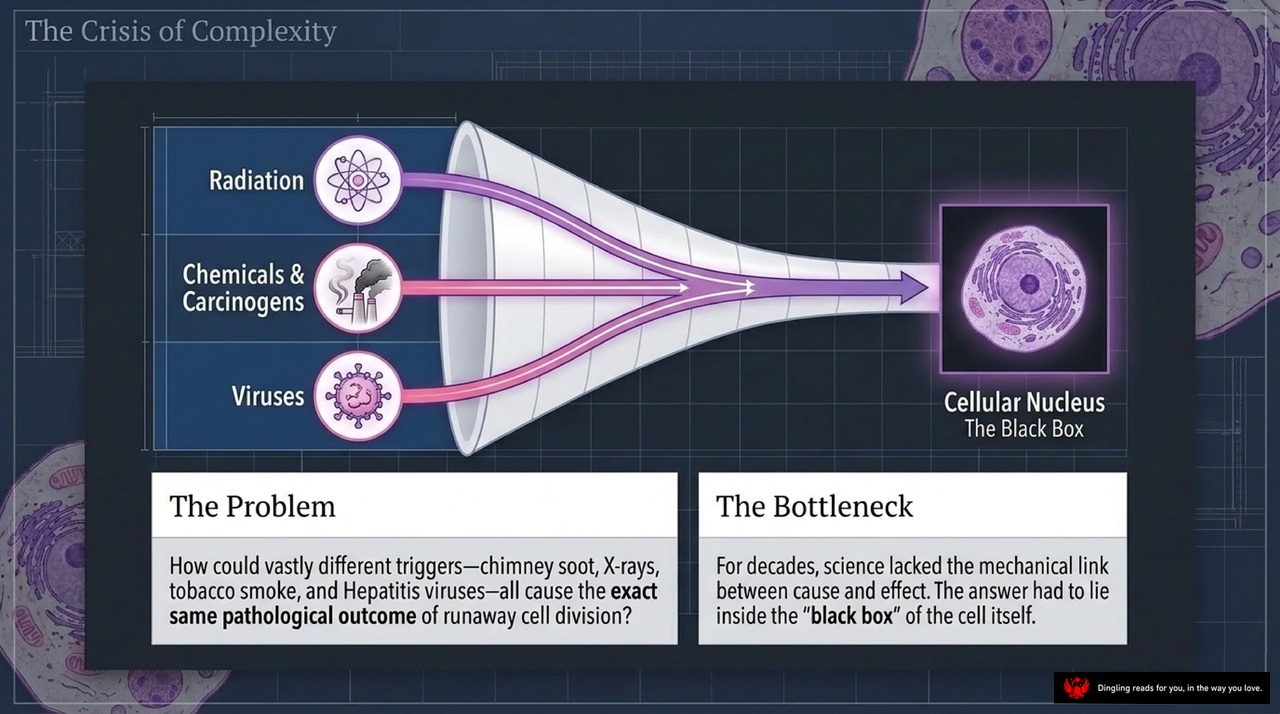
Look at this diagram. It illustrates a profound mystery that puzzled scientists for decades: how could vastly different triggers—radiation from X-rays, chemicals like tobacco smoke, and even viruses—all lead to the exact same pathological outcome? The answer lies in the cellular nucleus, labeled here as "The Black Box." For years, the mechanical link between these diverse causes and the single effect of runaway cell division remained hidden inside that box.
This slide captures the core crisis of complexity that drove the search for modern cancer therapy. Whether it was the external assault of carcinogens or the internal betrayal of mutated genes, the convergence point was always the same: the uncontrolled division of the cell. Understanding that all these disparate threats funnel into this one central mechanism was the key insight that eventually allowed us to move from blunt, broad-spectrum attacks to the precise, targeted therapies we use today. It was realizing that behind the chaos of different causes, there was a unified biological logic waiting to be decoded.
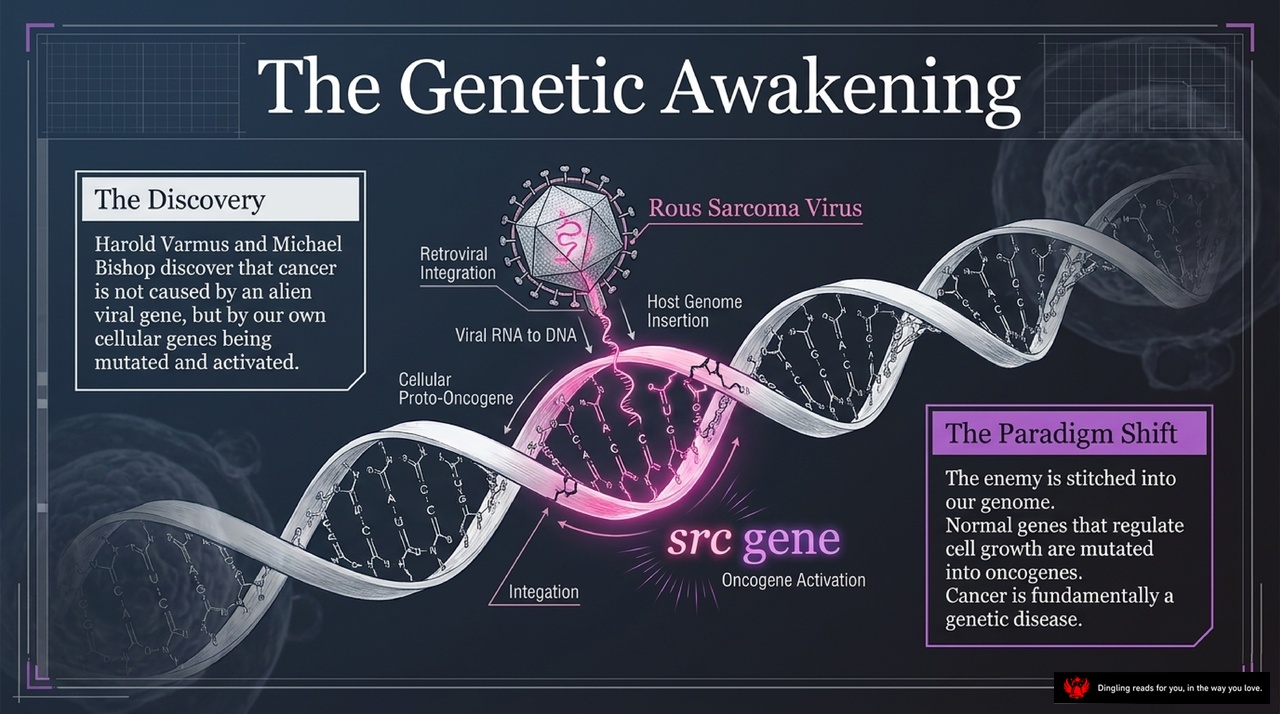
The Genetic Awakening. This isn't about an alien virus invading our body; it's about our own DNA turning against us. In the 1970s, Harold Varmus and Michael Bishop made a groundbreaking discovery that completely changed the rules of the game. They found that cancer isn't caused by a foreign invader, but by our own cellular genes getting mutated and activated.
Look at this diagram. We see the Rous Sarcoma Virus, but the real story happens inside the host genome. The virus inserts its RNA into our DNA, transforming our normal "Proto-Oncogene" into a rogue "Oncogene." Specifically, it targets the *src* gene. Think of this gene as a switch that controls cell growth. Normally, it's a regulated on/off switch. But once mutated by the virus—or by other factors like chemicals or radiation—that switch gets stuck in the "on" position forever. The cell receives a constant signal to divide, ignoring all safety checks, and turns into a cancer cell.
This was a massive paradigm shift. Previously, scientists thought the enemy was external, something we had to fight off with viruses or radiation. Now, we realized the enemy was stitched right into our own genome. Normal genes that regulate cell growth were simply hijacked. This proved that cancer is fundamentally a genetic disease. It wasn't just a random monster; it was a malfunction of our own biological code. This insight laid the foundation for everything that came after, from understanding why some cancers respond to certain drugs while others don't, to the eventual development of targeted therapies that fix the broken switch instead of just trying to blast the whole system. It was the moment we truly understood the genetic nature of cancer.

Imagine cancer not as a single monster, but as a runaway car. The slide you see breaks down the engine of this tragedy into two critical failures: a stuck accelerator and a broken brake. On the left, we have "The Stuck Accelerator," representing proto-oncogenes like ras or myc. These are our normal growth genes, but when mutated, they get permanently locked in the "ON" position, forcing the cell to divide relentlessly, much like a driver who can't take their foot off the gas pedal. On the right, we see "The Broken Brake," which stands for tumor suppressor genes like Rb or p53. These are the guardians that should halt rogue growth or trigger cell death when things go wrong. But when these genes are mutated and deactivated, the cell loses its ability to stop dividing. The slide clearly states the result: it requires both the stuck accelerator and the broken brake to push a cell over the cliff into malignancy. This dual failure explains why cancer is so difficult to stop—it's not just about one broken part, but a complete loss of control over the cell's life cycle.
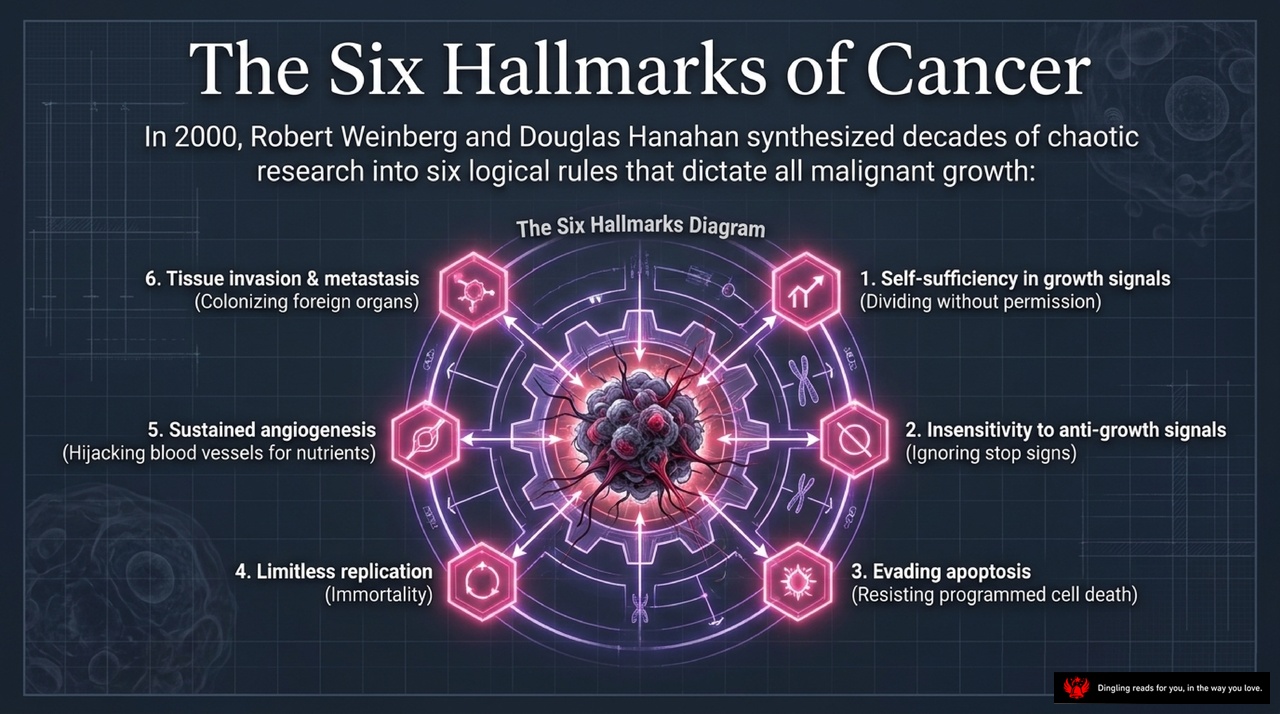
Imagine cancer not as a chaotic monster, but as a highly organized machine with a specific set of rules. In 2000, scientists Robert Weinberg and Douglas Hanahan synthesized decades of research into six logical principles that dictate all malignant growth, known as "The Six Hallmarks of Cancer."
Think of these hallmarks as the cheat codes that allow a normal cell to hijack the body and become unstoppable. First, the cancer cell achieves self-sufficiency in growth signals; it decides to divide without asking for permission, like an engine that refuses to turn off. Second, it becomes insensitive to anti-growth signals, effectively ignoring the body's "stop signs" that tell healthy cells when to rest.
Third, the cell learns to evade apoptosis, or programmed cell death. Normally, damaged cells are meant to self-destruct, but cancer cells resist this suicide program, allowing them to survive even when they should die. Fourth, they gain limitless replicative potential. Unlike normal cells that have a strict limit on how many times they can divide, cancer cells activate mechanisms like telomerase to achieve a kind of biological immortality.
Fifth, the tumor develops sustained angiogenesis. Once a tumor grows too large, it needs a blood supply. Cancer cells hijack the body's vascular system, inducing the growth of new blood vessels to feed their rapid expansion. Finally, the sixth hallmark is tissue invasion and metastasis. The cancer breaks through its original location, colonizing foreign organs and spreading throughout the body, which is often the primary cause of death.
These six rules transform a localized issue into a systemic disease, explaining why traditional treatments often struggle: they must fight an enemy that has learned to ignore every safety mechanism the body has built.

The Heterogeneity Problem isn't just a scientific concept; it's the fundamental reason why a "magic bullet" for all cancers is biologically impossible. Look at this visualization: on the left, leukemia shows only 5 to 10 mutations, but breast and colon cancer? That's a chaotic mountain range of 50 to 100 plus mutations. This discovery, rooted in the Human Genome Project, revealed a terrifying truth: a single breast cancer tumor can harbor over 120 unique genetic mutations.
Every patient's cancer is genetically unique, driven by profound genetic heterogeneity. This means physiological differences in how cancer behaves are directly caused by these massive differences in their DNA. Because of this, the idea of a single universal cure for all cancers is simply impossible. You can't treat a complex, ever-evolving ecosystem of mutations with one static solution. The graph we see here illustrates why the era of "one size fits all" chemotherapy is over. We are now forced to confront the reality that to truly fight cancer, we must understand the specific genetic fingerprint of every individual's tumor.
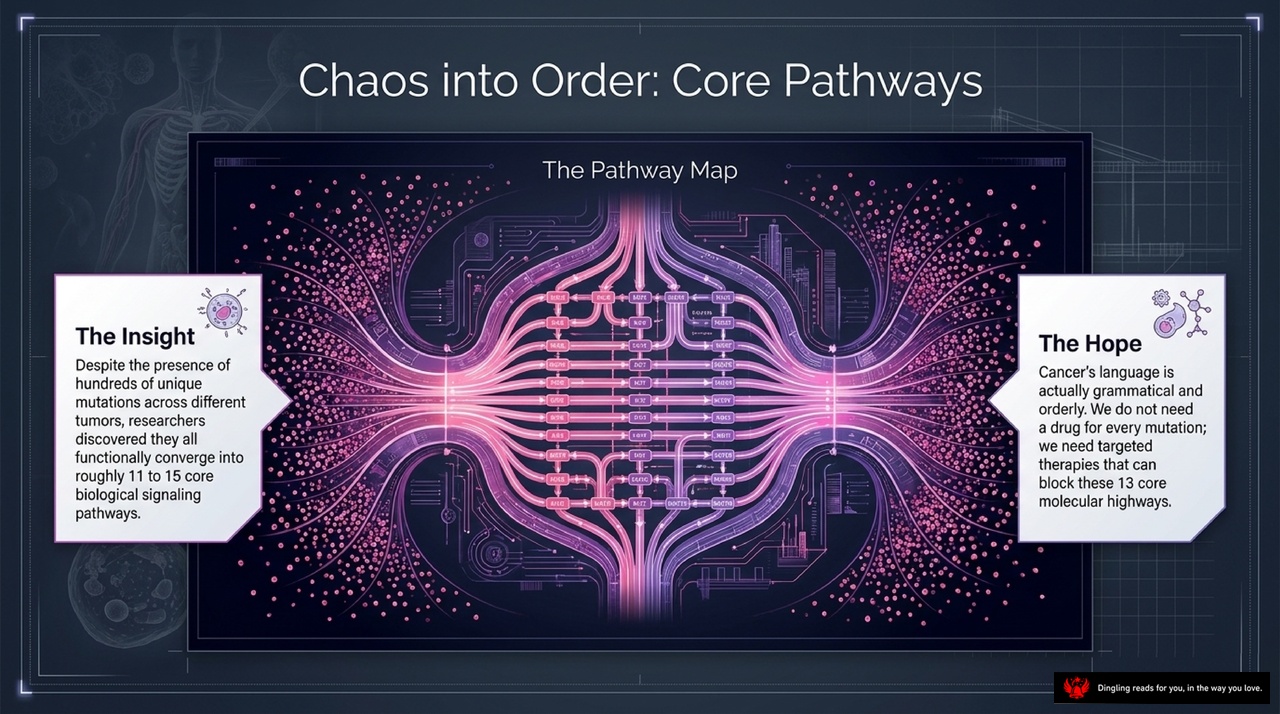
Chaos into Order: Core Pathways. Look at this intricate map. It might look overwhelming at first glance, but it represents a massive shift in how we understand cancer. For decades, we thought every mutation was a unique enemy requiring a custom weapon. But here's the breakthrough: despite the hundreds of unique mutations across different tumors, researchers discovered they all functionally converge into roughly 11 to 15 core biological signaling pathways.
This is the key insight. Cancer's language is actually grammatical and orderly. We do not need a drug for every single mutation; we need targeted therapies that can block these 13 core molecular highways. This realization transforms the battlefield from a chaotic war of attrition into a strategic campaign. Instead of trying to kill every individual cancer cell, we now focus on disrupting the specific pathways that drive the entire tumor network. It means we can treat different cancers using the same mechanism if they share these core pathways, paving the way for the precision medicine era we see today.
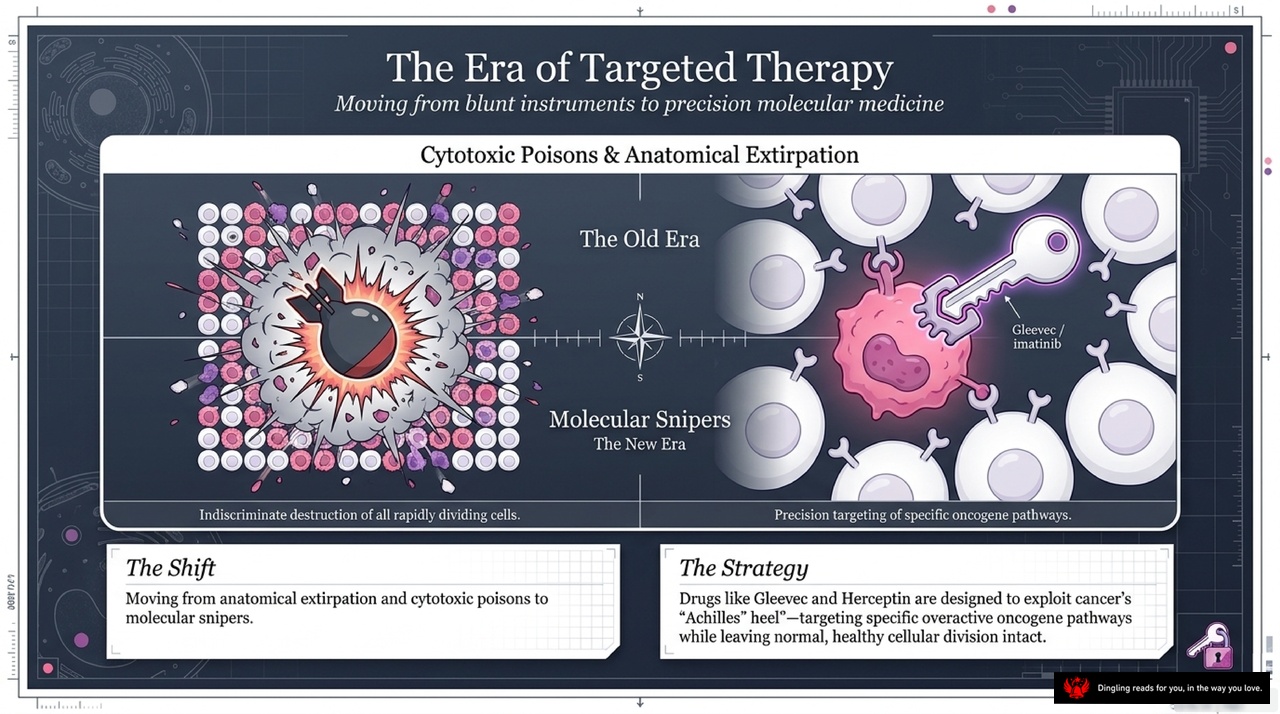
The visual on this slide perfectly captures the evolution of cancer treatment: moving from "blunt instruments" to "precision molecular medicine." On the left, we see the old era, where cytotoxic poisons and anatomical extirpation acted like indiscriminate bombs, destroying all rapidly dividing cells—both cancerous and healthy. This was the era of "molecular snipers" before they were actually snipers; it was more like throwing a grenade into a crowded room.
But look at the right side. This represents the new era of targeted therapy. Instead of a bomb, we now have a key—specifically, drugs like Gleevec and imatinib. These aren't general weapons; they are precision tools designed to target specific oncogene pathways, like the Bcr-abl fusion gene we discussed earlier. They exploit the cancer's "Achilles' heel," striking only the overactive molecular switches within the tumor while leaving normal, healthy cellular division completely intact.
The shift is profound. We've moved from trying to destroy the entire battlefield to surgically disabling just the enemy's command center. This strategy allows us to treat cancers that were once considered untouchable, turning a hopeless diagnosis into a manageable condition for many patients. It's no longer about fighting the war with maximum collateral damage; it's about winning the battle with surgical precision.

Imagine cancer not as a static tumor, but as a relentless evolutionary force, constantly racing against the very treatments designed to stop it. This slide illustrates that exact struggle through the concept of "The Red Queen's Race." Just like the character in *Through the Looking-Glass* who must run at top speed just to stay in the same place, oncology is locked in an endless sprint. Every time we apply a targeted therapy, we aren't just killing cancer cells; we are acting as an evolutionary pressure cooker.
Look at this cycle. First, we apply a specific treatment. This eliminates the weak cancer cells, but it inadvertently creates a survival advantage for the rare, resilient mutants that happen to be resistant. These survivors then proliferate, leading to relapse. The cancer has evolved, and now we must start the race all over again with a new weapon. This is the evolutionary loop of cancer—accelerated Darwinian evolution in action. Understanding this dynamic is crucial, because it means there is no single cure that lasts forever; instead, our goal is to stay ahead of the curve, constantly adapting our strategies to outmaneuver the ever-changing enemy.

Imagine a world where cancer wasn't a death sentence, but a manageable chronic condition. That shift didn't happen overnight; it was the result of a strategic evolution in how we fight this disease. Look at this graph: between 1990 and 2005, cancer mortality rates dropped by a staggering 15%. But here's the key insight—this wasn't the victory of a single "magic bullet." It was a combined triumph of three powerful strategies working in harmony.
First, we focused on prevention. Think about anti-smoking campaigns; by stopping the disease before it starts, we saved countless lives. Then, we moved to secondary screening. Tools like Pap smears and colonoscopies allowed us to catch cancers early, often when they were still tiny and curable. Finally, we developed targeted molecular therapies. Instead of using broad, toxic chemotherapy that attacks everything, we learned to design drugs that hit specific genetic weaknesses in the cancer cells.
This era redefined what victory looks like. We transformed a swift death sentence into a manageable reality. The battle against cancer became less about brute force and more about precision, foresight, and a relentless commitment to science. This is the new reality: a future where we don't just treat cancer, but we coexist with it, outsmarting it at every turn.

The 4,000-year biography of cancer reveals a profound truth: this disease is not an external invader waiting to be eradicated, but rather the ultimate, distorted manifestation of our own genetic capacity to adapt, survive, and grow. Think about it—our bodies are built on the same molecular mechanisms that drive both our healing and our survival. If the very processes that keep us alive are the same ones that drive cancer, then eradicating the disease entirely might even mean eradicating ourselves. This isn't just a philosophical puzzle; it's the core challenge that has shaped every breakthrough in oncology. From the early days of radical surgery and radiation to the modern era of targeted therapies, we've learned that cancer is a complex system of our own biology gone awry. Understanding this shift—from viewing cancer as a foreign enemy to recognizing it as a twisted version of ourselves—has been the key to unlocking the future of cancer treatment.