


The General Theory of Employment, Interest and Money: Reader Reviews & Ratings

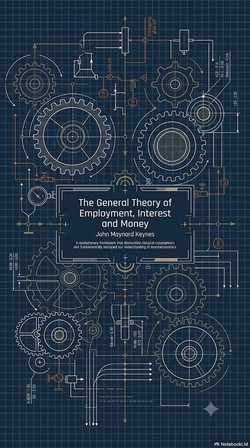
The General Theory of Employment, Interest and Money
Loading…

The General Theory of Employment, Interest and Money

John Maynard Keynes

Write a Review

Your Review

0/500

Other reviews

32 total
Sharon

Reading this felt like watching the 2008 crisis in slow motion. Keynes proves that saving during a recession actually hurts everyone because it kills demand. The idea that individual prudence becomes collective disaster really stuck with me. I finally understand why cutting wages makes things worse instead of better. It's a powerful reminder that the economy isn't a self-correcting machine. We need active government intervention to fill the demand gap when private spending collapses. This book changed how I see personal finance decisions completely. No more thinking saving is always virtuous without context. The multiplier effect concept explains so much about why stimulus works.


Cesar

The book explains why cutting wages during a recession actually makes unemployment worse instead of better, because total demand drops when everyone earns less. This insight about the paradox of thrift helps me understand why austerity measures failed in the 2008 crisis and the Great Depression, showing that individual financial prudence can destroy the whole market if everyone does it at once while jobs are scarce. Understanding this shift from classical supply-side logic to effective demand theory changed how I view government spending as a necessary tool to restart the cycle of hiring and production when private confidence collapses.

Casey

Keynes proved that saving more hurts everyone during a recession, not just the rich.

Chase

This book flipped my old ideas about saving and spending completely.

Blanche

This book finally explained why saving money during a recession actually makes everyone poorer.

Chiara2

Reading this changed how I view saving during a recession.

Faith

This book changed how I see recessions. Before reading Keynes, I believed that individual saving always fuels economic growth, a core idea from classical economics where banks lend your money to businesses for hiring. However, the interpretation exposes a fatal flaw in this logic: it only holds when the economy is at full employment. When everyone tightens their belts during a downturn, total demand collapses instead of rising. The text explains this paradox of thrift clearly, showing how businesses lay off workers because no one buys their products, leading to a vicious cycle. Understanding that supply does not create its own demand in a crisis was a huge revelation for me. I now see why government intervention is crucial to put money back in people's pockets and restart the engine of consumption and investment, rather than just waiting for the market to self-correct naturally.

Taylor

Keynes proves saving alone fails when everyone hoards cash, crushing demand instead of helping us.

Serena

The book brilliantly explains why individual saving destroys total demand during economic downturns, turning prudent personal choices into a collective disaster that deepens unemployment and crashes the economy instead of helping it recover, which completely overturns the old belief that frugality always benefits society.

Guy02

It finally explains why waiting for the market to fix itself fails.

Tobias

Keynes showed that everyone saving money together crushes total demand, creating a paradox where individual prudence becomes collective disaster. His idea that supply does not create its own demand in a recession changes how I see government spending. Instead of waiting for the market to fix itself, we need active investment to fill the gap left by cautious consumers. The distinction between nominal and real wages also explains why cutting pay actually worsens unemployment. Finally, the concept of animal spirits highlights how fear stops investment even when rates are low, proving why policy must address psychology, not just numbers.

Rosemary

The book explains why cutting wages hurts everyone. It shows that when everyone saves during a recession, total demand crashes, businesses can't sell their goods, and they lay off workers instead. This paradox of thrift means individual prudence becomes collective disaster. Instead of waiting for the market to fix itself, the text argues governments must step in with spending to create jobs and restore confidence. Understanding this shift from supply-side logic to demand-side focus helps make sense of modern economic policies and why austerity often fails to solve unemployment problems effectively in a crisis.

Edna

Finally a clear explanation of why saving money hurts everyone during a recession.

Bea

Keynes explains why saving more hurts everyone in a downturn.

Crystal88

Understanding why the classical model failed during the Great Depression helps me see why governments must step in to boost demand through public works projects or tax cuts when private spending collapses and leaves millions of workers without jobs.

Erik

I love how it shows why everyone saving at once makes the economy worse.

Curt18

Keynes showed that individual saving becomes collective disaster when everyone tightens their belt during a recession, creating a paradox where total demand collapses, forcing businesses to lay off workers and deepening the economic crisis instead of fixing it through natural market correction, which explains why austerity measures failed in the 2008 crash and the Eurozone, proving that what makes sense for one person can destroy the whole economy if everyone does it simultaneously.

Colton

I do not understand why everyone saves more when times are tough.

Gail

Finally a clear explanation of why saving money during a recession can actually make everyone poorer.

Faye

Grandma's advice was wrong, this book proved saving hurts us all.