



Zimbardo proves ordinary people can do terrible things when systems strip away their identity and accountability.
Your Review
Zimbardo proves ordinary people can do terrible things when systems strip away their identity and accountability.

Ordinary people can do terrible things in the right situation.
This book makes me realize how situations can push good people to do terrible things.

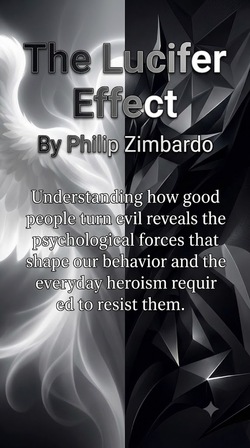
Zimbardo shows how systems trap good people in evil roles, using real examples like Abu Ghraib and the Stanford Prison Experiment to prove that situational forces, not just individual character, drive cruelty. The book challenges our comfort in believing we are immune to corruption, urging us to recognize dehumanization and group pressure in daily life. By breaking down the Lucifer Effect into individual, situational, and systemic levels, it explains why ordinary citizens become perpetrators or bystanders in atrocities. I found the section on cognitive biases like the Fundamental Attribution Error especially eye-opening, as it reveals why we blame individuals instead of fixing broken systems. The practical steps to resist situational influence give hope that we can choose everyday heroism, even when systems push us toward complicity. Ultimately, this book is a vital reminder that we must constantly question the environments we inhabit to prevent evil from taking root in our communities.

This book changed my view on evil, showing how ordinary people become bad through situations and systems rather than inherent flaws.

Zimbardo argues evil isn't in our hearts but triggered by situations, showing how ordinary people like the Stanford guards became cruel due to power and dehumanization, a terrifying reminder for all of us.

Scary truth about ordinary people.

This book changed how I see ordinary people and their capacity for harm under pressure.
This book shows how ordinary people become bad under pressure.

The Stanford Prison Experiment details show how systems turn normal people into perpetrators of evil without them realizing it, which is terrifying to think about because it suggests we are all vulnerable to these forces if the right conditions arise, making me realize I need to stay vigilant about my environment and the systems I participate in daily to avoid becoming complicit in harm just because the situation demands it from me.
Reading this made me realize that evil isn't in monsters but in situations that trap even good people.

Zimbardo's breakdown of the three levels of influence individual situational and systemic clearly explains how ordinary people can be pushed into doing terrible things without intending to be evil.

The idea that systems design the environments where moral collapse becomes inevitable is a powerful reminder that we cannot just rely on individual willpower to do good.

Zimbardo brilliantly shows how ordinary people like Chip Frederick become monsters when systems strip away their identity and force them into cruel roles without oversight.

The explanation of cognitive biases like the Fundamental Attribution Error helps me understand why I often blame individuals instead of systems when bad things happen, which is a crucial insight for self-reflection.

Zimbardo shows how ordinary people become cruel when systems strip away their identity and force them into roles that erase empathy.

The idea that ordinary people can do terrible things in bad situations really shook my view of human nature.

Interesting but the experiment feels a bit too controlled to me.

Zimbardo shows how ordinary people like the Stanford guards become cruel through roles and systems rather than inherent evil.

This book changed how I see ordinary people's potential for harm under pressure.